
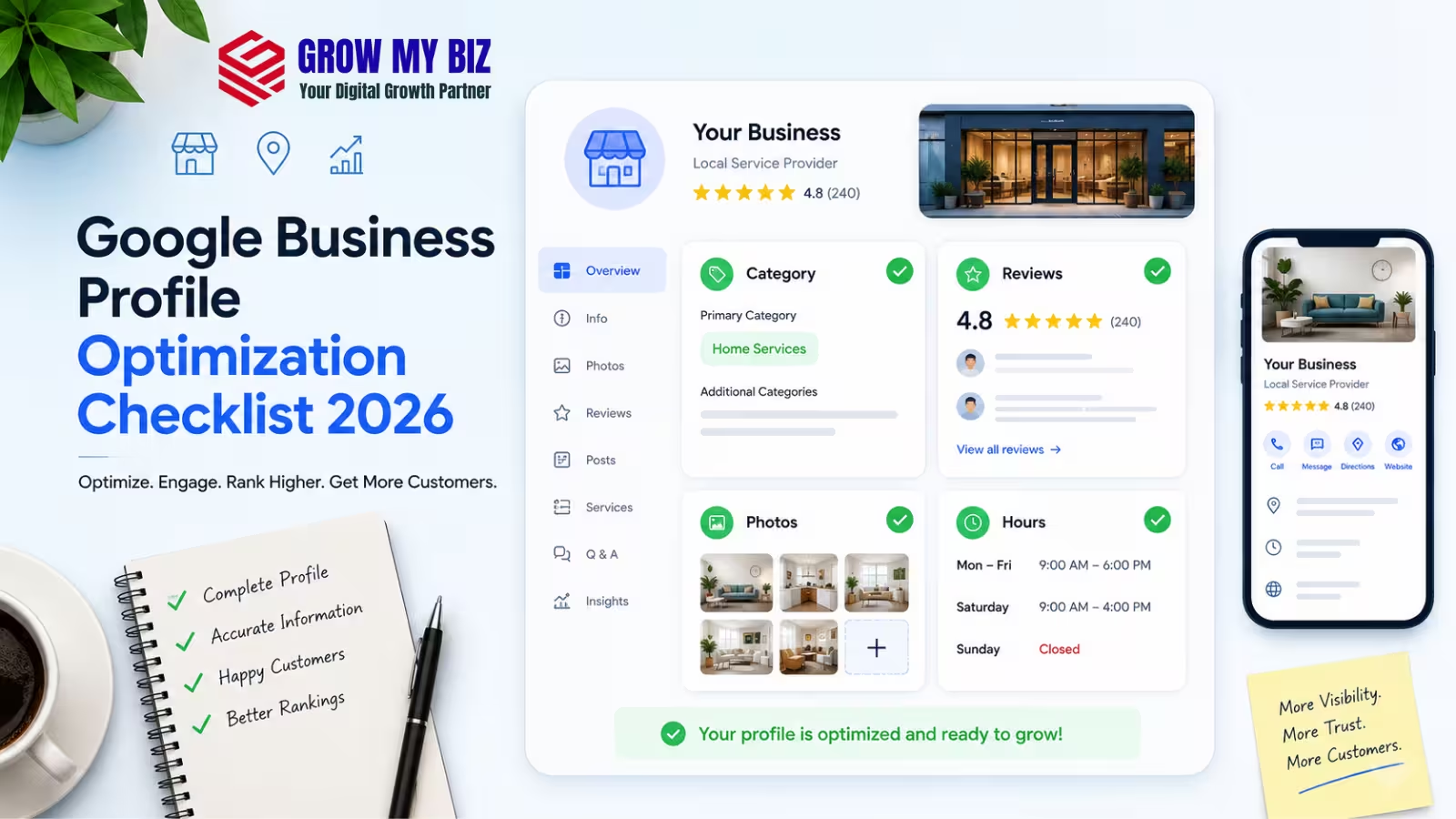
A completed Google Business Profile and an optimized one are not the same thing. Thousands of businesses fill in their name, address, and phone number, upload a logo, and never touch the profile again. Meanwhile, their competitor three doors down is answering reviews within a day, updating photos monthly, and getting called, messaged, and navigated to — while the first business quietly disappears from the map pack.
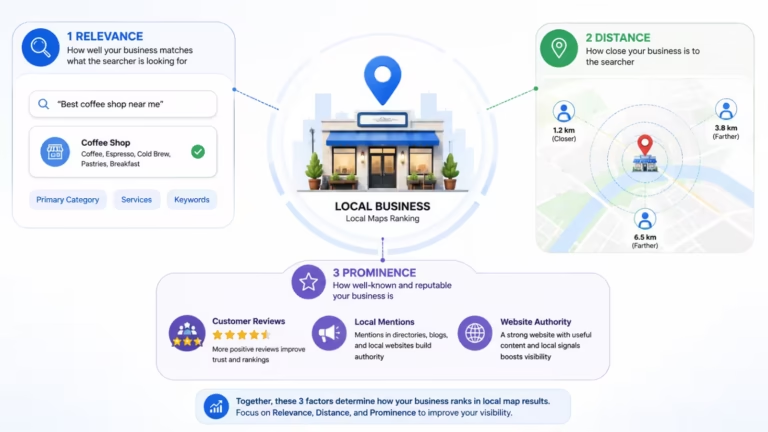
That gap is what this checklist is built to close. Google’s own guidance is clear that local visibility depends on three factors — relevance, distance, and prominence — and while distance is largely out of your hands, relevance and prominence are built almost entirely through the choices covered below.
This guide walks through a genuinely complete, 2026-current Google Business Profile optimization checklist: what to check, why it matters, what’s officially confirmed by Google versus what’s industry observation, and what to prioritize first if you can’t do everything at once.
Table of Contents
What Is a Google Business Profile?
A Google Business Profile (GBP) — formerly Google My Business — is the free business listing that controls how your business appears across three surfaces: standard Google Search, Google Maps, and the Local Pack (the “map pack” of three businesses shown at the top of local search results). It’s the data source Google pulls from to answer questions like “plumber near me” or “dentist in Karol Bagh,” and increasingly, it’s also a primary input for AI-generated answers in Google’s AI Overviews.
The relationship works like this: Google Business Profile → Local Search results → Google Maps → your website. A well-optimized profile is what gets a customer from “searching” to “on your website or calling you” — the website then has to close the job.
How Google Local Rankings Actually Work
Google states directly, through its own Business Profile Help documentation, that local results are based primarily on three factors:
- Relevance — how well your profile matches what someone is searching for
- Distance — how close your business is to the searcher (or to the location implied in their search)
- Prominence — how well-known and reputable your business is, based on signals like reviews, links, and mentions
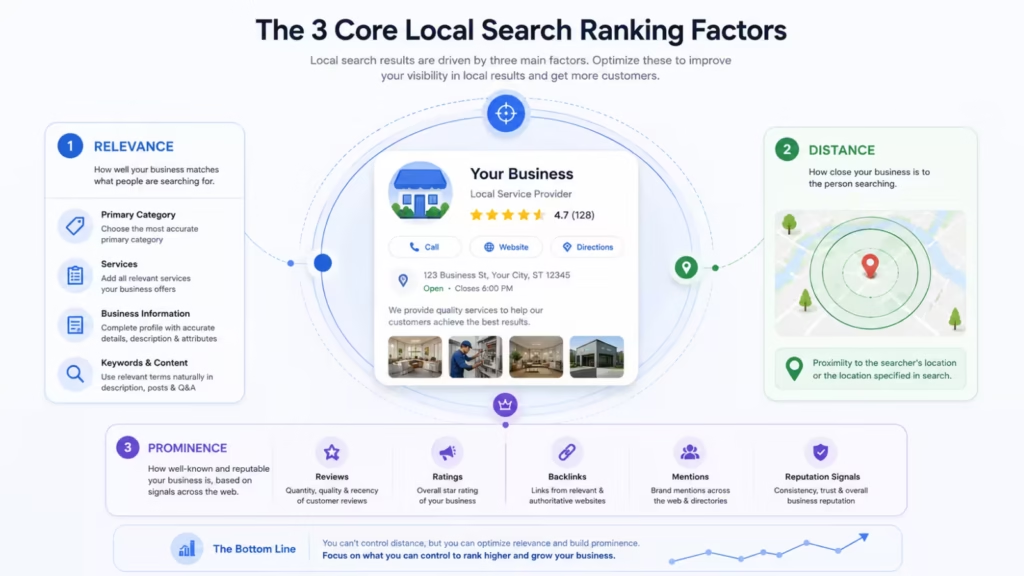
That’s the confirmed part, straight from Google. Everything past that — how much each sub-factor matters — comes from industry research, not Google’s own disclosure, and it’s worth being honest about that distinction:
- Officially confirmed by Google: relevance, distance, and prominence as the three pillars; that complete and accurate information helps relevance; that reviews and mentions feed prominence.
- Strong industry evidence (annual surveys, controlled tests): Whitespark’s 2026 Local Search Ranking Factors survey — which polls dozens of practicing local SEO experts — attributes roughly 32% of local pack ranking weight to Google Business Profile signals, about 20% to review signals, and around 19% to on-page website SEO, with the primary GBP category identified as the single most influential individual factor in the entire survey.
- Practitioner testing (not Google-confirmed, but controlled and repeatable): Sterling Sky testing has observed ranking changes for some keywords within 24–72 hours after adding specific services, although this should not be treated as a guaranteed timeline.
- Myths worth retiring: geotagging photos, keyword-stuffing your business name for a ranking boost (this is a policy violation, not a growth hack), and treating “distance” as something you can optimize away.
Keep this distinction in mind through the rest of the checklist — it’s what separates a genuinely useful guide from the guesswork that fills most “GBP ranking factors” articles.
Check our guide about Why Is My Competitor Ranking Higher on Google Maps.
The Complete Google Business Profile Optimization Checklist
1. Claim, Verify, and Secure Ownership
Before anything else, confirm the basics of control:
- ☐ Profile is claimed under a Google account your business actually controls (not a former employee’s or an old agency’s personal account)
- ☐ Verification is complete and current
- ☐ You know exactly who has Owner and Manager access — remove anyone who shouldn’t
- ☐ There is no duplicate profile for the same business/location competing with your main one
Why it matters: an unclaimed or improperly-owned profile means you can’t fix incorrect information, respond to reviews, or protect the listing if it’s edited by someone else — including competitors. Duplicate profiles split your reviews and prominence signals across two listings instead of concentrating them in one.
Also Read:- Local SEO for Veterinary Clinics in India: Getting Found When It Actually Matters
2. Business Name — Use It Exactly As It Exists in the Real World
- ☐ Business name matches the name customers see on your real-world signage and other official business materials
- ☐ No services, locations, or promotional phrases added (“Best,” “24/7,” “near me,” city names that aren’t part of your legal brand)
- ☐ No unnecessary special characters or symbols
Correct: ABC Dental Clinic Policy risk: Best Dentist in Delhi | ABC Dental Clinic | Emergency Dentist
This isn’t a style preference — it’s Google’s stated policy. Google’s own guidance says including unnecessary information in your business name “is not permitted, and could result in your listing being suspended.” Sterling Sky’s own documented cases of keyword-stuffed names show Google does eventually catch and penalize these, even though enforcement isn’t always immediate — which is exactly why relying on it is a risk, not a strategy.
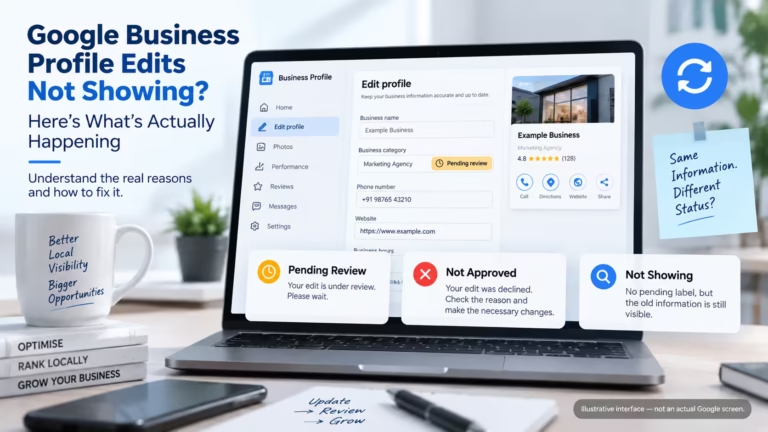
Please check our guide if your Google Business Profile Edits Not Showing? Here’s What’s Actually Happening.
3. Choose the Correct Primary Category
This is the single highest-weighted relevance factor identified in the 2026 Whitespark survey — more influential than any other individual field on your profile.
- ☐ Primary category is the most accurate match for what your business primarily does, not the broadest or most competitive-sounding option
- ☐ You’ve checked what category your closest, best-ranking competitors use (for research, not blind copying)
- ☐ Category has been re-evaluated if your core service offering has changed
Examples of getting specific right: | Business | Weak/generic choice | Better primary category | |—|—|—| | Dentist | “Doctor” | “Dental clinic” or “Cosmetic dentist” (if that’s the core focus) | | Digital marketing agency | “Consultant” | “Marketing agency” | | Physiotherapist | “Health consultant” | “Physical therapist” |
Copying a competitor’s category doesn’t guarantee their ranking — relevance is only one of three pillars, and prominence and distance still apply.
Check our comprehensive guide about Local SEO for Law Firms in India.
FREE GBP AUDIT FOR YOUR BUSINESS
Is Your Google Business Profile Costing You Customers?
We’ll audit your GBP — categories, photos, services, reviews and more — and show you exactly what could be holding back your local visibility.
4. Add Relevant Secondary Categories — Don’t Stuff Them
- ☐ Only genuinely applicable secondary categories added
- ☐ No categories added purely to “cover more keywords”
Secondary categories support relevance for adjacent services (a dental clinic that also offers orthodontics might add that as secondary), but category stuffing dilutes rather than strengthens relevance signals, according to current local SEO guidance.
Check our Local SEO Services Guide for better understanding.
5. Address and Service Area — Get the Fundamentals Exactly Right
Storefront businesses:
- ☐ Address is exact and matches your website, citations, and legal documents
- ☐ Address is set to show publicly only if customers can actually visit
Service-area businesses (SABs) — plumbers, electricians, cleaning companies, agencies, etc.:
- ☐ Business is genuinely eligible as an SAB (you travel to customers rather than have them visit you)
- ☐ Service areas reflect where you actually operate — not an inflated list to appear “everywhere”
- ☐ Address is hidden if you don’t have a public-facing storefront
- ☐ No fake or virtual-office addresses used to fake a presence in a city you don’t serve
One important, less-known point for SABs: Your listed service areas should not be treated as a substitute for having a legitimate business location. Proximity remains a major local ranking factor. Service areas exist for customer clarity and eligibility, not as a ranking lever.
6. Business Hours and Special Hours
- ☐ Regular hours are accurate for every day of the week
- ☐ Special/holiday hours updated ahead of time
- ☐ “Temporarily closed” status used correctly if you’re closed, and removed the moment you reopen
Business hours are more influential than most business owners assume — Whitespark’s 2026 survey lists accurate hours among the top five local pack ranking factors, and rankings have been observed to degrade in the final hour a business is listed as open. If you offer after-hours or 24/7 service, list it accurately — after-hours search competition tends to be lighter.
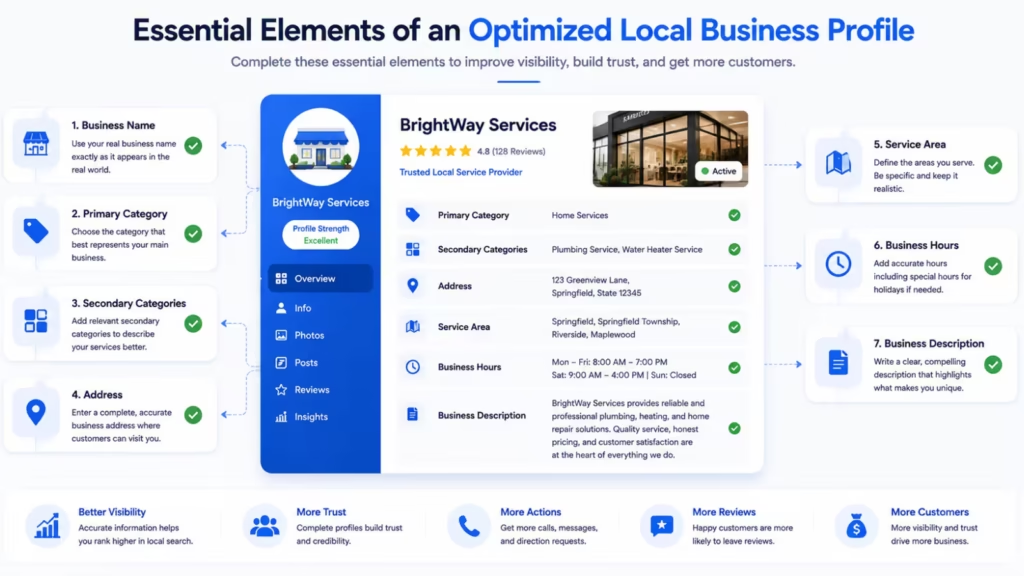
7. Business Description
Write it for humans first, search relevance second:
- ☐ Clearly states what you do
- ☐ Mentions main services/products
- ☐ Mentions target customer and service area naturally (not stuffed)
- ☐ Includes what makes you different
- ☐ No promotional spam, excessive punctuation, or unsupported claims (“#1 in Delhi,” “guaranteed results”)
Example:
“ABC Dental Clinic provides general and cosmetic dentistry for families in Rohini, Delhi, including root canal treatment, teeth whitening, and same-day emergency appointments. Our team of 3 dentists has served the local community since 2015.”
8. Services — One of the Most Underused High-Impact Fields
- ☐ Every real service is listed, using clear, accurate names
- ☐ Services have short descriptions where the field allows it
- ☐ Outdated or discontinued services are removed
- ☐ Services aren’t padded with keyword variants of the same offering
Sterling Sky’s controlled testing found that adding a specific service can move rankings for that exact keyword within 24–72 hours — making this one of the fastest, most measurable optimizations available, and one most businesses never touch after profile setup.
9. Products (Where Applicable)
- ☐ Used only if genuinely relevant (retail, e-commerce-adjacent, clinics with retail products)
- ☐ Product names, descriptions, images, and pricing are accurate
- ☐ Not force-fit onto service-only businesses just to fill a field
10. Photos — High Engagement Impact, Confirmed by Google Itself
This is one of the few areas where Google has published its own numbers directly: businesses that add photos to their profile receive 42% more requests for directions and 35% more website clicks than businesses without photos. Separate BrightLocal research on high-photo-volume profiles found even larger engagement gaps for businesses with 100+ images, though that scale won’t apply to every business type.
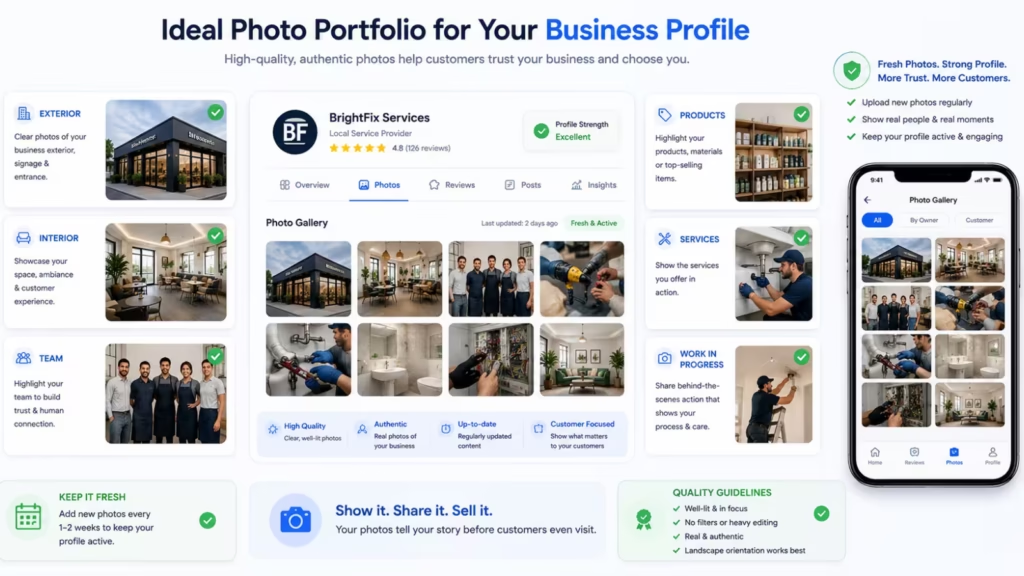
Checklist:
- ☐ Logo set as the profile thumbnail
- ☐ Cover photo represents the business well
- ☐ Exterior and interior photos included
- ☐ Team photos included
- ☐ Product/service/work-in-progress photos included
- ☐ Photos updated regularly (not just at profile setup)
- ☐ No misleading stock photography used in place of real business images
There’s no confirmed “magic number” of photos that guarantees a ranking boost — what’s confirmed is that more real, relevant photos correlate strongly with more customer actions, which is what actually drives revenue.
11. Videos
- ☐ Short business, service, or team-introduction videos added where useful
- ☐ Product demonstrations or process walkthroughs included for relevant industries
- ☐ Content is authentic, not generic stock footage
Video adds customer confidence and dwell time on the profile; treat it as a trust-building addition rather than a guaranteed ranking lever, since there’s limited controlled evidence specifically isolating video’s ranking impact.
WANT BETTER LOCAL VISIBILITY?
Not Ranking on Google Maps?
Find out why your competitors are appearing ahead of you. Get a practical local SEO strategy focused on improving your Google Business Profile and attracting more local customers.
12. Reviews — The Highest-Leverage Section on This Entire List
Reviews sit at the intersection of ranking signal and conversion driver, and 2026 data makes the stakes unusually clear. BrightLocal’s Local Consumer Review Survey 2026 (a representative panel of 1,002 US consumers) found:
- 97% of consumers read reviews before choosing a local business
- 41% now “always” read reviews when browsing for a business — up sharply from 29% the year before
- The average consumer checks six different review sources, not just Google, before deciding
- 85% are more likely to use a business after reading positive reviews; 77% are put off by negative ones
- Google’s own share of local business discovery dropped from 83% to 71% in one year — not because Google matters less, but because AI tools (ChatGPT, Google AI Mode, etc.) surged from 6% to 45% usage for local recommendations over the same period
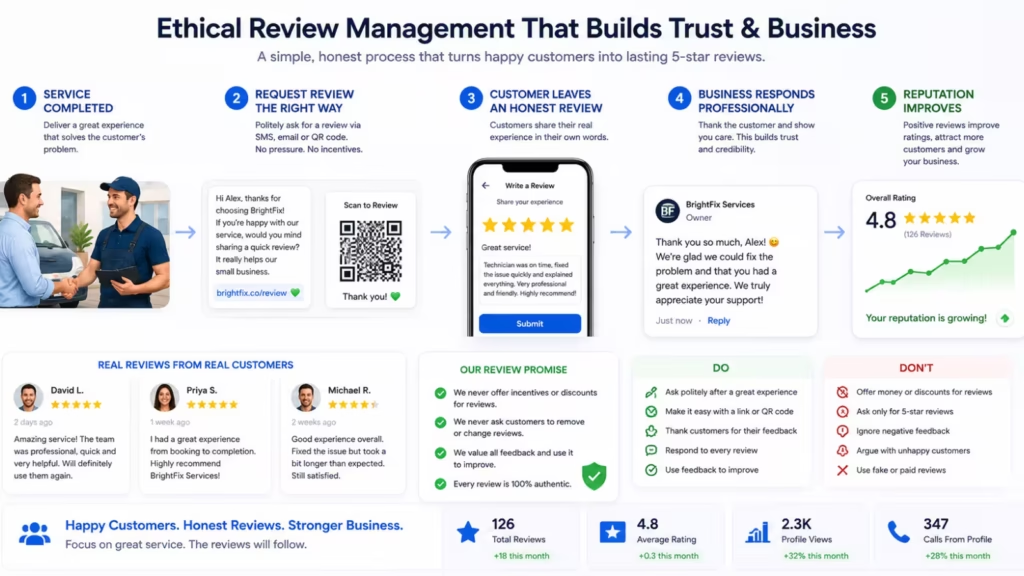
Checklist:
- ☐ A consistent, ethical process exists to request reviews after every completed job/visit (WhatsApp, email, QR code, or a direct review link)
- ☐ Review requests go out to genuine customers only — never incentivized, gated, or limited to only customers you expect to leave 5 stars
- ☐ Every review — positive and negative — gets a response
- ☐ No fake reviews, no employee/owner reviews, no paid reviews (Google explicitly prohibits all of these, and the FTC’s 2024 rule on consumer reviews adds regulatory risk on top of platform risk)
- ☐ Review responses mention relevant service details naturally — Sterling Sky’s testing found Google indexes the business’s response text as a relevance signal, even though keyword-stuffed customer review text itself showed no ranking effect
Ethical review-generation framework:
- Ask at the moment of genuine satisfaction (right after service completion, not weeks later)
- Make it a one-tap or one-scan process (QR code, direct link)
- Never offer a discount or incentive tied to leaving a review
- Never filter — send the request to everyone, not just customers you predict will rate you 5 stars (review gating violates Google’s and most platforms’ policies)
- Encourage specificity (“mention what service we did for you”) — genuinely helps future customers and, per current AI-search research, helps AI systems understand exactly what you do
Check our complete guide about Google Ads for Veterinary Clinics in India: Beyond Clicks to Booked Appointments.
13. Responding to Reviews
Positive reviews: thank the customer by name where appropriate, reference the specific service naturally, keep it genuine rather than templated.
Negative reviews: stay professional, don’t argue publicly, never disclose private customer details, acknowledge legitimate concerns, and offer to resolve the issue offline (a phone number or email, not a public back-and-forth).
Fake or policy-violating reviews: Google provides a formal flagging process through the review itself; use it for genuinely fake/policy-violating reviews only — not for real negative feedback you simply disagree with.
14. Google Posts
- ☐ Used to share offers, updates, events, or announcements
- ☐ Include a clear CTA and an image
- ☐ Not repetitive or purely promotional every time
Set expectations correctly here: Sterling Sky’s controlled 9-week study tracking 441 keywords found no measurable ranking movement tied to weekly Google Posts. Posts are genuinely useful for keeping your profile looking active and for direct customer communication — but treat them as an engagement and branding tool, not a ranking strategy.
15. Q&A Section
- ☐ Common customer questions are pre-seeded with accurate answers (you can add your own Q&As)
- ☐ Existing questions are monitored and answered promptly
- ☐ No misinformation left unanswered or unresolved
16. Website and GBP Alignment
Your GBP shouldn’t be treated as an island:
- ☐ Website link is correct and goes to the most relevant page (not always just the homepage)
- ☐ NAP (Name, Address, Phone) matches exactly between your website, GBP, and citations
- ☐ LocalBusiness schema markup is implemented on your website
- ☐ Website is mobile-friendly and loads quickly (mobile local search is the majority use case)
The full local visibility stack works together: GBP + Website + Local Content + Reviews + Authority. Strength in one area can’t fully substitute for weakness in another.
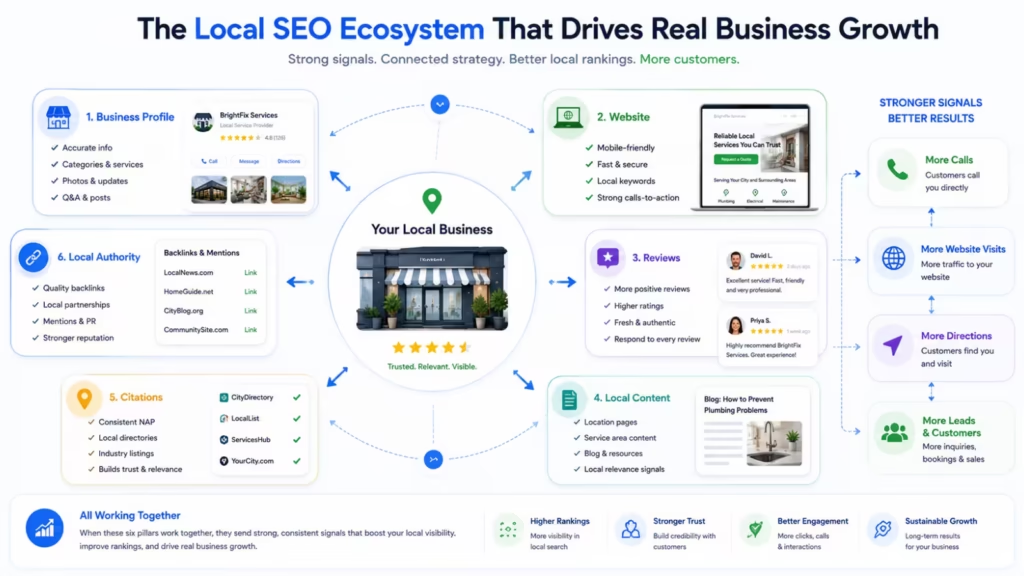
17. Local Landing Pages (Use Carefully)
- ☐ Location or service+location pages contain genuinely unique, useful content — not templated text with only the city name swapped
- ☐ Each page includes real contact info, relevant testimonials, and specific local service details
- ☐ You are not mass-producing thin “doorway” pages purely to rank for city-name variants
Google’s guidance and general local SEO consensus both treat thin, duplicated city pages as a liability, not an asset — a handful of genuinely useful location pages will outperform dozens of templated ones.
18. NAP Consistency and Citations
- ☐ Name, Address, and Phone number are identical across your website, GBP, and every directory listing
- ☐ Citations exist on relevant, reputable directories for your industry and region — not an arbitrary large number of low-quality ones
- ☐ Old/incorrect listings (previous address, old phone number) are corrected or removed
Consistency matters more than volume — a smaller number of accurate, relevant citations outperforms a large number of inconsistent ones.
19. Local Links and Authority
Legitimate ways to build prominence:
- ☐ Coverage or mentions from local publications
- ☐ Membership/listing with relevant industry associations or chambers of commerce
- ☐ Sponsorships or genuine community involvement
- ☐ Digital PR around real business milestones or expertise
Avoid spammy backlink schemes entirely — they carry real risk with limited local SEO upside in 2026’s environment.
20. Optimize for “Near Me” and Maps-Specific Search Behavior
- ☐ Service + city and service + neighborhood phrasing appears naturally across your website content (not stuffed into the GBP name)
- ☐ Mobile experience is fast and functional, since the majority of “near me” searches happen on mobile
- ☐ Understand that proximity to the searcher cannot be optimized away — strong relevance and prominence can help you compete across a wider radius, but a nearer, comparably relevant competitor often has a structural advantage in the immediate area
21. Competitor Analysis Framework
For your top 3–5 local competitors, check:
- ☐ Primary and secondary categories used
- ☐ Review count, average rating, and review recency
- ☐ Business description and services listed
- ☐ Photo volume and quality
- ☐ Whether they have local landing pages or citations you don’t
What to copy: legitimate strategies and content gaps you can fill better. What never to copy: keyword-stuffed names, fake addresses, review manipulation, or any other policy-violating tactic — even if a competitor is currently getting away with it.
22. Recognize and Avoid Spam Tactics (Yours and Competitors’)
Common violations Google enforces against:
- Keyword-stuffed business names
- Fake or virtual-office addresses for businesses that aren’t genuinely present there
- Duplicate profiles for the same location
- Fake, incentivized, or gated reviews
- Misleading categories chosen purely for competitive advantage
If you spot a competitor doing this, Google provides a legitimate reporting flow through the Business Profile itself and its community forums — use it appropriately rather than escalating into a dispute.
GOOGLE BUSINESS PROFILE SUSPENDED?
Don’t Risk Losing Your Local Visibility
Get help identifying the likely policy issue, preparing the right evidence and submitting a stronger reinstatement request for your Business Profile.
23. Multi-Location Businesses
- ☐ Each eligible location has its own individual profile (not one shared listing for multiple addresses)
- ☐ Business information is consistent in format across all locations
- ☐ Each location has its own reviews, photos, and (where relevant) a dedicated landing page
- ☐ Categories are consistent across locations unless a specific location genuinely differs
24. Service-Area Business Specifics
For plumbers, electricians, home-renovation companies, marketing agencies, cleaning companies, and similar:
- ☐ Confirmed SAB eligibility (you serve customers at their location, not yours)
- ☐ Service areas reflect genuine coverage, not an inflated list
- ☐ No fake office set up purely to appear local in a city you don’t actually serve
25. Special Business-Type Considerations
Eligibility and display rules differ somewhat by category:
- Doctors, dentists, lawyers: professional title/certification conventions apply to names (e.g., “Dr. Emily Carter, DDS” is acceptable; promotional taglines are not)
- Restaurants: menu/product-style listings and photos of food carry outsized weight in the customer decision
- Hotels: typically carry the highest average photo counts of any category — visual proof matters heavily
- Schools, clinics, agencies: description and services fields do more relevance work than photos alone
26. Suspension Prevention
Current 2026 data shows suspensions are being triggered faster and on thinner grounds than in previous years, often for freshly created or freshly edited profiles. The most common triggers:
- Keyword-stuffed business names
- Address, category, or NAP mismatches against your website and other records
- A burst of rapid edits in a short window, which can trip automated review systems
- Duplicate profiles for the same business
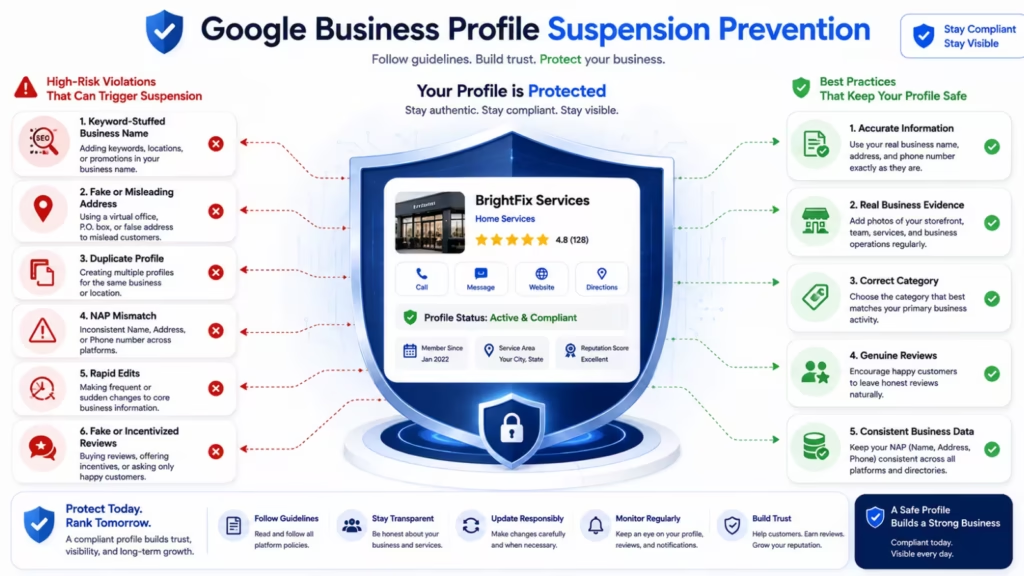
To reduce risk:
- ☐ Keep all business information accurate and consistent everywhere it appears
- ☐ Avoid rapid, frequent edits — batch changes when possible
- ☐ Maintain real evidence of business legitimacy (license, utility bill, signage photos) in case an appeal is ever needed
- ☐ Never create a second profile while an existing one is under review — this is one of the most common mistakes that delays reinstatement
Following this checklist significantly reduces suspension risk — it does not make suspension impossible, and no legitimate source claims otherwise.
27. If You’re Already Suspended: The Reinstatement Process, Briefly
- Identify the specific violation (Google typically states it in your registered email or the dashboard)
- Fix the underlying issue completely before appealing — an appeal submitted while the violation still exists is usually denied
- Gather supporting evidence (business license, utility bill, signage photos, website)
- Submit one clear, evidence-based appeal through Google’s official appeals tool rather than multiple rushed submissions
- If denied, you can submit an additional review with new evidence — but each attempt should be stronger than the last, since appeals are limited
(If your business has been through this before, our separate guide on Google Business Profile suspension covers the recovery process in more depth.)
28. GBP Performance Tracking
Monitor, at minimum:
- ☐ Searches (how customers found your profile)
- ☐ Profile views
- ☐ Calls, website clicks, and direction requests
- ☐ Messages (where enabled)
- ☐ Month-over-month trend, not just a single snapshot
Connect this to:
- ☐ Google Search Console (for website-side local search performance)
- ☐ Google Analytics (for what happens after a GBP visitor lands on your site)
- ☐ Call tracking or CRM (to connect GBP activity to actual leads, not just clicks)
29. The KPIs That Actually Matter
Ranking #1 in the map pack is not the same as running a better business. Track outcomes, not just position:
| Vanity metric | Business outcome metric |
| Map pack position | Calls and direction requests generated |
| Follower/review count alone | Review rating trend and response rate |
| Total impressions | Website clicks that convert to leads |
| — | Cost per lead / customer acquisition cost |
Google Business Profile Optimization for AI Search in 2026
This deserves its own section because the landscape genuinely shifted in 2026, not just incrementally.
According to research cited by Search Engine Journal, AI Overviews now appear for roughly 68% of local searches, compared to only about 39% of the same queries triggering a traditional local pack. That doesn’t mean the map pack is disappearing — but it does mean a meaningful share of local search traffic is now being filtered through an AI-generated summary before a user ever sees traditional results.
What current evidence suggests actually matters for AI visibility:
- Entity consistency — your business name, address, phone, categories, and services need to say the same thing everywhere Google’s AI can find them: your GBP, website, and other cited platforms
- Complete, structured profile data — GBP remains one of the primary data sources AI systems draw on to describe a local business
- Specific, descriptive review content — AI systems appear to extract “entity signals” from review text (what you actually did for a customer), which is another reason to encourage specific, honest reviews rather than generic “great service!” comments
- Well-structured website content that directly answers real customer questions — not keyword density
What’s worth being skeptical of: claims that AI has “replaced” Google Maps, or that special AI-specific schema markup is required. Google’s own AI features documentation does not require proprietary structured data beyond standard, accurate implementation — the fundamentals (accurate GBP, real reviews, clear website content) still do the heavy lifting.
Bottom line for 2026: don’t abandon traditional local SEO to chase AI visibility — build one accurate, consistent, well-reviewed presence that both traditional local search and AI systems can draw from confidently.
What Actually Matters Most — A Priority Framework
Not every item on this checklist carries equal weight. If you’re starting from scratch or triaging limited time, work in this order:
Tier 1 — Essential (do these first): Eligibility, verification, correct business name, correct primary category, accurate address/service area, correct hours, working website link, an active review-generation process.
Tier 2 — Strong Optimization: Secondary categories, complete services list, real photos, local landing pages, relevant citations, consistent review responses, early local authority building.
Tier 3 — Ongoing Maintenance: Fresh photos, continued review generation, occasional Posts, Q&A monitoring, website content updates, local PR, competitor monitoring, performance analysis.
Businesses often invest heavily in Tier 3 activities (posting frequency, photo count) while neglecting Tier 1 fundamentals (accurate category, complete services, a working review process) — that’s backwards from what the evidence supports.
Common Google Business Profile Optimization Mistakes
- Keyword-stuffing the business name — the single most common policy violation
- Choosing an irrelevant or overly broad primary category
- Setting up fake locations or misusing virtual offices for service-area businesses
- Ignoring reviews entirely, or worse, buying/gating them
- Never responding to reviews — positive or negative
- Relying only on stock photography
- Leaving hours inaccurate, especially around holidays
- Publishing dozens of thin, near-identical city landing pages
- Letting duplicate profiles compete against your main listing
- Treating Google Posts as a ranking strategy instead of an engagement tool
- Chasing map pack position while never tracking actual leads or conversions
- Copying a competitor’s spam tactics because “they’re getting away with it”
A Practical 30-Day Google Business Profile Optimization Plan
This won’t guarantee a specific ranking outcome — no legitimate plan can — but it’s a realistic, evidence-based sequence.
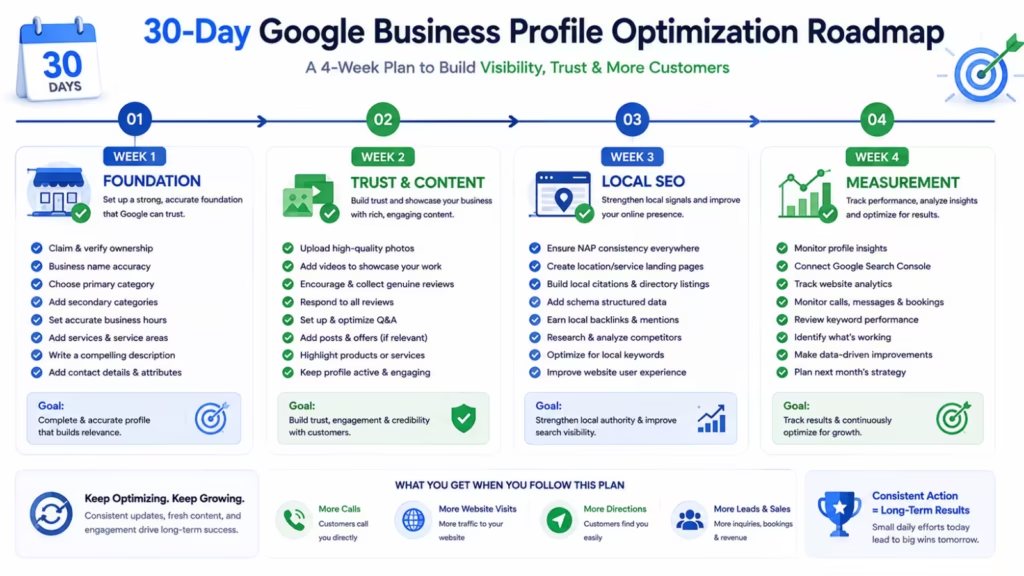
Week 1 — Foundation Claim/verify ownership → correct business name, address, hours → select the correct primary category → write the business description → complete the services list → confirm the website link and NAP consistency.
Week 2 — Trust and Content Upload/refresh photos across all categories (logo, cover, exterior, interior, team, work) → add any relevant videos → set up (or tighten) your review-request process → respond to every existing unanswered review → check and answer open Q&A.
Week 3 — Local SEO Foundation Audit and fix NAP consistency across your website and top citations → build or refresh 2–3 genuinely useful local landing pages → identify 2–3 realistic local link/authority opportunities → run the competitor analysis framework above.
Week 4 — Measurement and Iteration Set up or review GBP Insights, Search Console, and Analytics tracking → connect leads back to source where possible → review what changed in calls/clicks/direction requests since Week 1 → set your priorities for the next 30 days based on what the data actually shows.
TURN LOCAL SEARCHES INTO CUSTOMERS
Want More Calls, Directions & Leads From Google?
Let’s identify the gaps in your local search presence and build a strategy that helps your business get found by more customers in your target area.
Real-World Examples (Hypothetical, for Illustration)
Local Clinic: A single-location dental clinic selects “Dental clinic” as its primary category (not the broader “Doctor”), lists every service individually (root canal, teeth whitening, pediatric dentistry) rather than a vague “dental services” line, requests a review via WhatsApp immediately after each appointment, and links its GBP to a dedicated services page rather than a generic homepage. The combination of accurate category + granular services + consistent reviews + relevant landing page is what builds relevance and prominence together — no single field does the work alone.
Restaurant: A restaurant keeps its menu/products section current, uploads fresh food photography monthly rather than relying on opening-day photos, and asks for reviews at the point of checkout rather than hoping customers remember later. Photos and review recency both carry outsized weight for this category specifically.
Home-Service Business (Electrician): A service-area electrician confirms genuine SAB eligibility, lists only the areas actually served (not an inflated regional list), adds every specific service (panel upgrades, EV charger installation, emergency repairs) individually rather than one generic “electrical services” entry, and builds one solid landing page per genuinely served city rather than fifteen thin ones.
Digital Marketing Agency: An agency selects “Marketing agency” as its primary category, builds out individual service pages that mirror its GBP services list, actively requests reviews from completed client engagements, and pursues a few genuine local mentions (industry association listing, a local business journal feature) rather than mass citation submissions.
(These are illustrative examples for explaining how the checklist items work together — not actual client case studies.)
Summary: The Master Checklist
Use this as your working checklist — check items off as you complete them.
Foundation
- ☐ Profile claimed, verified, and correctly owned
- ☐ No duplicate profiles exist
- ☐ Business name matches real-world branding exactly
- ☐ Correct primary category selected
- ☐ Relevant secondary categories added (no stuffing)
- ☐ Address accurate (or service area accurate for SABs)
- ☐ Regular and special hours current
Content
- ☐ Business description written for humans, includes natural keywords
- ☐ All services listed individually with descriptions
- ☐ Products added where relevant
- ☐ Photos cover logo, cover, exterior, interior, team, and work — updated regularly
- ☐ Videos added where useful
Reviews and Engagement
- ☐ Active, ethical review-request process in place
- ☐ All reviews (positive and negative) receive a response
- ☐ No fake, gated, or incentivized reviews
- ☐ Q&A monitored and answered
- ☐ Posts used for engagement (not relied on for rankings)
Website and Local SEO
- ☐ Website link correct and NAP-consistent
- ☐ LocalBusiness schema implemented
- ☐ Genuine, non-templated local landing pages published
- ☐ Citations accurate and consistent across relevant directories
- ☐ Legitimate local links/authority being built
Protection and Growth
- ☐ Suspension risk factors checked and avoided
- ☐ Competitor analysis done (for strategy, not imitation of violations)
- ☐ Multi-location/SAB setup correct if applicable
- ☐ GBP Insights, Search Console, and Analytics connected
- ☐ Business outcomes (leads, calls, conversions) tracked — not just rankings
Frequently Asked Questions Google Business Profile Optimization Checklist
1. How do I optimize my Google Business Profile?
Start with the fundamentals: accurate business name, correct primary category, complete address/service area, accurate hours, a full services list, and an active review-generation process. Photos, Posts, and Q&A matter, but they build on top of a correctly completed profile — they don’t substitute for it.
2. How long does GBP optimization take to show results?
There’s no fixed timeline Google confirms, but practitioner testing suggests some changes (like adding a specific service) can affect keyword rankings within 24–72 hours, while broader prominence-building (reviews, citations, local authority) typically compounds over months rather than days.
3. What is the most important Google Business Profile ranking factor?
Based on the 2026 Whitespark survey of local SEO practitioners, the primary business category is the single most influential individual factor for relevance. But no single factor works in isolation — Google’s own guidance still frames ranking as a combination of relevance, distance, and prominence together.
4. Does adding keywords to my business name improve rankings?
It can produce a short-term visibility edge in some cases, which is exactly why the practice persists — but it directly violates Google’s guidelines, carries genuine suspension risk, and Google has documented and penalized cases of it. It’s not a recommended strategy at any point in 2026.
5. How many Google reviews do I need?
There’s no universal number Google confirms, but general local SEO benchmarks suggest 10–20+ reviews with a 4.0–4.5+ average is where most businesses start building meaningful trust and conversion lift; higher-competition categories often need more. Consistency and recency of new reviews matter as much as the total count.
6. Do Google Posts improve rankings?
Current evidence says no, not directly — a controlled 9-week Sterling Sky study tracking 441 keywords found no measurable ranking change from weekly posting. Posts remain useful for engagement, promotions, and keeping your profile looking active.
7. Does GBP affect Google Maps rankings?
Yes — GBP is the primary data source for Maps results. Category selection, completeness, reviews, and photos all feed directly into how your business appears (or doesn’t) in Maps search.
8. Can a service-area business rank on Google Maps?
Yes, but ranking is based primarily on your verified physical address relative to the searcher, not the list of areas you claim to serve. Listed service areas support eligibility and customer clarity more than they directly move rankings.
9. Can I have multiple Google Business Profiles?
Only if you have multiple genuinely eligible locations, each with its own profile. A single business should never have two profiles for the same address — this is treated as a duplicate-listing violation and can trigger suspension of both.
10. What causes a Google Business Profile suspension?
The most common 2026 triggers are keyword-stuffed business names, address/category/NAP mismatches against your other records, a burst of rapid profile edits, and duplicate listings. Most suspensions are recoverable through a proper appeal once the underlying issue is fixed.
11. Does my website affect my Google Business Profile ranking?
Yes — on-page website SEO is estimated to carry meaningful weight in local pack rankings (around 19% per the 2026 Whitespark survey), and GBP and website signals reinforce each other through NAP consistency, relevant landing pages, and schema markup.