
A veterinary clinic running Google Ads and looking only at clicks and cost-per-click is measuring the wrong thing. A campaign can post a low cost-per-click, a healthy click-through rate, and still be losing money — if most of those clicks are pet owners searching for job openings, DIY home remedies, or a completely different clinic they misremembered the name of.
Google Ads for a veterinary clinic isn’t really a traffic problem. It’s a filtering and follow-through problem: getting the ad in front of the right search, at the right moment, sending that click to a page built to convert it, and then tracking whether it actually turned into a booked appointment rather than just a click that looked good in the dashboard.
This is a practical breakdown of what a properly structured Google Ads setup for a veterinary clinic in India looks like — the keyword and campaign decisions, the parts most generic PPC guides skip, and where clinics tend to lose budget without realising it.
Table of Contents
Why Clicks and Cheap Leads Aren’t the Metric That Matters
One thing worth checking first before spending a single rupee of a veterinary clinic’s Google Ads budget: what’s actually being measured as “success.” A lot of campaigns get judged on cost-per-click or click-through rate, both of which can look excellent while producing almost no real appointments.
A cheap click from someone searching “dog ear infection home remedy” costs less than a click from someone searching “emergency vet [city] open now” — but the second click is worth far more to the clinic even at a higher cost, because it’s someone ready to book. A campaign optimised purely to bring down cost-per-click will drift toward exactly the wrong audience: broad, informational searchers who were never going to call.
What actually matters is cost per booked appointment, not cost per click or even cost per lead. A lead that never shows up, or that turns out to be a student researching a college assignment, isn’t cheap just because it cost less to acquire — it’s a wasted click that displaced a real enquiry the budget could have captured instead.
Related:- Google Ads Services Complete Guide for Businesses (2026)
How Routine and Emergency Searches Need Different Campaigns
Most veterinary clinics run one campaign covering everything. That’s a common mistake, because routine and emergency searches represent genuinely different buyers with different urgency, different willingness to compare options, and different value per click.
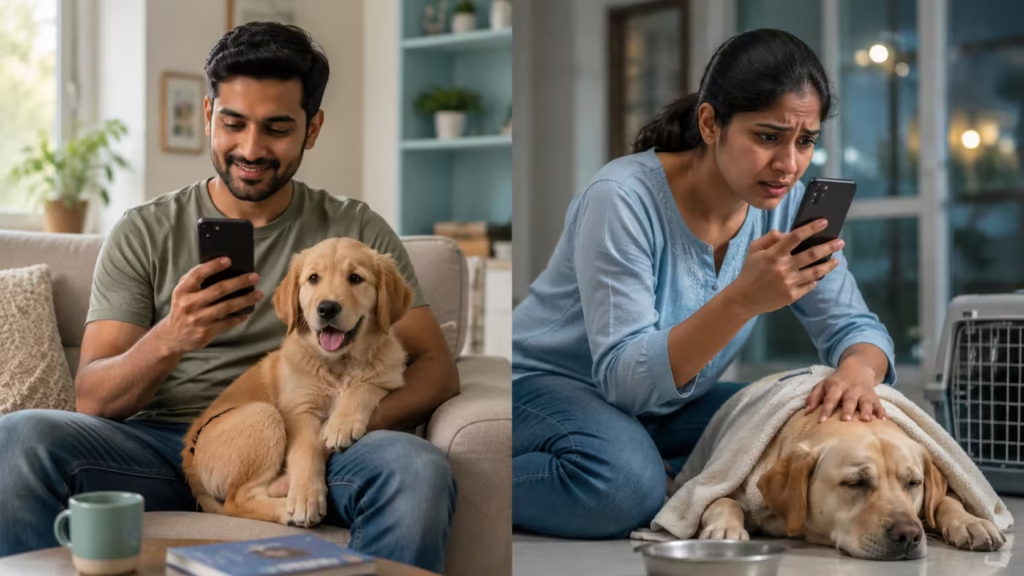
Routine-care searches — “puppy vaccination schedule,” “cat spay cost,” “dog dental cleaning near me” — come from pet owners with a day or two to decide, often comparing two or three clinics before calling. Emergency searches — “emergency vet near me,” “24 hour animal hospital,” “dog ate chocolate vet now” — come from someone who will call whichever result looks most immediately trustworthy and closest, often within minutes of searching. In most cases, they should be separated into different campaigns with different ad copy, because a single message that tries to speak to both a browsing pet owner and someone in a crisis usually undersells one or the other.
Get More Veterinary Appointments with Google Ads
Reach pet owners actively searching for veterinary care and turn high-intent Google searches into genuine appointment enquiries.
Building a Campaign Structure That Actually Reflects the Clinic
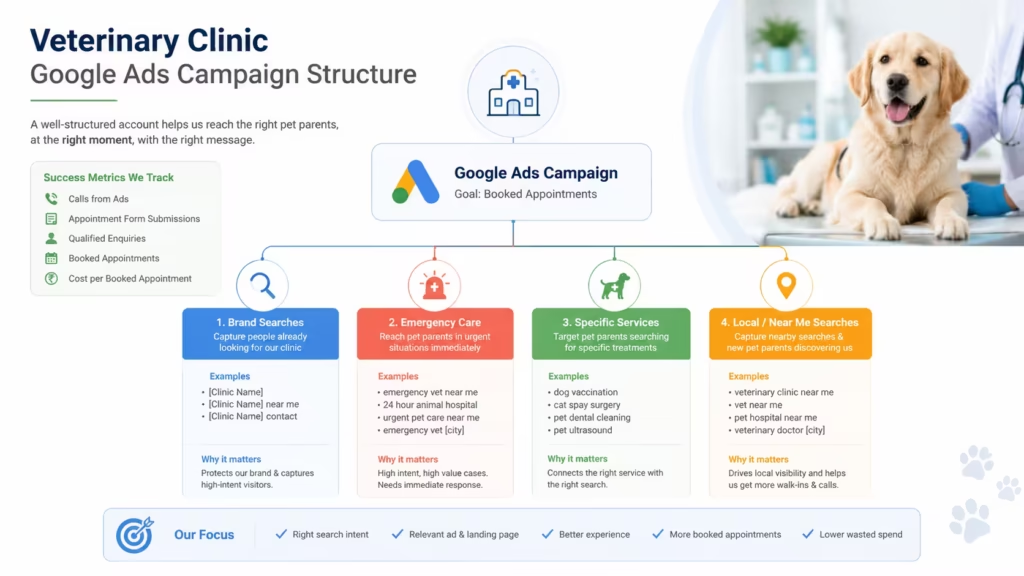
A single, broad “veterinary services” campaign tends to underperform because Google’s ad relevance systems reward tightly themed ad groups over broad ones trying to cover everything. A more effective structure segments by service and intent:
- Branded campaign — the clinic’s own name and close variations, to protect against competitors bidding on it and to capture people who already intend to visit
- Emergency/urgent campaign — “emergency vet [city],” “24 hour animal hospital,” “urgent pet care near me,” with ad copy and extensions built for immediate action
- Service-specific campaigns — vaccinations, spay/neuter, dental care, diagnostics, grooming — each with its own ad group and, ideally, its own landing page rather than all pointing to a homepage
- Local/”near me” campaign — broader local-intent terms not tied to a specific service, useful for capturing general discovery searches
Each ad group inside these campaigns should stay narrow — a handful of closely related keywords per group, with ad copy written specifically for that group’s intent, rather than one generic ad reused everywhere. Tightly themed keyword and ad groups can improve ad relevance and landing page alignment, which tends to support stronger ad quality and auction performance over time — a compounding advantage that a broad, unsegmented campaign rarely gets access to.
Also Read:- Local SEO for Veterinary Clinics in India: Getting Found When It Actually Matters
What Keywords Should a Veterinary Clinic Actually Target?
Keyword selection for veterinary Google Ads shouldn’t start with a long list of every pet-related phrase Google Keyword Planner happens to suggest. The better starting point is intent: what is the pet owner trying to do right now, and does that search indicate a realistic chance of contacting or visiting the clinic?
A practical keyword strategy can be divided into four main groups:
Emergency and High-Urgency Keywords
These searches usually come from pet owners looking for immediate help. They can justify a higher cost-per-click because the searcher’s intent is much closer to taking action.
Examples include:
- “emergency vet near me”
- “emergency veterinary clinic [city]”
- “24 hour vet [city]”
- “24 hour animal hospital [city]”
- “urgent pet care near me”
- “pet emergency hospital [city]”
- “emergency vet [area]”
These keywords should usually have their own campaign or tightly controlled ad groups, with ad copy focused on availability, location and how quickly the clinic can help. Only target terms such as “24 hour” or “open now” if the clinic can genuinely support those claims.
Must Check our guide about Digital Marketing for Veterinary Clinics: Why Pet Owners Still Can’t Find You.
Routine Care Keywords
Routine-care searches are less urgent but can still show strong commercial intent, particularly when the search includes a service and a location.
Examples include:
- “dog vaccination [city]”
- “cat vaccination near me”
- “pet vaccination clinic [area]”
- “puppy vaccination near me”
- “pet health checkup [city]”
- “veterinary clinic for vaccination [area]”
These searches often need more trust-building than emergency searches. The ad and landing page can focus on the clinic’s veterinarians, services, convenience, booking process and relevant experience.
Service-Specific Keywords
Where a clinic offers a specific service and there is enough search demand, targeting that service separately can create a much tighter connection between the keyword, ad and landing page.
Examples may include:
- “dog dental cleaning [city]”
- “pet dental clinic near me”
- “cat spaying [city]”
- “dog neutering [city]”
- “pet surgery [city]”
- “veterinary diagnostics [city]”
- “pet ultrasound [city]”
- “animal x ray [city]”
Not every service needs its own campaign. If search volume is too low, closely related services can be grouped together. The goal is relevance and control, not creating dozens of campaigns with too little data to manage effectively.
Stop Waiting for Pet Owners to Find You
A well-planned Google Ads campaign can put your veterinary clinic in front of people searching for treatment, consultations and urgent care.
General Local-Intent Keywords
These are broader searches from people looking for a veterinary provider without yet specifying the exact service they need.
Examples include:
- “veterinary clinic near me”
- “vet near me”
- “pet hospital near me”
- “veterinary doctor [city]”
- “animal hospital [area]”
- “best vet in [area]”
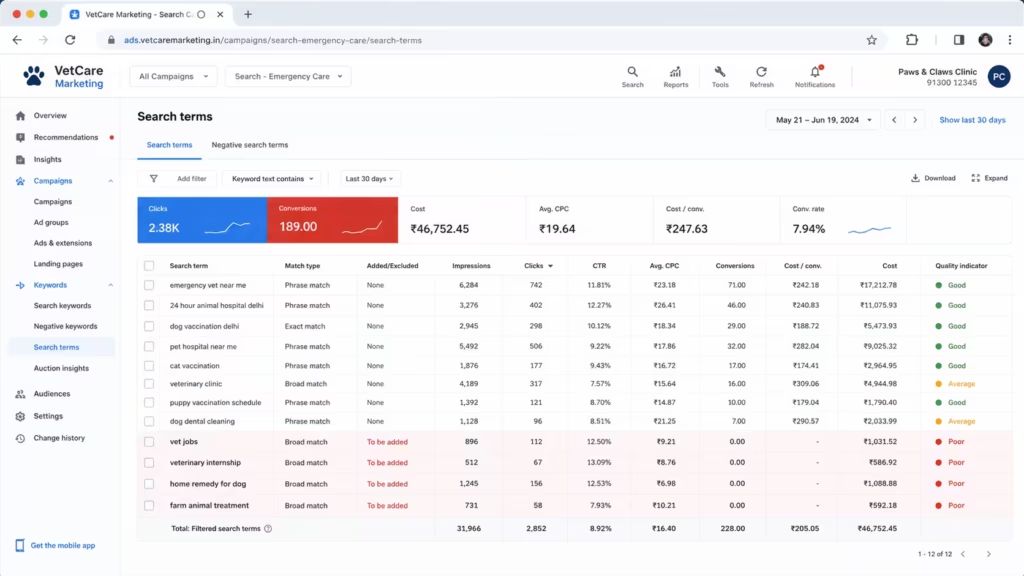
These terms can bring valuable enquiries, but they should be monitored carefully because intent can vary significantly. Search Terms data becomes particularly important here for identifying which queries are producing actual calls and booked appointments and which are simply consuming budget.
The exact keyword list should ultimately be based on the clinic’s location, services, opening hours, capacity and local search demand. A keyword with high search volume is not automatically a good keyword if the clinic cannot profitably serve the intent behind it. The objective is not to target the most keywords — it is to identify the searches most likely to produce qualified enquiries and, ultimately, real appointments.
Negative Keywords: Where Veterinary Budgets Quietly Leak
This is one of the most consistently underused tools in veterinary Google Ads accounts, and reviewing it is usually one of the fastest checks for a campaign that’s spending steadily without producing appointments.

A few categories worth reviewing against the account’s own Search Terms report, rather than excluding automatically:
- “Free” — free veterinary services, free checkups (unless genuinely offered)
- “Jobs” / “careers” / “internship” — people searching for employment, not care
- “DIY” / “home remedy” / “how to treat at home” — informational searchers with no intent to visit a clinic
- “Adoption” / “rescue” — unless the clinic specifically handles adoption-related services
- “Boarding” / “daycare” / “grooming only” — worth excluding only if these genuinely aren’t services the clinic offers; for clinics where grooming or boarding is part of the broader client funnel, excluding them can cut off real enquiries
- “Vet school” / “course” / “salary” — students and career researchers, not pet owners
- “Cheap” / “lowest cost” — review price-sensitive terms individually rather than excluding them outright; in a price-sensitive local market, some of these searches convert into genuine clients
What often goes wrong here: a clinic sets up negative keywords once at launch and never revisits the Search Terms report again. New irrelevant search patterns show up constantly, and a negative keyword list that isn’t reviewed periodically slowly stops doing its job.
Ad Copy, Quality Score and Why Generic Ads Underperform
Google’s Quality Score system rewards ads that closely match the searcher’s actual query — not clever copywriting, and not the clinic’s general brand messaging. An ad for “emergency vet [city]” that leads with “Compassionate care for your furry family member since 2015” is technically accurate and completely mismatched to what someone in a crisis is looking for in that exact moment.
What tends to work: ad copy that mirrors the specific intent of the ad group it sits in. Emergency ad groups should lead with urgency and availability — open now, call immediately, how fast the clinic can see the pet. Routine-care ad groups can lead with trust and value — experience, services offered, easy booking. A single generic ad copy reused across every ad group is one of the more reliable ways to keep Quality Score, and therefore cost-per-click, worse than it needs to be.
Extensions (Assets) That Matter Most for Veterinary Clinics
Google now calls these “assets” rather than “extensions,” but the function is the same — additional information attached to the ad that increases its size, its relevance, and usually its click-through rate. A few matter more for this category than most:
- Call assets — for a category where a meaningful share of conversions happen by phone rather than a form, a visible, tappable call button on the ad itself removes a step between searching and calling
- Location assets — pulls in the clinic’s address and a map marker directly into the ad, which matters enormously for proximity-driven, urgent searches
- Sitelink assets — links to specific pages (Book Appointment, Emergency Services, Our Services, Reviews) that let a searcher jump straight to what they actually need
- Callout assets — short trust and differentiation points (years in practice, on-site diagnostics, cat-friendly clinic, 24/7 emergency care if genuinely offered)
- Structured snippet assets — a quick, scannable list of services, useful for routine-care searches where the pet owner is comparing what different clinics offer
Landing Pages Built for How Pet Owners Actually Decide
Sending ad traffic to a generic homepage is one of the most common and most costly mistakes in veterinary Google Ads. A homepage is built to represent the whole clinic; a landing page needs to answer the one specific question the ad promised to answer.
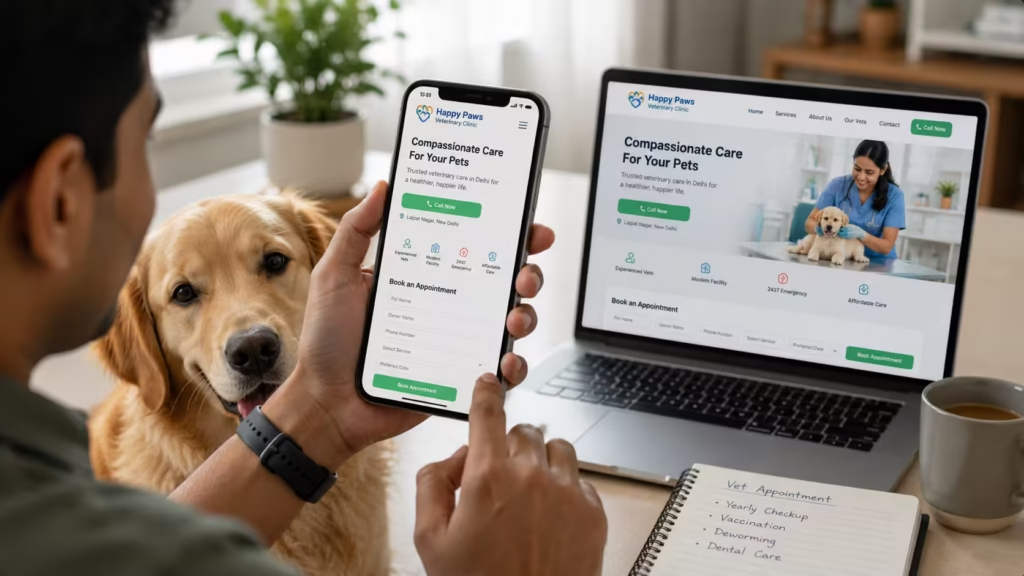
What a proper veterinary landing page needs, regardless of which campaign it’s serving:
- The clinic’s name, address and phone number visible immediately, matching exactly what’s on Google Business Profile — pet owners in a hurry are confirming proximity and legitimacy in seconds
- A visible, tappable call button and/or a short appointment form — not both competing for attention, one clear primary action
- Content matched to the specific ad group — an emergency landing page should look and read differently from a routine wellness-exam landing page
- Trust signals placed where they’ll actually be seen — years in practice, vets’ qualifications, a genuine review or two — not buried on a separate About page
- Fast load time and clean mobile layout, since the large majority of this traffic arrives on a phone, often mid-crisis
Your Ad Budget Should Generate Appointments
Don’t run generic campaigns. Build a focused Google Ads strategy around the veterinary services, locations and searches that matter to your clinic.
Conversion Tracking: The Step Most Clinics Skip
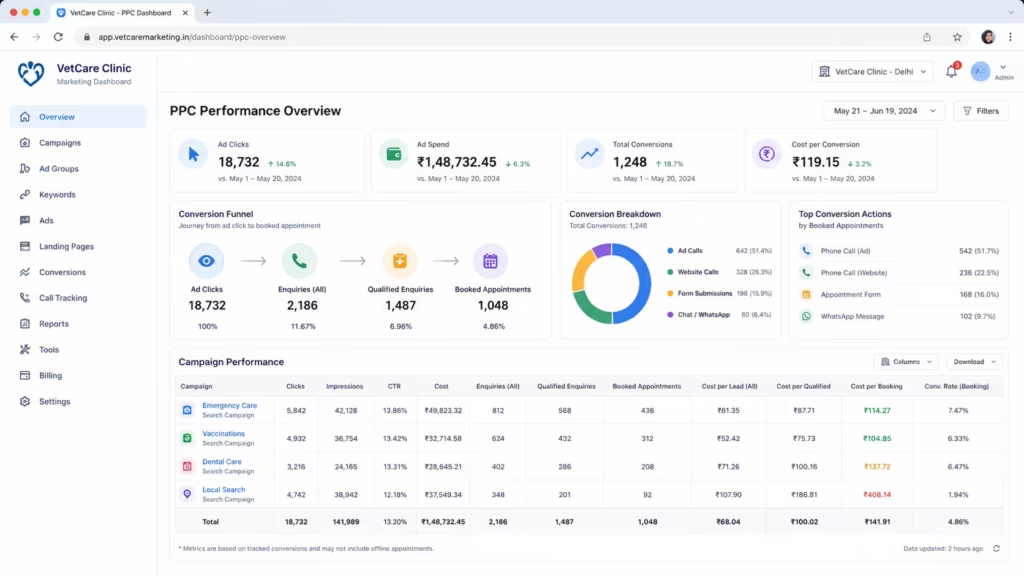
If a clinic can’t see which clicks turned into actual calls or booked appointments, every other decision in the account is being made blind. This is the single most common reason a Google Ads account gets judged as “not working” when the real issue is that nobody can see what it’s actually producing.
A proper setup tracks calls from the ad’s call asset, calls from a tracked number on the landing page, and form submissions — ideally with a way to mark which of those calls or forms actually turned into a booked appointment, fed back manually or through a simple CRM if the clinic doesn’t have call-tracking software. Without this, whoever manages the account is optimising for clicks and form-fills, which is only a proxy for the actual goal.
Remarketing: Staying Visible to People Who Didn’t Convert Yet
Not everyone who visits a veterinary clinic’s website on their first click is ready to book immediately — this applies almost entirely to routine-care research, not emergency searches. Someone searching for an emergency vet has no time for a second touch days later; the whole value of that click is in the moment. Remarketing is built for the other kind of visitor: someone comparing a couple of clinics for a new puppy’s vaccination schedule or a routine dental cleaning, who might look at two or three websites over a few days before deciding.
A few things worth setting up deliberately rather than running one generic remarketing list:
- Segment by what the visitor looked at — someone who viewed a specific service page (dental, vaccinations, diagnostics) can see an ad referencing that service, rather than a generic “come visit us” message
- Set a sensible audience window — routine-care decisions in this category are usually made within a week or two, so a remarketing list open for 30-60 days tends to work better than one left open for 180 days showing ads to people who’ve long since chosen a clinic elsewhere
- Exclude existing clients where possible — someone who’s already booked and visited doesn’t need to keep seeing acquisition-focused ads; a different, retention-focused message (or no ad at all) usually makes more sense
- Search remarketing (via Custom Segments or similar) can complement standard Display remarketing — showing up again when a warm visitor searches a related term, not only when they’re browsing unrelated sites
Budget Allocation: A Framework, Not a Fixed Number
How much a veterinary clinic should spend on Google Ads depends on the city, the number of competing clinics bidding on the same terms, and how much of the clinic’s local demand is already being captured through Local SEO and Google Business Profile. What’s more useful than a specific rupee figure is a framework for allocating whatever budget exists:
- Weight budget toward emergency and high-intent service searches first — these tend to convert at a meaningfully higher rate than broad or informational searches, even at a higher cost-per-click
- Keep a small, protected budget on the branded campaign — it’s usually the cheapest, highest-converting traffic in the account, and losing it to a competitor bidding on the clinic’s name is an avoidable loss
- If automated bidding is being used, allow enough time and enough conversion data for that bidding strategy to learn before making major performance judgments — manual bidding doesn’t follow the same learning curve, so this applies specifically to Smart Bidding and similar automated strategies, not every campaign by default
- Track spend against cost-per-booked-appointment by campaign where possible, not just overall spend — a campaign that looks expensive on paper can be the most profitable one in the account once actual appointment value is factored in
Common Google Ads Mistakes Veterinary Clinics Make
- Running one broad campaign instead of segmenting by service and search intent
- No or minimal negative keyword list, letting job-seekers, students and DIY researchers eat into the budget
- Generic ad copy reused across every ad group instead of matching copy to intent
- Sending all traffic to the homepage instead of intent-matched landing pages
- No call tracking or conversion tracking, so decisions get made on clicks and impressions instead of real outcomes
- Judging a new campaign’s performance within the first few days instead of allowing a genuine learning period
- Treating cost-per-click or cost-per-lead as the success metric instead of cost-per-booked-appointment
- Letting the branded campaign lapse, allowing competitors to bid on the clinic’s own name
What a Complete Google Ads Strategy for a Veterinary Clinic Should Include
“We’ll run some Search ads and send a monthly report” isn’t a strategy for a category this local and time-sensitive — it’s a placeholder for one. A genuinely complete setup covers each of these as a distinct, deliberate piece:
- Campaign structure — segmented by branded, emergency, service-specific and local-intent campaigns, not one broad catch-all
- Keyword strategy — a mix of routine and emergency terms, matched to tightly themed ad groups
- Negative keyword management — set up at launch and reviewed on an ongoing basis against the Search Terms report
- Ad copy — written specifically per ad group’s intent, not one generic message reused everywhere
- Assets — call, location, sitelink and callout assets configured and kept current
- Landing pages — intent-matched, with visible NAP, a clear primary action, and genuine trust signals
- Conversion tracking — calls, forms, and ideally booked-appointment outcomes fed back into the account
- Remarketing — a standing campaign for past visitors who haven’t converted yet
- Reporting — cost-per-booked-appointment by campaign, not just clicks and impressions
What to Look for in a Google Ads Agency for a Veterinary Clinic
Plenty of clinic owners can run a basic Search campaign themselves, particularly a tightly scoped branded and emergency campaign. Bringing in a veterinary Google Ads agency or a PPC specialist tends to make more sense once the account needs proper segmentation across multiple services, once conversion tracking and call tracking need setting up correctly, or once the owner’s time is worth more spent on patient care than managing bids and Search Terms reports.
A few questions worth asking any Google Ads management provider or vet advertising agency being considered for this work:
- Do they structure campaigns around search intent (routine vs emergency), or run one generic “veterinary services” campaign?
- Will they set up call tracking and conversion tracking from the start, or only report on clicks and impressions?
- Do they build and maintain a negative keyword list on an ongoing basis, or set it once and leave it?
- Can they explain how they’ll measure cost-per-booked-appointment, not just cost-per-click or cost-per-lead?
- Are they upfront about the learning period new campaigns need, or do they promise fast, fixed lead volumes no legitimate agency can honestly guarantee?
Ready to Grow Your Veterinary Clinic?
Let’s build a Google Ads strategy designed to help your clinic attract relevant pet care enquiries and make better use of its advertising budget.
A Note for the Indian Market Specifically
Google’s Local Service Ads format — the pay-per-lead, “Google Guaranteed” badge product some clinic owners may have come across in international guides — isn’t available for veterinary practices in India as of this writing. Platform availability changes over time, so this is worth re-checking directly with Google before ruling it out; for now, standard Search campaigns, built with the structure and tracking described above, remain the practical option for veterinary clinics and pet hospital Google Ads in India.
It’s also worth accounting for how differently tier-1 and tier-2 Indian cities can behave in this category. In dense metros like Delhi NCR, Mumbai or Bangalore, competition for veterinary keywords is often real, and Quality Score, negative keyword hygiene and landing page relevance tend to matter more because every inefficiency is being paid for at a more competitive auction. In smaller tier-2 cities, competition can be lighter, which often means lower costs, but total search volume is often lower too — so campaigns may need broader local-intent keywords just to have enough volume to learn from and optimise properly.
Ready to Turn Search Traffic Into Booked Appointments?
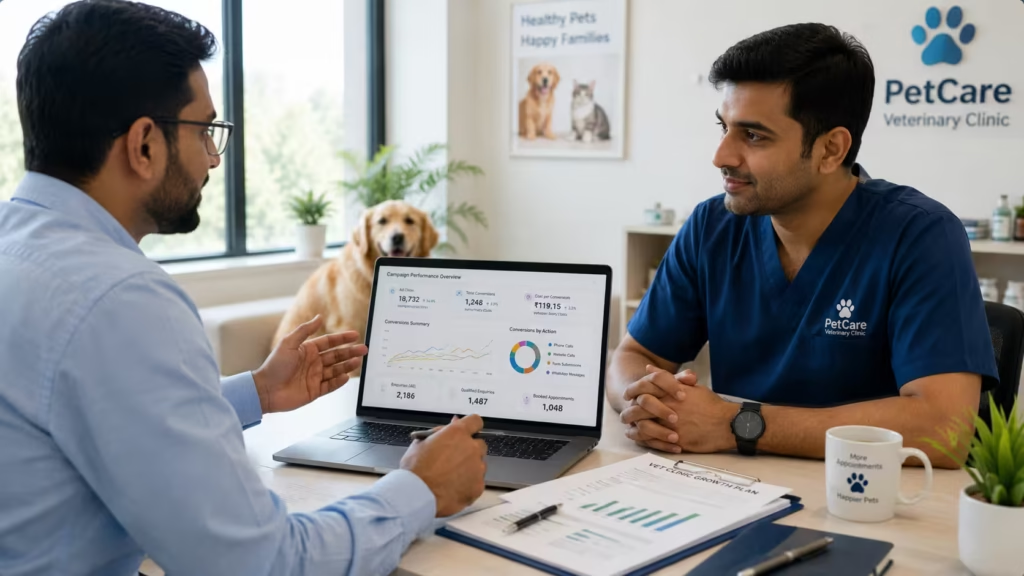
At Grow My Biz Digital, we manage Google Ads for healthcare and veterinary clinics across Delhi NCR, offering veterinary clinic lead generation built around search intent rather than raw click volume. If you’d like a straightforward review of your current account — campaign structure, wasted spend sitting in your Search Terms report, whether calls and forms are actually being tracked, and what your real cost per booked appointment looks like — get in touch and we’ll walk you through it.
Frequently Asked Questions Google Ads for Veterinary Clinics in India
Should a veterinary clinic focus Google Ads on clicks or on something else?
Neither clicks nor cost-per-click should be the main success metric. Cost per booked appointment is the number that actually reflects whether a campaign is working — a cheap click that never turns into a visit isn’t cheap in any way that matters to the clinic.
What are the most important negative keywords for veterinary Google Ads?
Terms like free, jobs, DIY, home remedy, adoption, boarding, and vet school consistently pull in searchers with no intent to book a paid visit. These should be excluded from the start and reviewed periodically against the account’s Search Terms report.
Are Google Local Service Ads available for veterinary clinics in India?
No — Local Service Ads, the pay-per-lead “Google Guaranteed” format available for some categories internationally, isn’t available for veterinary practices in the Indian market at the time of writing. Standard Search campaigns remain the practical route here.
Should routine and emergency veterinary searches be in the same campaign?
They perform better separated. Emergency searches are urgent, proximity-driven and typically convert faster, while routine searches involve more comparison and benefit from trust-building ad copy — mixing them into one campaign usually means the ad copy and bidding strategy suit neither well.
How long before a veterinary clinic’s Google Ads campaign shows real results?
New campaigns need a genuine learning period — typically a few weeks — before Google’s bidding systems have enough conversion data to optimise well. Judging results within the first few days is one of the most common reasons clinics conclude Google Ads isn’t working for them.