
Seeing a competitor sit above your business in the Map Pack doesn’t automatically mean they have “better SEO.” It might mean they’re physically closer to the person searching. It might mean their category is a slightly better match for that specific query. It might mean they’ve spent three years building reviews you haven’t started collecting yet — or, occasionally, it means they’re bending a rule Google hasn’t caught yet.
The mistake most business owners make is assuming it’s one thing, copying whatever that competitor is visibly doing, and hoping it works. A more useful approach is to actually find the gap: separate what’s controllable from what isn’t, and fix the controllable part systematically. That’s what this guide walks through.
In local SEO audits, one pattern comes up repeatedly: businesses often assume their competitor is ranking because of one obvious advantage—usually reviews, keywords, or a better-optimized profile. Once the profiles are compared across multiple ranking factors, the real gap is often somewhere else.
Table of Contents
How Google Maps Rankings Actually Work
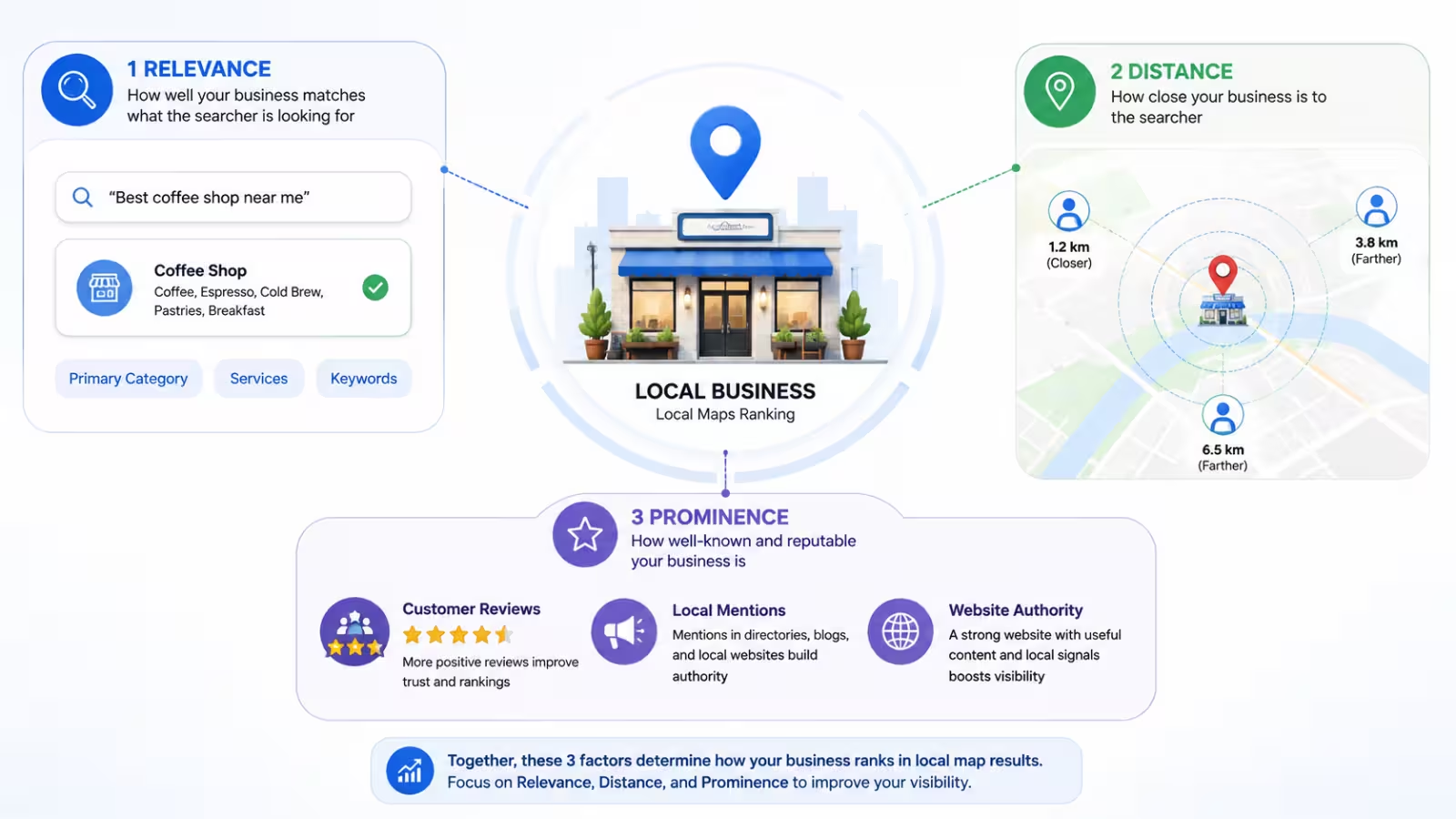
Google states directly, through its own Business Profile documentation, that local ranking comes down to three factors:
- Relevance — how well your business matches what the searcher typed
- Distance — how close you are to the searcher (or the location implied in their search)
- Prominence — how well-known and reputable your business is
That’s confirmed by Google itself. What’s not confirmed is exactly how much weight each one carries — that comes from industry testing, not Google’s own disclosure, and it’s worth keeping that distinction honest throughout this article.
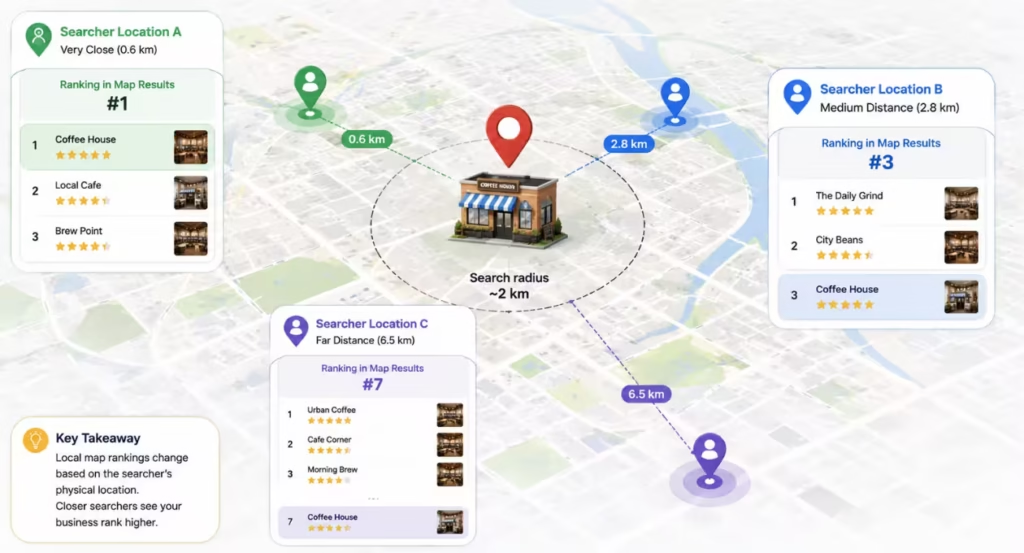
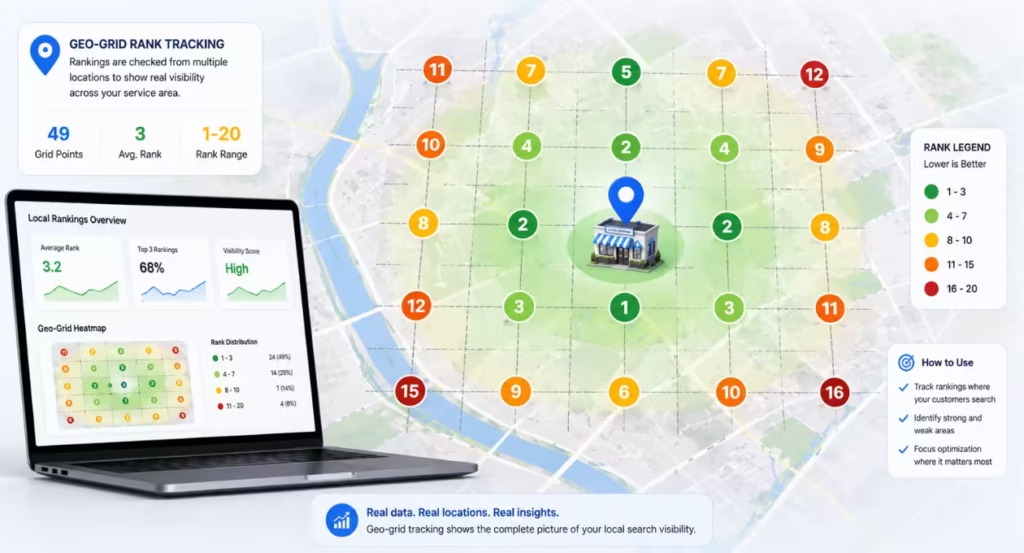
One example of the difference this makes in practice: the same “dentist near me” search run from two locations three kilometers apart can return two completely different Map Packs. There is no single, universal ranking position for your business — only a ranking relative to a specific searcher’s location, at a specific moment.
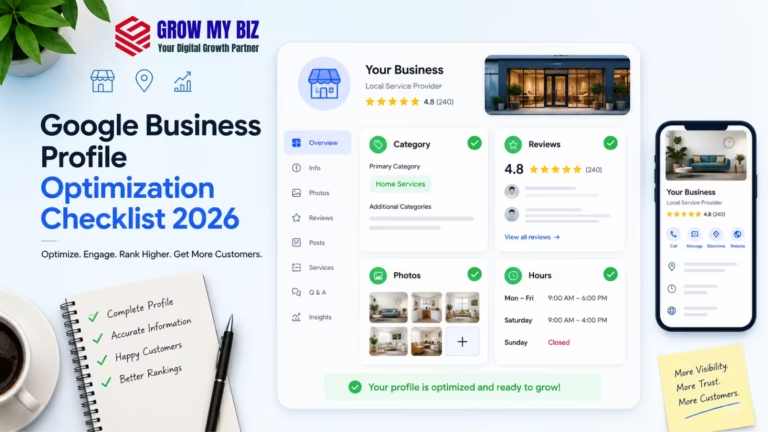
Check our Complete Google Business Profile Optimization Checklist 2026.
Step One: Are You Even Comparing Rankings Correctly?
Before diagnosing “why” a competitor outranks you, confirm you’re not chasing a false signal. A single manual search tells you almost nothing reliable, because local rankings vary by:
- The searcher’s exact location — not just the city, but the specific point they’re searching from
- Mobile vs. desktop — Google Maps results are clicked roughly 2.7x more often on mobile than desktop, and mobile searches carry GPS-precise location data that desktop searches often don’t
- The specific keyword used — “dentist near me,” “dentist [city],” and “cosmetic dentist [neighborhood]” can each return different Map Packs
- Personalization — search history and saved places can shift what an individual searcher sees
This is where geo-grid rank tracking becomes useful. Instead of one search from one location, think of it as checking your Google Maps ranking from multiple locations instead of checking only from your office. A geo-grid tool shows these results as a heatmap rather than a single ranking number.
It’s common for a business to rank #1 within a few blocks of its own address and #9 just a mile or two away — and have no idea, because they only ever checked from their office. If your service area is more than a couple of kilometers wide, a single-point check is not a reliable diagnostic tool.
Check our comprehensive guide about Local SEO for Law Firms in India.
LOCAL SEO COMPETITOR ANALYSIS
Is Your Competitor Getting More Customers From Google Maps?
We’ll analyze your Google Business Profile, reviews, categories, services, website and local SEO signals — and help you identify what’s holding your business back from competing more effectively on Google Maps.
Is Your Competitor Actually More Relevant?
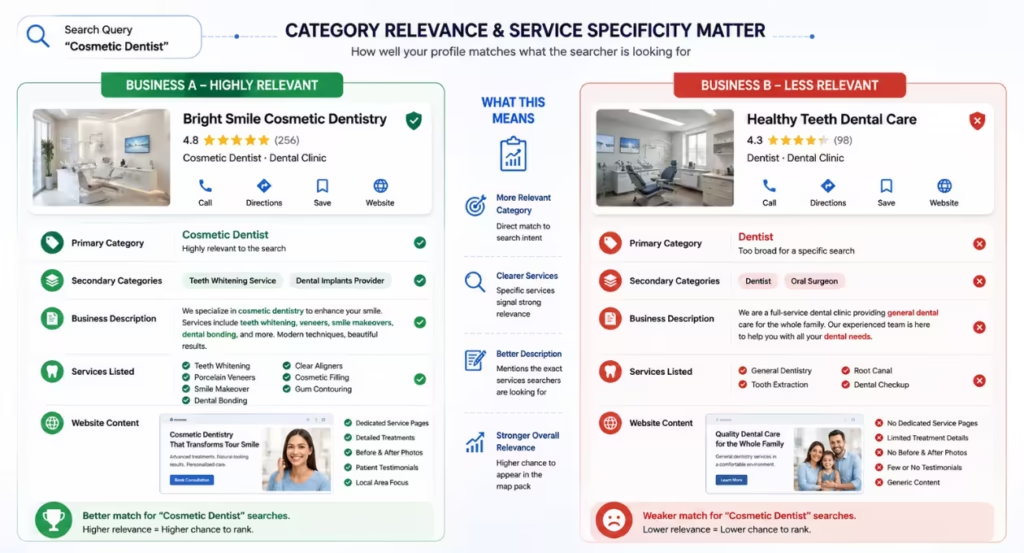
Relevance isn’t just “do you offer this service” — it’s how clearly and specifically your profile and content communicate that you do. Compare:
- Primary category — the single most heavily weighted individual GBP factor according to Whitespark’s 2026 Local Search Ranking Factors survey of practicing local SEOs
- Secondary categories — genuinely relevant additions, not padding
- Services listed — specific and complete, or vague and generic
- Business description and website content — does it name the exact service someone searched for, or only imply it
Example: for the query “cosmetic dentist,” a profile categorized simply as “Dentist” is competing against a less-relevant match than one categorized as “Cosmetic dentist.” Neither guarantees a ranking outcome on its own — but the more specific category can give that profile a relevance advantage for that particular search.
Investigation steps:
- Identify 3–5 competitors who consistently appear for your actual target queries (not random nearby businesses)
- Check their primary and secondary categories
- Compare against your own — does your category still accurately reflect your core business, or has your business evolved past it?
Don’t change your category just because a competitor uses a different one — it has to genuinely describe what you do, or it creates its own relevance and policy problems.
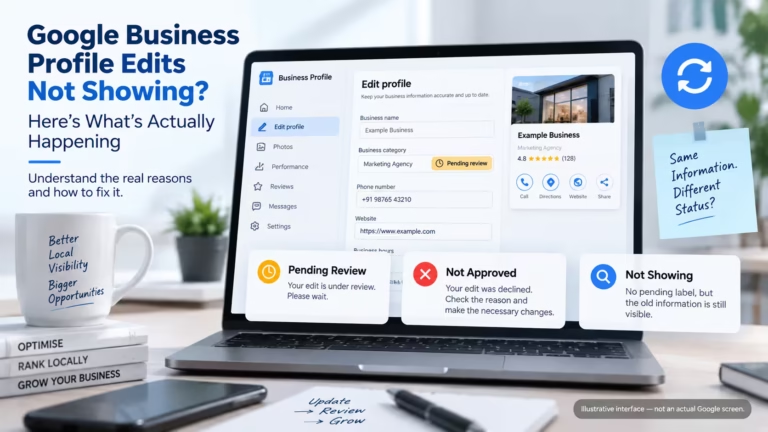
Please check our guide if your Google Business Profile Edits Not Showing? Here’s What’s Actually Happening.
Distance: The Factor You Cannot Fully “SEO Away”
This deserves its own section because it’s the factor most business owners misunderstand — and the one most tempted to cheat.
If a competitor is 1 kilometer from a searcher and you’re 8 kilometers away, no amount of reviews or keywords fully closes that gap for that specific search. Google’s algorithm weighs proximity heavily, and for many competitive local queries, it’s becoming one of the more dominant of the three factors — which is exactly why geo-grid data (above) shows such dramatic swings between nearby points.
What businesses should never do about this:
- Create a fake location or rent a virtual office purely to appear closer
- Stuff a neighborhood or city name into the business name
- Set up a second GBP listing at an address the business doesn’t operate from
These aren’t just against Google’s guidelines — they’re common triggers for profile suspension, and the short-term visibility gain rarely survives long enough to be worth the risk.
What’s actually within your control: You can’t move your storefront, but you can improve relevance and prominence enough to compete for searches coming from somewhat farther away — you just can’t expect to out-rank someone objectively closer for a search happening right outside their door.
Prominence: Is Your Competitor More Established?
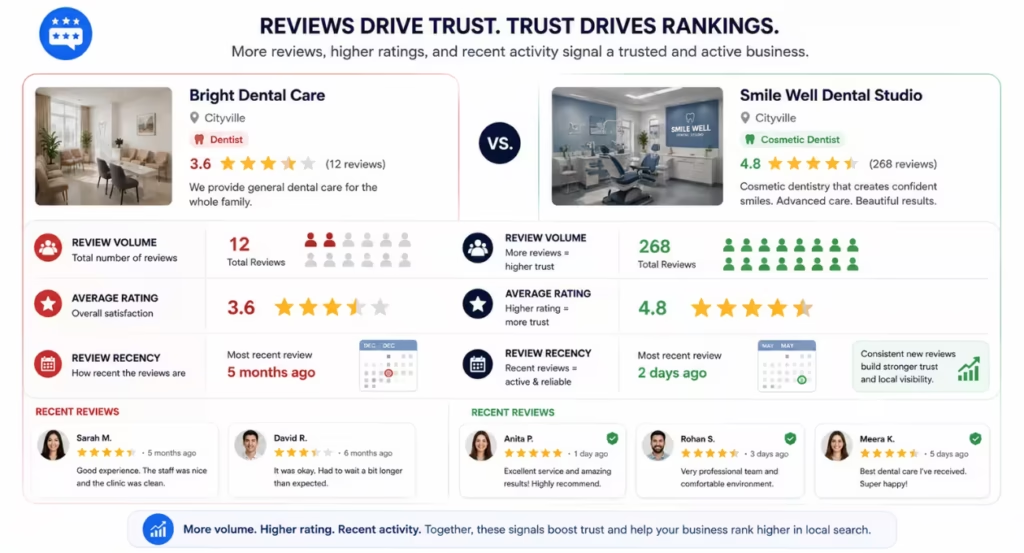
Prominence is Google’s term for how well-known and trusted your business appears to be, based on signals like reviews, mentions, and overall web presence — it isn’t the same as raw popularity. Legitimate contributors include:
- Review volume, quality, and recency
- Local mentions, press, and citations
- Website authority and relevant backlinks
- General brand visibility online
Be cautious about treating every individual item on this list as an independently confirmed Google ranking signal — Google has confirmed prominence matters, not the exact formula behind it.
Reviews: One of the Most Important Prominence Signals
This is worth comparing in detail because the data on review influence is unusually strong for 2026:
| Your business | Competitor | |
| Review count | 42 | 310 |
| Average rating | 4.4 | 4.7 |
| Recent reviews (last 90 days) | 2 | 18 |
A gap like this is meaningful — but “more reviews automatically wins” is an oversimplification. What the evidence actually supports:
- Whitespark’s 2026 survey found businesses with a 4.0+ star rating appear roughly 58% more often in the Local Pack than lower-rated businesses
- BrightLocal’s 2026 Local Consumer Review Survey found 97% of consumers read reviews before choosing a local business, and 41% now “always” check — up from 29% the year before
- Review recency carries real weight: a business with two reviews from three years ago signals something very different than one with eighteen from the last quarter
Never respond to a review gap with: buying reviews, incentivizing them, gating them (only asking happy customers), or review-from-employee tactics — all explicitly prohibited by Google and increasingly easy for both Google and consumers to detect.
What legitimately closes the gap: a consistent request process at the moment of genuine customer satisfaction (WhatsApp, QR code, direct link), sent to every customer rather than filtered ones, and a habit of responding to every review — positive and negative — since Google indexes your response text as an additional relevance signal.
LOCAL SEO COMPETITOR GAP ANALYSIS
Don’t Know Why Your Competitor Ranks Higher?
We’ll compare your Google Business Profile, reviews, categories, services, website and local authority against the competitors appearing above you — so you know exactly which gaps deserve your attention first.
Is Your Competitor’s Website Stronger for Local Search?
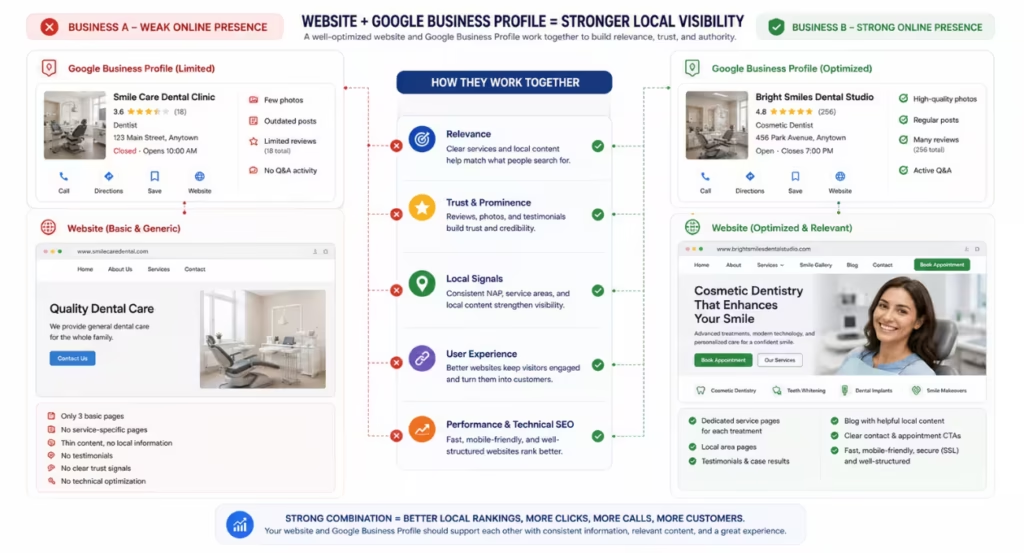
A Google Business Profile doesn’t operate in isolation. Compare:
- Whether their website has dedicated, substantive service pages (not just a homepage mentioning services in passing)
- Local landing pages with genuinely unique content — real testimonials, specific service details, not templated text with the city name swapped
- NAP (Name, Address, Phone) consistency between their website and their GBP
- Basic technical quality: mobile usability and page speed
- LocalBusiness structured data implementation
A competitor with a stronger Google Business Profile and a more useful website may have an advantage because both give Google and customers more information about the business. It’s one input among several, not a silver bullet.
A caution on local landing pages specifically: mass-producing dozens of near-identical city pages (same content, city name swapped) tends to be treated as low-value “doorway” content rather than a genuine ranking asset. A handful of substantive, unique pages consistently outperforms a large volume of thin ones.
Local Citations and Authority
Compare your presence against your competitor’s across:
- Major and industry-specific directories
- NAP consistency (name, address, phone matching exactly, everywhere)
- Local backlinks — signals that show your business is recognized and trusted in your local market, such as relevant local links, press mentions, associations, and partnerships.
The goal is accuracy and relevance, not volume. Submitting to hundreds of low-quality directories doesn’t reliably outperform a smaller number of accurate, relevant, trustworthy citations — and inconsistent NAP data across many directories can actively work against you.
Avoid entirely: paid link schemes, automated backlink services, PBNs, and irrelevant directory spam. These carry real policy and trust risk for limited, unreliable upside in 2026’s environment.
Google Business Profile Completeness: Are They Simply More Useful?
Compare categories, services, products, hours, photos, videos, and Q&A completeness side by side. It’s tempting to treat a 100%-complete profile as a guaranteed ranking win — it isn’t. What’s actually supported: a complete, accurate profile improves the quality of information Google and customers can use to evaluate relevance and make a decision. It supports the outcome; it doesn’t guarantee the ranking on its own.
Photos specifically: Google’s own published data shows businesses with photos get 42% more requests for directions and 35% more website clicks than businesses without them. If your competitor has 40 recent, real photos and you have 3 stock images from setup day, that’s a genuine trust and engagement gap worth closing — independent of whatever direct ranking effect exists.
Could Your Competitor Be Using Spam?
Occasionally, a competitor really is outranking you through a genuine policy violation:
- A keyword-stuffed business name (“Best Plumber Delhi 24/7 | ABC Plumbing”)
- A fake address or virtual office for a business that isn’t actually present there
- A duplicate profile competing alongside their legitimate one
- Reviews that show clear signs of manipulation (bursts of 5-star reviews from accounts with no other review history, near-identical wording, etc.)
Investigate before assuming — an unusually strong competitor isn’t automatically a spammy one. If you find a genuine, verifiable violation, Google provides a legitimate reporting path through the listing itself. What to avoid: mass reporting based on suspicion alone, or using the reporting system as a competitive weapon rather than a genuine policy flag. Misuse tends to backfire and wastes the time of the one channel that actually helps when violations are real.
Why Copying Your Competitor Isn’t the Answer
“They have 310 reviews, so I need 310 reviews” and “they added a keyword to their name, so I should too” are both common instincts — and both miss the point. Competitors differ from you in ways that make direct imitation unreliable: business age, starting review base, market conditions, physical location, and category eligibility all vary. Some of what a competitor does may not even be helping them — it may simply be coinciding with an advantage from a completely different factor, like proximity.
The more reliable process is: analyze → identify the actual gap → prioritize what’s controllable → improve it → measure the result.
The Competitor Gap-Analysis Framework
A repeatable process, not a one-time check:
- Identify 3–5 real competitors — businesses that consistently appear for your actual target queries, not just “who’s nearby”
- Record their location relative to your typical customer base
- Compare categories — primary and secondary
- Compare reviews — count, rating, recency, and quality
- Compare services — specificity and completeness
- Compare GBP content — photos, videos, Q&A, products
- Compare websites — service pages, local landing pages, technical quality
- Compare citations — accuracy and relevance, not just count
- Compare backlinks/local authority
- Check for genuine spam or policy violations
- Run a geo-grid scan if your service area is wider than a couple of kilometers
- Turn findings into a prioritized action plan
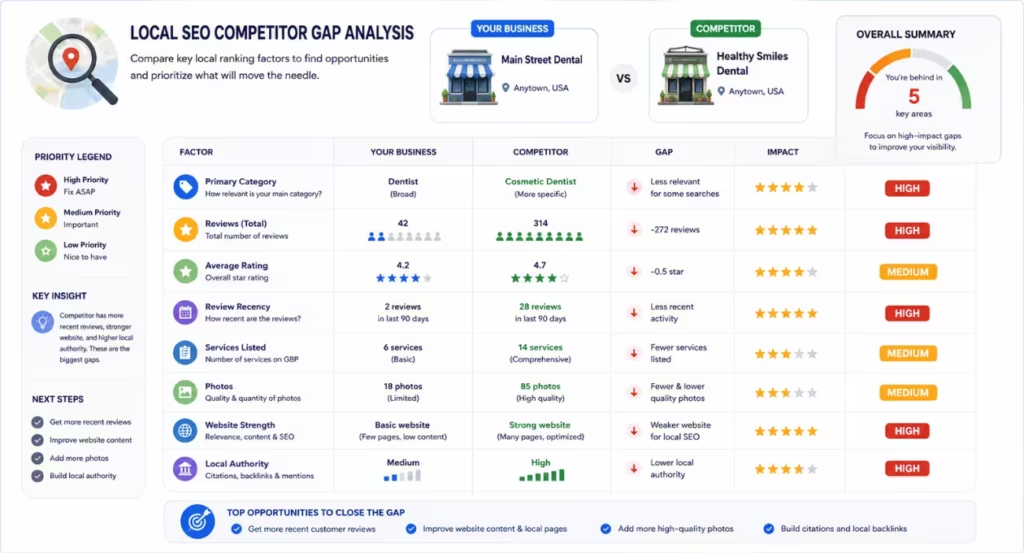
The important part isn’t simply collecting competitor data. The goal is to identify which differences are actually meaningful. A competitor may have more reviews, for example, but if your category, proximity, and website relevance are comparable, reviews may not be the only reason you’re losing visibility.
Gap Analysis Table (fill this in for your top competitor)
| Factor | Your Business | Competitor | Gap | Priority |
| Primary Category | Dentist | Cosmetic Dentist | Competitor has a closer category match | High |
| Reviews | 42 | 310 | 268 reviews behind | Medium |
| Rating | 4.4 | 4.7 | 0.3★ gap | Medium |
| Review Recency | 2 / 90 days | 18 / 90 days | Competitor is more active | High |
| Services | 6 listed | 14 listed | Several relevant services missing | Medium |
| Photos | 12 | 48 | Competitor has stronger visual coverage | Low |
| Website | Basic | Dedicated service pages | Content depth gap | High |
| Local Authority | Limited | Several local mentions | Authority gap | Medium |
Use it to separate “genuinely missing” from “already comparable” — The goal is to identify the 2–3 specific gaps that matter most, rather than trying to improve everything at once.
What to Fix First
Priority 1 — Fix immediately: Incorrect business information, wrong category, duplicate listings, eligibility problems, inaccurate address or service area, major website errors.
Priority 2 — Build the signals that help you compete: Review volume and recency, service list completeness, website/local page relevance, citation accuracy, legitimate local authority.
Priority 3 — Ongoing optimization: Fresh photos, review responses, Q&A monitoring, continued local content, competitor monitoring.
Fix foundational problems before chasing advanced tactics — a wrong category or duplicate listing undermines every other improvement you make on top of it.
LOCAL SEO & GOOGLE MAPS GROWTH
Ready to Get More Local Customers From Google?
Stop guessing what your competitors are doing differently. Get a practical local SEO strategy focused on your Google Business Profile, website, reviews, local relevance and the factors you can actually improve.
How Long Does It Actually Take?
There’s no universal timeline, and any article promising a specific number of days is guessing. What’s realistic: some profile corrections (fixing a category, completing services) can reflect in weeks. Gaps in reviews, local authority, and website strength typically take months of consistent effort to close meaningfully. Website and local content improvements need time to be crawled, indexed, and trusted. And if the main reason you’re losing is proximity, no timeline closes that for the specific searchers closest to your competitor.
What NOT to Do
- Keyword-stuffing your business name
- Fake addresses or fake GBP listings
- Buying, incentivizing, or gating reviews
- Spam citations or automated backlinks
- Mass-produced thin local landing pages
- False spam reports against competitors
Each of these can create policy problems, damage trust, and lead to short-term gains that disappear once the tactic is detected.
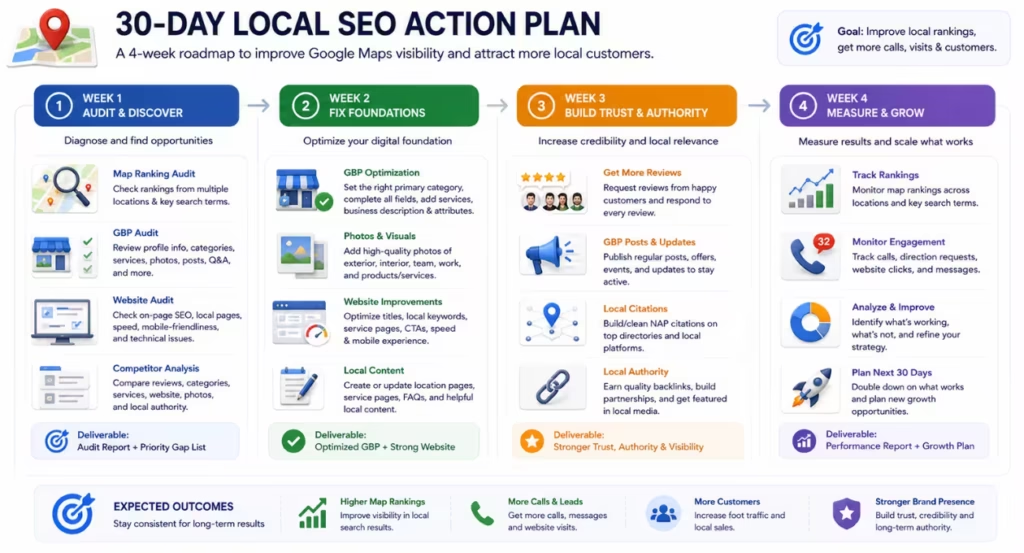
A Practical 30-Day Plan
Week 1 — Audit: Verify ranking data with a geo-grid check if your area is wide. Identify real competitors. Compare location, category, GBP completeness, and reviews.
Week 2 — Fix Foundations: Correct any inaccurate GBP information. Confirm your category is still the right match. Update services and description. Fix major website issues.
Week 3 — Build Trust and Authority: Set up a consistent review-request process. Respond to every outstanding review. Add real, recent photos. Audit and correct citation accuracy.
Week 4 — Measure: Re-check rankings (geo-grid, not a single search). Track calls, website clicks, and direction requests — not just position. Note what’s still gapped and plan the next cycle.
This is an optimization framework, not a ranking guarantee — no legitimate source can promise a specific outcome or timeline.
A Practical Local SEO Observation
In competitor analyses, the business ranking below a competitor does not always have one obvious weakness. For example, a business may have a similar rating but significantly fewer recent reviews, a weaker service structure on its website, or less local authority. In other cases, the difference may simply be proximity to the searcher. This is why comparing several ranking factors together is more useful than trying to identify a single “ranking trick.”
Real-World Example (Hypothetical)
A dental clinic comparison:
Your business: 80 reviews (4.3 average), correct category, basic website with a single generic “Services” page, no dedicated local content.
Competitor: 140 reviews (4.6 average, several from the last month), same category but with each service listed individually, dedicated pages for teeth whitening and root canal treatment with real patient testimonials, and a chamber-of-commerce listing.
Run through the framework: category is comparable (not the gap), proximity is comparable (not the gap) — the real gaps are review recency/volume and website depth. That’s where the next 30 days of effort should go, not into copying an unrelated tactic or guessing.
(Illustrative example only — not an actual client case study.)
🔎 Local SEO Competitor Analysis
Want to Know Why Your Competitor Ranks Higher?
If your business is consistently appearing below competitors on Google Maps, guessing isn’t enough. A competitor gap analysis can show whether the difference is coming from proximity, categories, reviews, website relevance, local authority, or other factors.
Grow My Biz Digital can help you identify the gaps in your Google Business Profile and local search presence and turn them into a practical optimization plan.
→ Get a Google Maps / Local SEO Competitor AnalysisThe Bottom Line
A competitor ranking above you on Google Maps is a starting question, not a final verdict. Some of the gap will be genuinely outside your control — you can’t relocate your business closer to every searcher. But most of it comes down to identifiable, fixable differences in category accuracy, review consistency, website depth, and profile completeness. Run the comparison honestly, fix what’s actually controllable, and measure with tools that reflect how local rankings really work — not a single search from your own office. The Highest-Leverage Prominence Signa
FAQs Why Is My Competitor Ranking Higher on Google Maps?
1. Why does my competitor rank higher than me on Google Maps?
Usually a combination of relevance, distance, and prominence — not one single cause. The gap-analysis framework above helps identify which factor is actually driving the difference for your specific market.
2. Does having more Google reviews guarantee higher rankings?
No. More reviews correlate with stronger prominence and consumer trust, and Whitespark’s 2026 data shows highly-rated businesses appear more often in the Local Pack — but it’s one signal among several, not an automatic win.
3. Does Google Maps ranking depend on location?
Yes, heavily. The same business can rank very differently just a few kilometers apart for the same search — this is why single-point manual checks are unreliable.
4. Can I outrank a competitor with more reviews?
Yes, if your relevance and proximity advantages are strong enough to offset the review gap — review count is influential, not decisive on its own.
5. Does my website affect Google Maps rankings?
Yes. Your website can support your local search visibility by helping Google understand your services, locations, and relevance to the search, working alongside your GBP rather than separately from it.
6. Does changing my GBP category improve rankings?
Only if your current category is genuinely inaccurate. Changing to a more accurate, specific category can help relevance; changing purely to copy a competitor without it truly fitting your business can create its own problems.
7. How do I compare my Google Business Profile with competitors?
Use a structured framework — category, reviews, services, photos, website, citations — rather than a single glance. The gap-analysis table above is a starting template.
8. How long does it take to improve Google Maps rankings?
No fixed timeline. Some fixes reflect within weeks; authority and review-based gaps typically take months of consistent effort.
9. Can I report a competitor for using a fake address?
Yes, if you’ve genuinely verified a policy violation — Google provides a reporting path through the listing. Don’t use it based on suspicion alone or as a competitive tactic.
10. Can a business rank higher than a competitor located closer to the searcher?
Sometimes — strong relevance and prominence can offset a moderate distance disadvantage — but for a searcher standing right next to a closer, comparably-relevant competitor, distance is difficult to fully overcome.