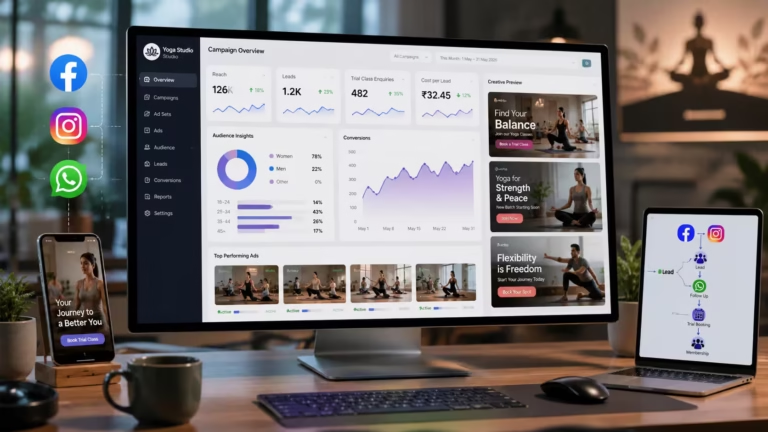

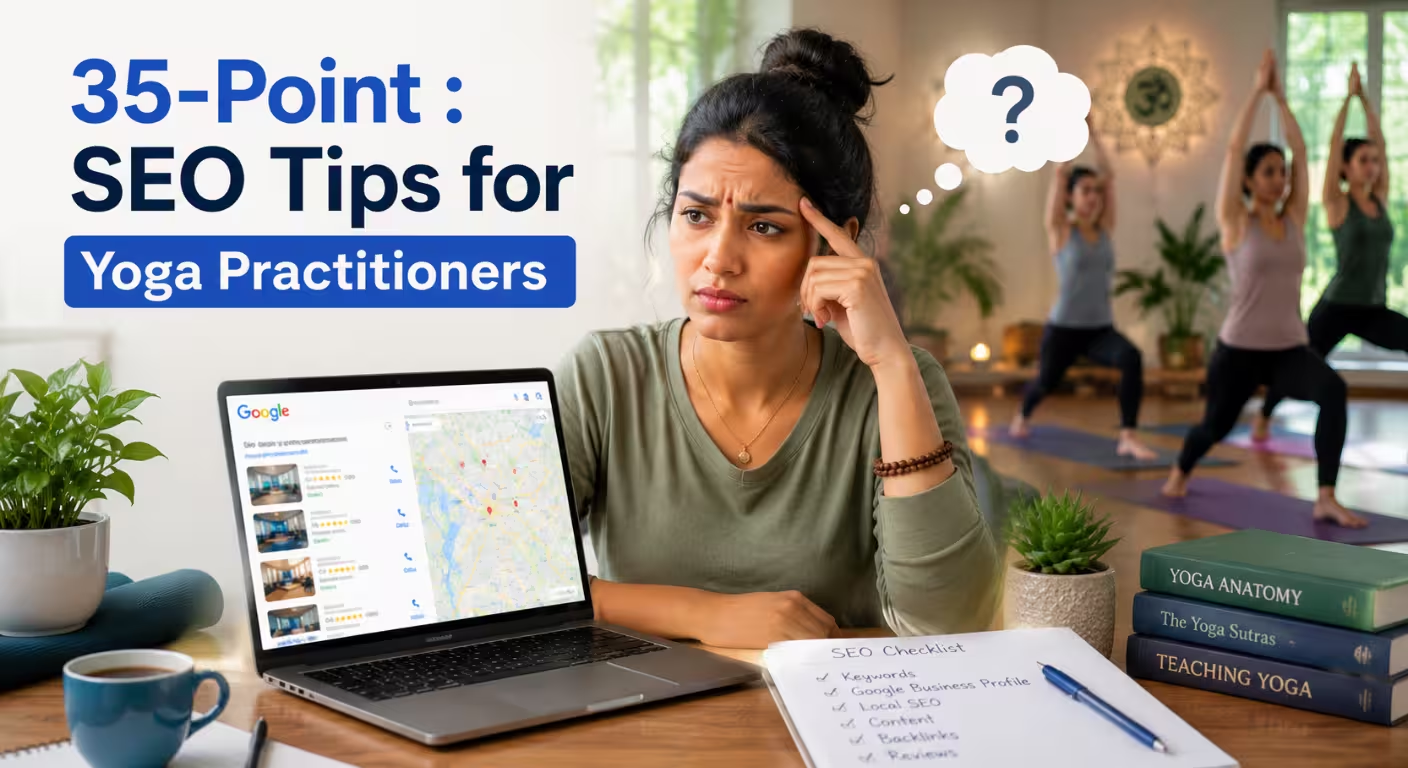
Most yoga practitioners are exceptional at what they do — but invisible online. A studio owner in Pune with 12 years of teaching experience can be completely outranked by a newer studio that simply understands how Google works.
This is the reality of yoga discovery in 2026. When someone searches ‘yoga classes near me’ or ‘yoga studio in Indirapuram’, Google shows them three options at the top of the map. Those three studios get the calls. Everyone else gets nothing — regardless of how good their teaching is.
SEO for yoga practitioners is not complicated. But it does require a clear, systematic approach. This guide gives you 35 specific, actionable SEO tips built for yoga studio owners and independent yoga instructors in India — organised from the most impactful to the supporting optimisations.
Who this guide is for: Yoga studio owners running a physical location, independent yoga instructors teaching in-person or online classes, yoga teachers expanding into corporate wellness or retreats, and yoga practitioners building a personal brand or YouTube presence.
Table of Contents
Why SEO Matters More Than Social Media for Yoga Studios
Instagram and Facebook are where yoga practitioners spend most of their marketing time. They are not wrong — social media builds community and brand awareness. But there is a critical difference between social media and SEO when it comes to getting new students.
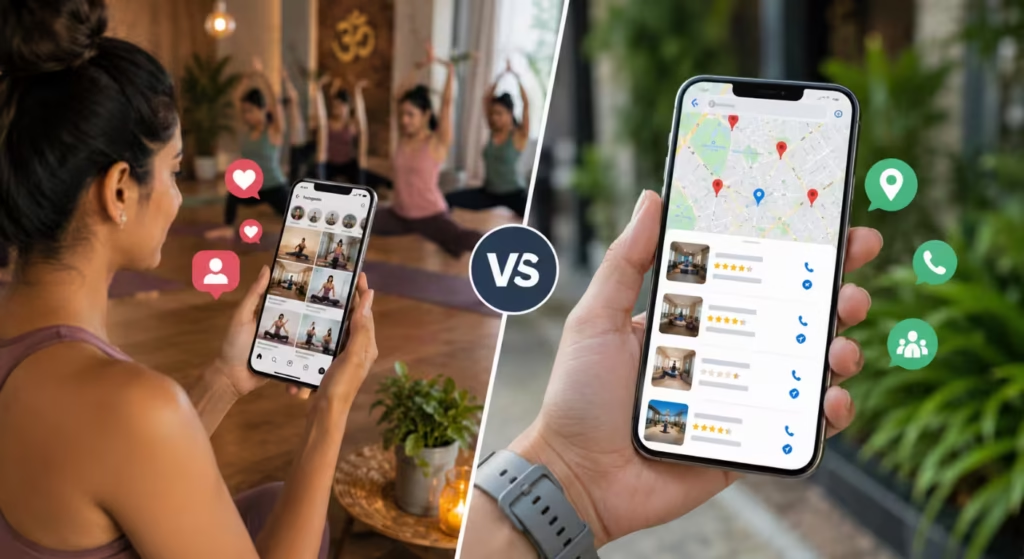
Social media shows your content to people who are not necessarily looking for yoga classes. SEO puts your studio in front of people who are actively searching for yoga classes right now — with intent to join.
A person searching ‘yoga studio in Laxmi Nagar’ is ready to visit. A person scrolling Instagram may enjoy your content but never book a class. This is why SEO consistently delivers better conversion rates for yoga studios than social media alone.
You can check our guide abuot Why Yoga Studios Get Traffic but No Leads (And How to Fix It in 2026).
The numbers from Indian yoga studios confirm this: Studios that rank in the Google Local 3-Pack for their area report that 60-70% of their new student enquiries come from Google Maps — not Instagram, not Facebook, not word of mouth. Google is where decisions are made.
Part 1: Foundation SEO Tips for Yoga Practitioners (Tips 1–10)
These ten tips form the non-negotiable base of your yoga SEO strategy. Without these in place, everything else will underperform.
Tip 1 — Claim and Fully Optimise Your Google Business Profile
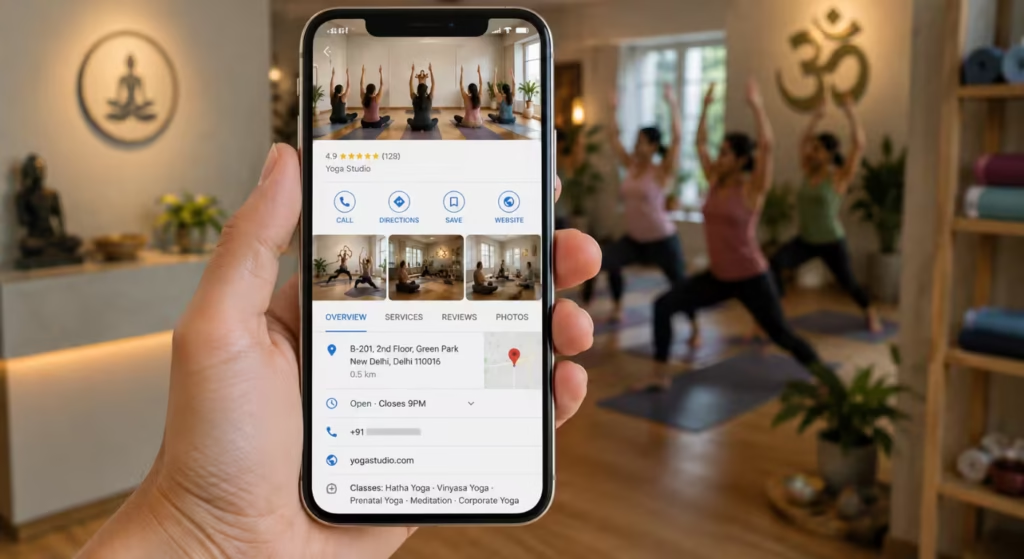
Your Google Business Profile (GBP) is the single most important SEO asset a yoga studio can have. It determines whether you appear in Google Maps and the Local 3-Pack — the three businesses shown at the very top of local search results.
What full optimisation means:
- Set your primary category as ‘Yoga Studio’ — not ‘Fitness Centre’ or ‘Gym’
- Add all secondary categories that apply — Pilates Studio, Meditation Centre, Wellness Centre
- Write a business description using your target keywords naturally — include your city, specialisations, and class types
- Upload minimum 10 high-quality photos — studio interior, classes in session, instructor photos, entrance
- List all your services with descriptions — Hatha Yoga, Vinyasa, Prenatal Yoga, Kids Yoga, Corporate Wellness
- Add your class timings under ‘Hours’ accurately
- Enable messaging so students can WhatsApp or message directly
An incomplete GBP is one of the most common reasons yoga studios do not appear in Maps searches — even when they have been operating for years.
Please check our Complete Recovery Guide about Google Business Profile Suspended in India.
Tip 2 — Use the Right Yoga SEO Keywords
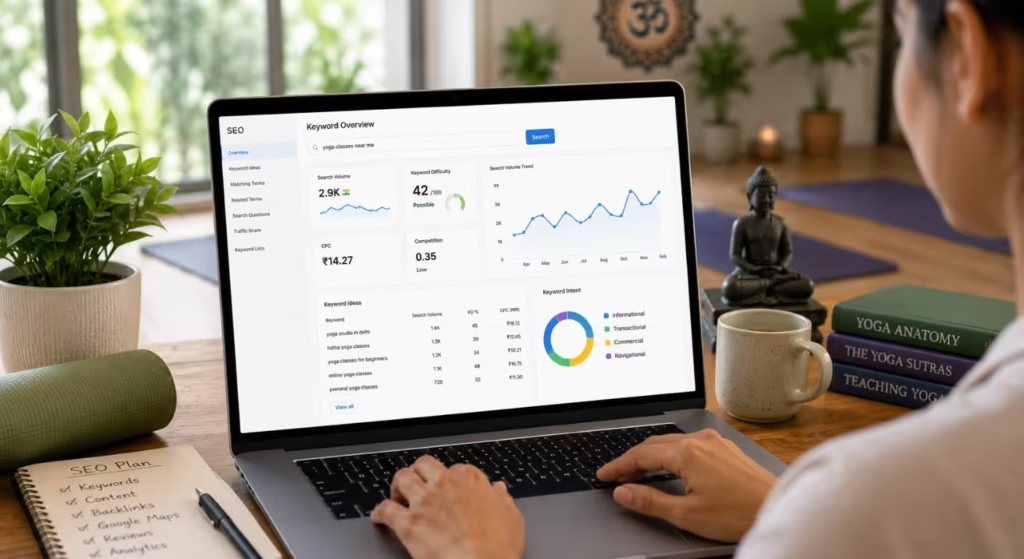
Most yoga practitioners target keywords that are too broad (‘yoga classes’, ‘yoga studio’) or too vague (‘best yoga’). The keywords that actually drive new student enquiries are location-specific and intent-specific.
| Keyword Type | Examples | Search Intent |
| Location + Studio | ‘yoga studio in Koramangala’, ‘yoga classes in Sector 62 Noida’ | Ready to join — highest conversion |
| Near Me | ‘yoga classes near me’, ‘yoga studio near me’ | Mobile search, immediate intent |
| Style Specific | ‘hatha yoga classes Delhi’, ‘vinyasa yoga Pune’ | Style preference, informed searcher |
| Instructor | ‘yoga instructor in Gurgaon’, ‘certified yoga teacher Bangalore’ | Looking for personal training |
| Problem Based | ‘yoga for back pain Delhi’, ‘prenatal yoga classes Noida’ | High intent, specific need |
| Online | ‘online yoga classes India’, ‘live yoga classes Hindi’ | Non-local, scalable audience |
Build a keyword list of 20-30 terms before you start optimising. Every page on your website should target a specific keyword from this list — not compete with other pages for the same term.
Grow Your Yoga Business with Proven SEO Strategies, please check our Yoga Studio SEO Services to improving your website’s visibility on search engines like Google so potential customers can find your business at the exact moment they are searching for your products or services.
For yoga studios in Pune specifically, see our dedicated Pune yoga marketing guide.
Need Help Improving Your Yoga Studio’s Google Rankings?
From Google Business Profile optimisation to Local SEO and website improvements, we help yoga studios attract more students through Google Search and Maps.
Call Now WhatsApp UsTip 3 — Fix Your NAP Consistency Across All Platforms
NAP stands for Name, Address, Phone number. Google cross-references your business information across the web to verify that your business is real and trustworthy. If your studio name is listed differently on Justdial, Sulekha, and your website — Google’s confidence in your business drops, and so do your rankings.
Where your NAP must be identical:
- Google Business Profile
- Your website — footer, contact page, About page
- Justdial, Sulekha, Indiamart listings
- Social media profiles — Instagram bio, Facebook page
- Any directory or listing where your studio appears
Even small differences matter — ‘Yoga Studio’ vs ‘Yoga studio’, ‘201’ vs ‘B-201’, ‘+91’ vs ‘0’. Audit all your listings and standardise them.
Most yoga studio owners think SEO means ranking on Google Search. That is only half the picture. You can check our Yoga Studio SEO Checklist: 49-Point Audit to Rank on Google Maps.
Tip 4 — Create a Dedicated Page for Every Class Type
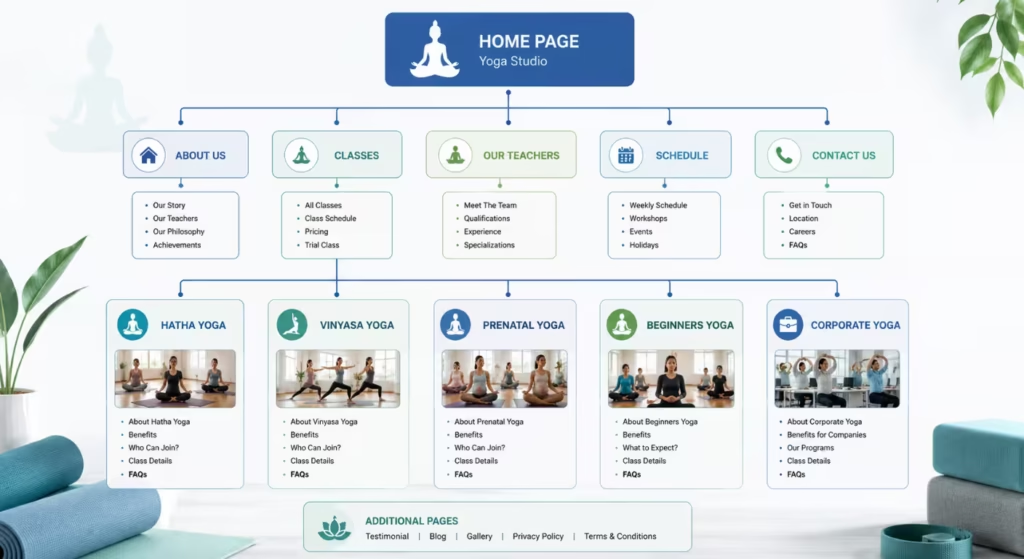
One of the most common and costly yoga SEO mistakes is listing all class types on a single ‘Classes’ page. This means your website can only rank for one keyword when it could be ranking for ten.
Instead, create a dedicated page for each class type you offer:
- Hatha Yoga Classes in [City]
- Vinyasa Yoga in [City]
- Prenatal Yoga Classes in [City]
- Yoga for Beginners in [City]
- Corporate Yoga Programmes in [City]
Each page targets a specific search query, builds individual authority, and captures a different segment of searchers. This is how yoga studios with smaller followings outrank larger competitors in search results.
Also Read:- Digital Marketing for Physiotherapy Clinics in India
Tip 5 — Optimise Your Website’s Title Tags and Meta Descriptions
Your title tag is the blue text people see in Google search results. Your meta description is the two-line summary below it. These are the first things a potential student reads — and they determine whether someone clicks on your result or your competitor’s.
Formula for yoga studio title tags:
[Class Type] in [City/Area] | [Studio Name]
Examples:
- Hatha Yoga Classes in Koramangala | Sattvic Yoga Studio
- Prenatal Yoga in Noida Sector 62 | AwakenYoga
- Online Yoga Classes India | Certified Instructor | YogaWithAnanya
Your meta description should include your primary keyword, one specific benefit, and a soft call to action. Keep it under 155 characters.
Before optimizing content or keywords, you should strengthen your website’s technical foundation. for this, you can check our On-Page SEO Services guide.
Tip 6 — Get Your Studio Listed on Local Directories
Beyond Google Business Profile, your yoga studio should be listed on every relevant local directory. Each listing creates a citation — a mention of your business name, address, and phone number — that strengthens your local SEO authority.
Priority directories for yoga studios in India:
- Justdial — high authority, frequently indexed by Google
- Sulekha — strong local search presence
- Indiamart — surprisingly useful for corporate yoga enquiries
- Practo — useful if you offer therapeutic or medical yoga
- Facebook Business Page — treated as a citation by Google
- Bing Places — often overlooked, still valuable
- Apple Maps — important for iPhone users
Related:- Meta Ads for Yoga Studios: Get More Leads, Trial Bookings & Students in 2026
Tip 7 — Build a Review Generation System
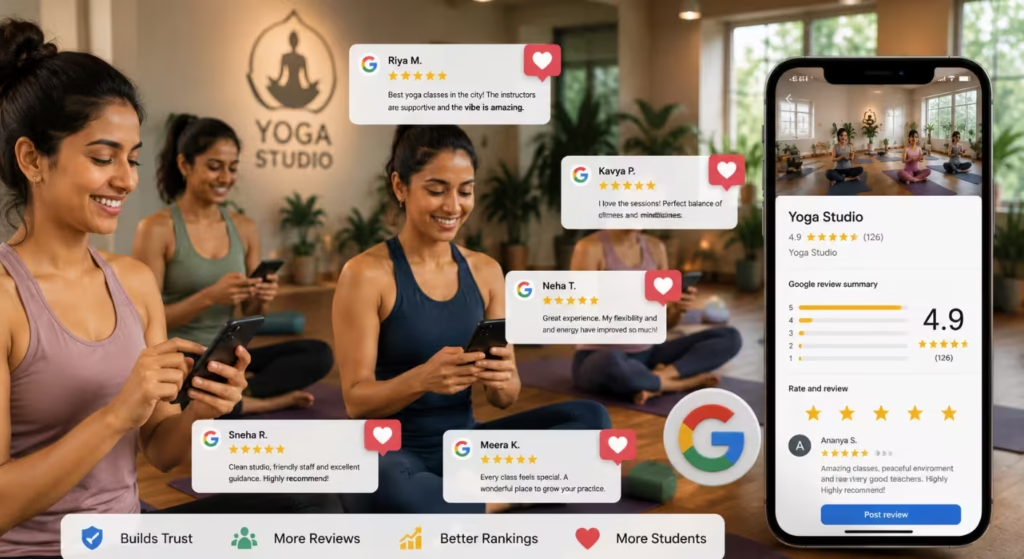
Google reviews are one of the three primary ranking factors for Google Maps. A studio with 80 genuine reviews consistently outranks a studio with 15 reviews — even if the latter has better ratings.
A simple, compliant review system for yoga studios:
- After a student’s first month, send a WhatsApp message: ‘We are so glad you are part of our community. If you have enjoyed your classes, we would be grateful if you could share your experience on Google — it helps other students find us.’
- Include your Google review link directly in the message — make it one tap
- Respond professionally to every review within 48 hours — positive and negative
- Never offer incentives for reviews — this violates Google’s guidelines
Aim for 2-3 genuine reviews per month consistently. Sudden spikes of 20 reviews in a week can trigger Google’s spam filters.
Please check our guide if your Google Business Profile Edits Not Showing? Here’s What’s Actually Happening.
Tip 8 — Ensure Your Website Is Mobile-First
Over 80% of ‘yoga near me’ searches in India happen on mobile phones. Google uses mobile-first indexing — meaning it ranks your website based on its mobile version, not desktop.
Mobile optimisation checklist for yoga studio websites:
- Page loads in under 3 seconds on mobile — test with Google PageSpeed Insights
- Click-to-call button visible above the fold — students should be able to call with one tap
- WhatsApp button on every page — standard expectation for Indian users
- Text is readable without zooming — minimum 16px font size
- Buttons and links are large enough to tap easily — minimum 44px touch target
- No horizontal scrolling — content fits the screen width
Tip 9 — Add LocalBusiness Schema Markup to Your Website
Schema markup is code that tells Google exactly what your website is about — in a language Google understands directly. For yoga studios, LocalBusiness schema communicates your business name, address, phone number, hours, and services in structured data format.
Schema markup does not directly improve rankings but it improves Google’s understanding of your business — which supports local search visibility and can generate rich results in search.
If you use WordPress with RankMath or Yoast SEO, LocalBusiness schema can be configured without coding. If you are on a custom website, ask your developer to implement it.
Tip 10 — Fix Technical SEO Basics
Technical SEO issues silently suppress rankings. These are the most common ones yoga studio websites have:
- Slow page speed — images not compressed, no caching plugin active
- No SSL certificate — website loads as http:// instead of https://
- Broken links — particularly common on older studio websites with removed class pages
- Duplicate content — the same class information copied across multiple pages
- Missing or duplicate title tags — every page must have a unique, keyword-optimised title
- No XML sitemap submitted to Google Search Console
Run a free audit using Google Search Console or Screaming Frog to identify these issues on your website.
Part 2: Local SEO Tips for Yoga Studios (Tips 11–20)
Local SEO determines your visibility in Google Maps and near-me searches — the highest-intent searches in the yoga discovery journey. These ten tips focus specifically on dominating local search in your area.
Good instructors, full morning batches, happy students — but when someone nearby searches “yoga classes near me”, another studio three lane away shows up on Google Maps instead of them. This “Local SEO for Yoga Studios” guide explains exactly how to fix it.
Tip 11 — Post Consistently on Your Google Business Profile
Most yoga studios set up their GBP and never touch it again. Google rewards active profiles with better visibility. Post at least once per week on your GBP — class schedule updates, workshop announcements, seasonal offers, or educational tips about yoga practice.
GBP posts appear directly in Google Maps search results and act as fresh content signals that tell Google your business is active and relevant.
Tip 12 — Use Area-Specific Landing Pages
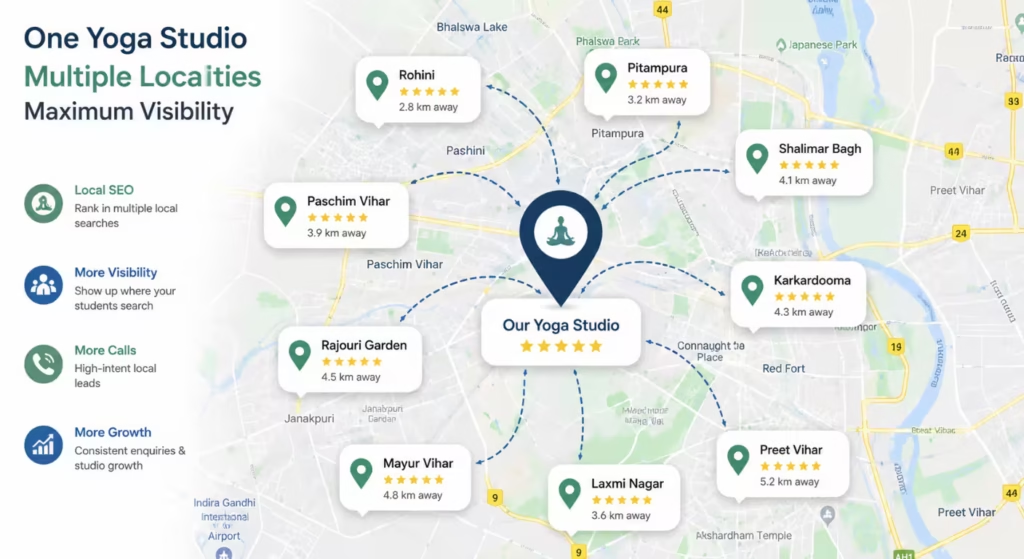
If your yoga studio is in Indirapuram but also attracts students from Vaishali, Kaushambi, and Vasundhara — create area-specific pages targeting each locality.
A page titled ‘Yoga Classes in Vaishali Ghaziabad’ will rank for students searching from that area — even if your studio is technically in Indirapuram. This hyper-local targeting dramatically expands your Maps visibility without requiring multiple locations.
Tip 13 — Optimise for ‘Near Me’ Searches
‘Yoga classes near me’ is one of the highest-volume yoga search queries in India. Near me searches are determined by Google Maps proximity — but your GBP optimisation, relevance signals, and review volume all influence whether you appear for searchers in different parts of your area.
Use phrases like ‘yoga studio near [landmark]’, ‘yoga classes near [major area]’ naturally in your website content to strengthen proximity signals.
Tip 14 — Build Local Backlinks
Backlinks from local websites — other businesses in your area, local news sites, community blogs — are powerful local SEO signals. For yoga studios, these are the most accessible sources:
- Partner with local wellness cafes, health food stores, or physiotherapy clinics for mutual website mentions
- Get listed in local wellness and lifestyle directories
- Offer to write a guest post for a local parenting blog if you offer kids yoga or prenatal yoga
- Participate in local events and get mentioned in event roundups
- Get featured in local news coverage — many city newspapers have wellness sections
Tip 15 — Monitor Your Rankings with Geo-Grid Heatmaps
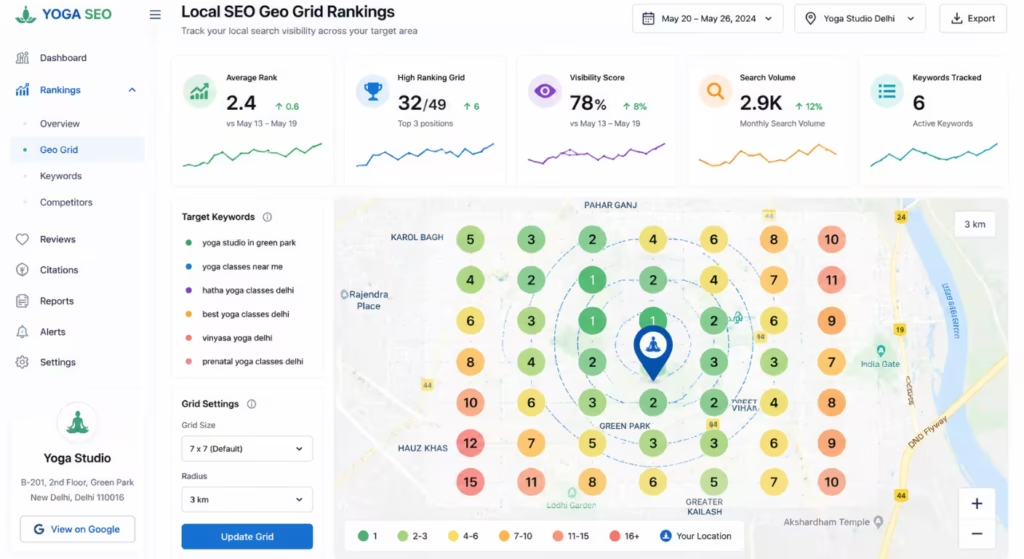
Standard SEO rank tracking tools show you one ranking position for a keyword. But Google Maps rankings vary block by block — you might rank #1 within 1 km of your studio and #8 for students searching 3 km away.
Geo-grid heatmap tools show your exact Maps visibility across your surrounding area — revealing the specific zones where you need to strengthen your local presence. This is especially valuable in dense urban areas like Delhi, Mumbai, and Bangalore where competition changes street by street.
Want More Yoga Students from Google Maps?
Discover how your yoga studio can rank higher in local searches, generate more enquiries, and improve visibility across your target areas.
Schedule a Call Chat on WhatsAppTip 16 — Respond to Every Google Review
Responding to reviews is not just good customer service — it is a local SEO signal. Google’s guidelines recommend responding to reviews, and active review engagement correlates with stronger Maps rankings.
For negative reviews, respond professionally within 24 hours. Acknowledge the concern, offer to resolve it offline, and keep the response brief. A well-handled negative review is often more persuasive to potential students than five positive ones.
Tip 17 — Add Your Studio to Google Maps Correctly
Sounds basic — but many yoga studios have incorrect pin locations, wrong service areas, or inaccurate category selections on Google Maps. Verify that:
- Your pin is on the correct building entrance — not the road or a neighbouring property
- Your service area (if you offer home visits or corporate yoga) is set correctly
- Your primary category is ‘Yoga Studio’ — the most specific option available
- Your address matches exactly what is on your website and all directory listings
Tip 18 — Create Content Around Local Yoga Events and Workshops
Whenever you host a workshop, retreat, or special event — create a dedicated page or blog post for it. ‘International Yoga Day 2026 Workshop in Pune’ or ‘Prenatal Yoga Workshop Noida June 2026’ are highly specific, low-competition search terms that are easy to rank for.
These event pages also generate fresh content signals that keep your website active in Google’s eyes — supporting your overall rankings.
Tip 19 — Verify Your Google Business Profile Regularly
Google occasionally re-verifies business listings — particularly for studios that have moved, changed phone numbers, or updated their information. An unverified or suspended GBP disappears from Maps entirely.
Check your GBP status monthly. Set a calendar reminder. If your profile shows a ‘Get verified’ or ‘Verification needed’ message, complete the verification immediately to restore your Maps visibility.
Tip 20 — Track Your Local SEO Performance in Google Search Console
Google Search Console is free and shows you exactly which searches are bringing people to your website — including the queries, click-through rates, and average positions. Every yoga practitioner with a website should have GSC set up and checked monthly.
Look specifically for queries where you have high impressions but low clicks — these indicate your page is ranking but the title or meta description is not compelling enough to get the click. Fixing these is one of the highest-ROI activities in yoga SEO.
Part 3: Content SEO Tips for Yoga Practitioners (Tips 21–28)
Content SEO builds your website’s authority over time — positioning you as the expert resource for yoga in your area and specialisation. These tips focus on the content strategies that consistently bring organic traffic and student enquiries.
Tip 21 — Start a Yoga Blog With Consistent Educational Content
A blog is the most sustainable long-term SEO investment a yoga practitioner can make. Each article targets a search query, builds topical authority, and creates internal linking opportunities to your class pages.
Blog topics that rank well for yoga practitioners in India:
- ‘Yoga for [specific condition] in [city]’ — yoga for back pain, yoga for PCOS, yoga for anxiety
- ‘Best yoga poses for [beginner/intermediate/seniors/pregnant women]’
- ‘How to choose a yoga studio in [city]’ — targets high-intent comparison searches
- ‘Difference between Hatha and Vinyasa yoga’ — educational, evergreen content
- ‘How to start a home yoga practice’ — high search volume, builds brand authority
Publish one article per month consistently. Twelve articles per year compounds significantly over 2-3 years — each one working continuously to bring new students to your website.
Tip 22 — Optimise Your YouTube Channel for Yoga SEO
YouTube is the second largest search engine in the world — and yoga content performs exceptionally well there. A 10-minute tutorial video targeting ‘morning yoga for beginners Hindi’ can generate thousands of views and consistent enquiries for your in-person classes.
YouTube SEO essentials for yoga practitioners:
- Include your target keyword in the video title — naturally, not stuffed
- Write a full 200-300 word description with your keyword, location, and website link
- Add chapters/timestamps — Google uses these in search previews
- Link to your website and GBP in every video description
- Use your city and specialisation in the channel name or handle
Tip 23 — Create a Yoga FAQ Page Targeting Question-Based Searches
Question searches — ‘how much does yoga cost in Delhi’, ‘what should I wear to yoga class’, ‘is yoga good for weight loss’ — are highly searchable and often appear in Google’s Featured Snippets and People Also Ask sections.
A dedicated FAQ page answering 15-20 common questions about your studio and yoga practice can capture significant search traffic that your class pages will never rank for. Structure answers clearly — short paragraph responses of 40-60 words work best for featured snippet eligibility.
Tip 24 — Write Location-Specific Content Regularly
Content that references specific localities, landmarks, and neighbourhoods around your studio signals hyper-local relevance to Google. Mention the areas your students come from, reference nearby landmarks, and create content specifically about yoga in your city.
A blog post titled ‘Why More People in Indirapuram Are Starting Yoga in 2026’ targets local search intent and builds geographic relevance that generic yoga content cannot match.
Tip 25 — Build Topical Authority in Your Yoga Specialisation
If you specialise in prenatal yoga, corporate yoga, therapeutic yoga, or a specific style — build a cluster of content around that specialisation. Five articles on prenatal yoga position you as the expert in that niche, and Google rewards topical depth with stronger rankings across all related searches.
This is the same principle that drives the topical cluster strategy — each article supporting the others, with a pillar page anchoring the entire cluster.
Tip 26 — Repurpose Content Across Platforms Efficiently
A single piece of well-researched content can be repurposed across multiple channels without creating new work each time. This maximises the SEO value of every piece you create:
- Blog post → LinkedIn article → Instagram carousel → YouTube Short → WhatsApp tip
- Workshop content → Blog post + YouTube video + Instagram Reels series
- Student FAQ → Website FAQ page + Instagram Stories Q&A + YouTube Shorts
The blog post is always the anchor — it is the only format that builds lasting SEO value. Everything else drives traffic back to it.
Tip 27 — Optimise Old Content Before Creating New Content
If you have an existing blog or website with older articles, updating them delivers faster SEO results than creating new content. Google favours recently updated, comprehensive content over older thin articles.
When updating an old yoga article, add: more specific information, updated statistics, additional FAQs, internal links to newer content, and a ‘Last Updated’ date. A well-updated older article can jump multiple positions within weeks.
Tip 28 — Use Internal Linking to Strengthen Your Key Pages
Internal links — links from one page on your website to another — distribute authority across your site and tell Google which pages are most important. Every blog post you write should link back to your core class pages and GBP optimisation service page.
A yoga studio website with strong internal linking structure consistently outranks competitors with better backlink profiles but poor internal linking — because Google can crawl, understand, and rank the well-linked site more effectively.
Ready to Build a Consistent Student Acquisition System?
SEO is not about quick hacks. It’s about building long-term visibility. Let Grow My Biz Digital create a customised SEO roadmap for your yoga studio and help you generate more student enquiries month after month.
Get Free SEO Consultation Talk on WhatsAppPart 4: Advanced SEO Tips for Yoga Practitioners (Tips 29–35)
These seven tips go beyond the basics — for yoga practitioners who have the foundation in place and want to accelerate their growth.
Tip 29 — Run Google Ads Alongside SEO for Faster Results
Local SEO takes 3-6 months to show full impact. Google Ads for yoga studios — specifically call-only ads and location-targeted search ads — deliver enquiries immediately while your organic rankings build.
The most effective approach is running both simultaneously: Ads for immediate new student acquisition, SEO for sustainable long-term growth. Once your organic rankings are strong enough to capture the traffic you need, you can reduce ad spend.
Our guide on Google Ads for Yoga Studios in India covers the exact campaign structure that works for local service businesses like yoga studios in Delhi NCR.
Tip 30 — Optimise for Voice Search
Voice search is growing rapidly in India — particularly on mobile. Voice queries are conversational and question-based: ‘Where is the nearest yoga studio to me?’, ‘What yoga classes are available on Saturday morning in Gurgaon?’
Optimise for voice by including natural, conversational phrases in your content. FAQ pages are particularly effective for voice search — Google frequently reads FAQ answers aloud through Google Assistant.
Tip 31 — Build a Google Review Response Template Library
Responding consistently to every Google review is time-consuming — but essential. Build a library of 10-15 response templates for different review types: glowing 5-star reviews, constructive 3-star feedback, and negative reviews requiring careful handling.
Personalise each response with the student’s name and a specific detail from their review. Generic copy-paste responses are worse than no response — Google and students can both tell the difference.
Tip 32 — Track Competitor Rankings and Strategy
Understanding what your top local competitors are doing — which keywords they rank for, what content they publish, how many reviews they have — tells you exactly where the gaps and opportunities are.
Use free tools like Google Search itself (incognito mode), Ubersuggest, or Google Maps to monitor competitor rankings monthly. When a competitor adds a new class page that starts ranking, it signals a keyword opportunity you may have missed.
Tip 33 — Create a Dedicated Corporate Yoga Page
Corporate yoga is one of the highest-value and fastest-growing segments in India’s yoga market. Companies in Delhi NCR, Mumbai, and Bangalore are actively searching for ‘corporate yoga instructor’ and ‘corporate wellness yoga programme’.
If you offer corporate sessions — even occasionally — a dedicated page targeting these searches can bring enquiries from HR managers and wellness coordinators who have significantly higher budgets than individual students.
Tip 34 — Earn Mentions in Local Wellness and Lifestyle Media
A mention in a local lifestyle blog, wellness magazine, or city guide — even without a direct link — contributes to your local brand authority. Google’s understanding of businesses increasingly incorporates unlinked mentions as trust signals.
Reach out to local lifestyle bloggers, city guides like LBB and Insider pages for your city, and regional wellness publications. Offer a free class trial, a quote for a wellness article, or a collaboration on a local event. These mentions build both brand awareness and SEO authority simultaneously.
Tip 35 — Be Consistent for 12 Months
This is the most important SEO tip — and the one most yoga practitioners ignore. SEO is not a one-time activity. It is a 12-month minimum commitment.
The studios that dominate Google Maps in their areas have been consistently optimising their GBP, collecting reviews, publishing content, and building citations for 12-24 months or more. Their lead is built on consistency — not a single viral post or one-off optimisation.
The good news: most of your competitors are not consistent. A yoga practitioner who commits to implementing these 35 tips systematically over the next 12 months will be nearly impossible to displace from their local search rankings.
35 SEO Tips for Yoga Practitioners — Quick Reference
| # | SEO Tip | Category |
| 1 | Claim and fully optimise your Google Business Profile | Foundation |
| 2 | Use the right yoga SEO keywords | Foundation |
| 3 | Fix NAP consistency across all platforms | Foundation |
| 4 | Create a dedicated page for every class type | Foundation |
| 5 | Optimise title tags and meta descriptions | Foundation |
| 6 | Get listed on local directories | Foundation |
| 7 | Build a review generation system | Foundation |
| 8 | Ensure your website is mobile-first | Foundation |
| 9 | Add LocalBusiness schema markup | Foundation |
| 10 | Fix technical SEO basics | Foundation |
| 11 | Post consistently on Google Business Profile | Local SEO |
| 12 | Use area-specific landing pages | Local SEO |
| 13 | Optimise for near me searches | Local SEO |
| 14 | Build local backlinks | Local SEO |
| 15 | Monitor rankings with geo-grid heatmaps | Local SEO |
| 16 | Respond to every Google review | Local SEO |
| 17 | Add your studio to Google Maps correctly | Local SEO |
| 18 | Create content around local events and workshops | Local SEO |
| 19 | Verify your Google Business Profile regularly | Local SEO |
| 20 | Track performance in Google Search Console | Local SEO |
| 21 | Start a yoga blog with consistent educational content | Content SEO |
| 22 | Optimise your YouTube channel for yoga SEO | Content SEO |
| 23 | Create a yoga FAQ page | Content SEO |
| 24 | Write location-specific content regularly | Content SEO |
| 25 | Build topical authority in your specialisation | Content SEO |
| 26 | Repurpose content across platforms efficiently | Content SEO |
| 27 | Optimise old content before creating new content | Content SEO |
| 28 | Use internal linking to strengthen key pages | Content SEO |
| 29 | Run Google Ads alongside SEO | Advanced |
| 30 | Optimise for voice search | Advanced |
| 31 | Build a Google review response template library | Advanced |
| 32 | Track competitor rankings and strategy | Advanced |
| 33 | Create a dedicated corporate yoga page | Advanced |
| 34 | Earn mentions in local wellness and lifestyle media | Advanced |
| 35 | Be consistent for 12 months | Advanced |
Final Thoughts — SEO as a Long-Term Student Acquisition System
SEO for yoga practitioners is not about gaming Google. It is about making your studio genuinely easy to find for students who are actively looking for what you offer.
Every tip in this guide serves one purpose: ensuring that when a potential student in your area searches for yoga classes, your studio appears, looks credible, and makes it easy for them to take the next step.
Start with the foundation tips. Get your Google Business Profile fully optimised, fix your NAP consistency, and build your review system. These three actions alone will improve your Maps visibility faster than any other investment.
Then build your content layer — one blog post per month, a YouTube video when you can, FAQ pages targeting the questions your potential students are actually asking. This layer compounds over 12-24 months into a student acquisition engine that works continuously without ongoing ad spend.
Grow My Biz Digital specialises in local SEO and digital marketing for yoga studios across India. Our full Local SEO for Yoga Studios guide and 49-Point Yoga Studio SEO Checklist cover the complete framework in detail — from GBP setup to 3-Pack ranking strategy. Book a free consultation to find out exactly where your studio’s SEO stands today.
Frequently Asked Questions — SEO for Yoga Practitioners
1. How long does SEO take to work for a yoga studio?
For local SEO and Google Maps optimisation, initial improvements in visibility are typically visible within 30-60 days of completing a full GBP optimisation. Significant ranking improvements for competitive keywords take 3-6 months. Content SEO — blog articles ranking for search queries — typically takes 2-4 months per article, compounding over time as your site’s authority grows.
Do I need a website to do SEO for my yoga studio?
You can improve your Google Maps visibility without a website — through GBP optimisation and reviews alone. However, a website dramatically amplifies every other SEO effort. It provides a destination for searchers who want more information, enables content SEO, supports internal linking, and allows you to target dozens of additional keywords that GBP alone cannot capture. A basic WordPress website is sufficient to start.
3. What are the most important yoga SEO keywords in India?
The highest-value yoga keywords combine location with class type or intent — ‘yoga studio in [city]’, ‘yoga classes near me’, ‘hatha yoga [city]’, ‘prenatal yoga [city]’, ‘yoga for back pain [city]’. Near-me searches have the highest conversion rate. Build your keyword strategy around 20-30 location-specific terms rather than generic broad keywords.
4. Should I use the same SEO strategy for online yoga classes?
Online yoga SEO is different from local yoga SEO. Without a physical location, you cannot rank in Google Maps. Instead, focus on organic content SEO — blog articles, YouTube SEO, and website optimisation targeting national or language-specific searches. ‘Online yoga classes in Hindi’, ‘live yoga classes for beginners India’, and style-specific terms work well for online yoga practitioners.
5. How many Google reviews does a yoga studio need to rank?
There is no fixed number — but in most Indian cities, a yoga studio with 40-60 genuine reviews and a 4.5+ rating is competitive for Local 3-Pack rankings. In highly competitive areas like South Delhi or Koramangala, 80-120 reviews may be needed. The key is steady, consistent growth — 2-3 reviews per month rather than spikes.
6. Can I do yoga SEO myself or do I need an agency?
Foundation SEO tips 1-10 in this guide — GBP optimisation, NAP consistency, basic website optimisation, review generation — can be done independently with time and attention. Advanced strategies — technical SEO, content cluster building, backlink acquisition, geo-grid monitoring — are more effectively handled with specialist support. Many yoga studio owners start with DIY SEO and engage an agency once they have the budget for faster, more competitive results.