

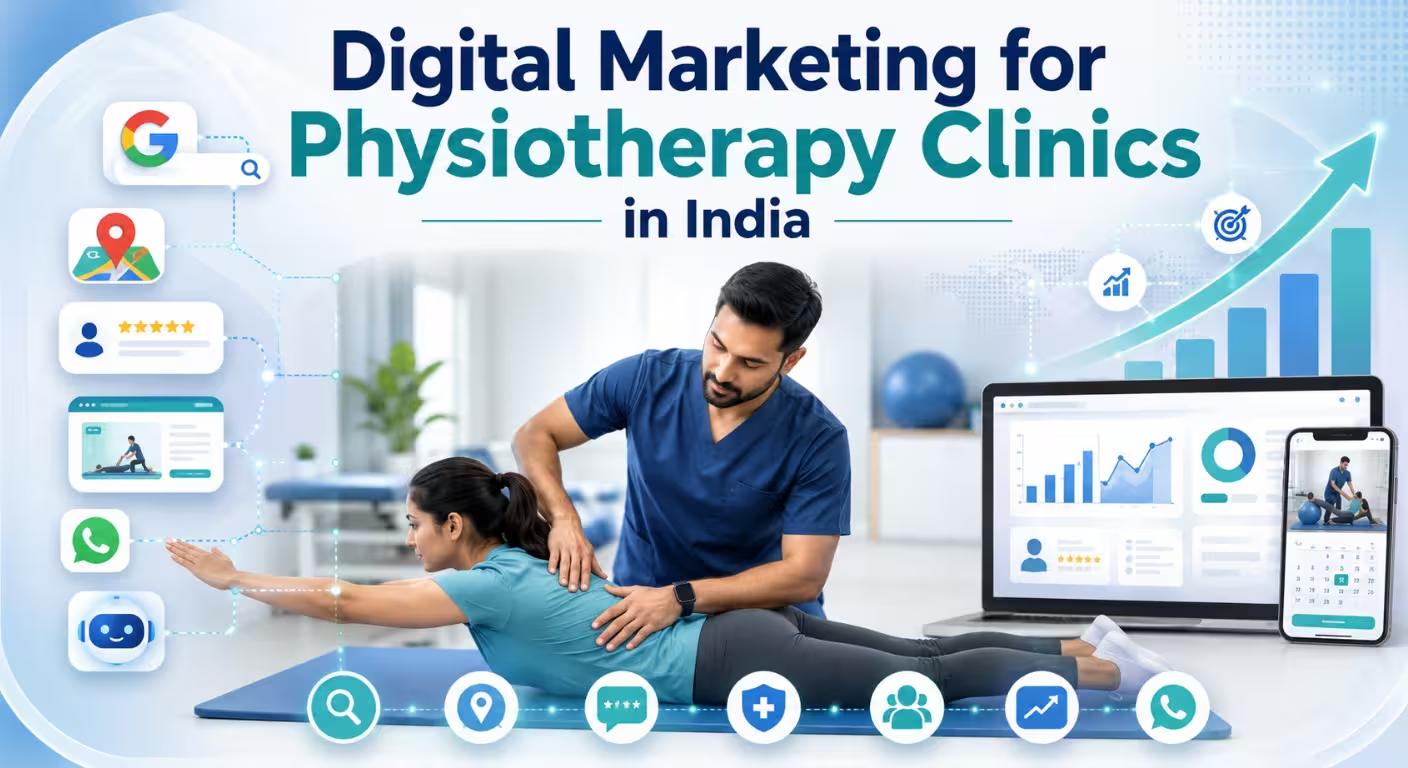
QUICK ANSWER: Digital marketing for physiotherapy clinics means capturing patients at the exact moment they search ‘physiotherapist near me’ or ‘back pain treatment without surgery’, combined with structured referral partnerships and corporate wellness outreach — most Indian physiotherapy clinics currently rely almost entirely on doctor referrals and have little to no digital presence.
India’s physiotherapy sector is growing at roughly 14% a year, according to the Indian Association of Physiotherapists — driven by rising sports injuries, an ageing population, and India’s largest-ever volume of post-surgical rehabilitation cases. Yet walk into almost any independent physiotherapy clinic in Delhi NCR and you will find the same pattern: a functional but dated website, no active Google Business Profile strategy, and a patient pipeline that depends entirely on which orthopaedic surgeons happen to refer that month.
This is not a criticism of physiotherapists — building a referral network with orthopaedic surgeons is genuinely hard-won and valuable. But it means growth is capped by how many doctors know you, not by how many patients in your area actually need physiotherapy. And increasingly, a patient with knee pain or a sports injury searches Google before they ever ask their doctor for a referral.
At Grow My Biz Digital, we build digital marketing for physiotherapy clinics around this reality — capturing the growing share of patients who self-refer through search, while strengthening (not replacing) the doctor and corporate wellness referral channels that already work.
Table of Contents
How Physiotherapy Patients Actually Find a Clinic
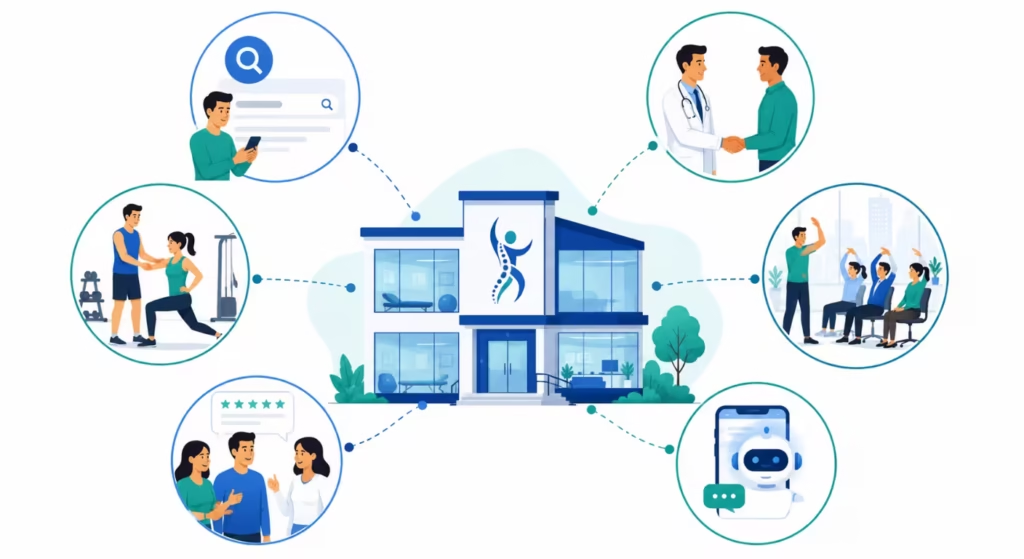
QUICK ANSWER: Patients reach a physiotherapy clinic through six distinct channels — self-search, orthopaedic referral, corporate wellness programmes, sports/gym referral, word-of-mouth, and increasingly, AI search tools — and most clinics only actively manage one or two of these.
| Channel | How It Works | Most Clinics’ Current Approach |
| Self-search | A patient with knee pain or a sports injury searches ‘physiotherapist near me’ before or instead of considering surgery | Almost entirely unmanaged — no GBP optimisation, no website content answering these searches |
| Orthopaedic referral | The traditional, highest-trust channel — a surgeon refers a patient post-consultation or post-surgery | Well-managed through personal relationships, but growth-capped by network size |
| Corporate wellness | An employer’s occupational health programme routes employees with musculoskeletal complaints to a partner clinic | Almost entirely untapped — the highest-volume, lowest-cost-per-patient channel for well-located urban clinics |
| Sports/gym referral | Clinics affiliated with sports teams, gyms, or running clubs receive consistent injury rehab referrals | Informal, rarely systematised into a real partnership programme |
| Word-of-mouth | A satisfied patient recommends the clinic to friends and family — the highest-quality referral source | Passive — few clinics actively prompt or make this easy to act on |
| AI search (ChatGPT, Google AI Overview) | Patients increasingly ask AI tools directly which treatment or clinic type to consider | Essentially unaddressed by any physiotherapy clinic in Delhi NCR currently |
Most clinics manage exactly two of these six channels — referrals and word-of-mouth — leaving self-search, corporate wellness, and AI search largely uncaptured, despite these often being lower-cost and higher-volume than referrals alone.
Also Read:- Digital Marketing for Doctors in Delhi NCR — Get More Patients Online
Need More Patients for Your Physiotherapy Clinic?
Increase your Google Maps visibility, attract more qualified enquiries, and build a consistent patient pipeline with a customised digital marketing strategy.
Referral-Only vs Referral + Digital Marketing
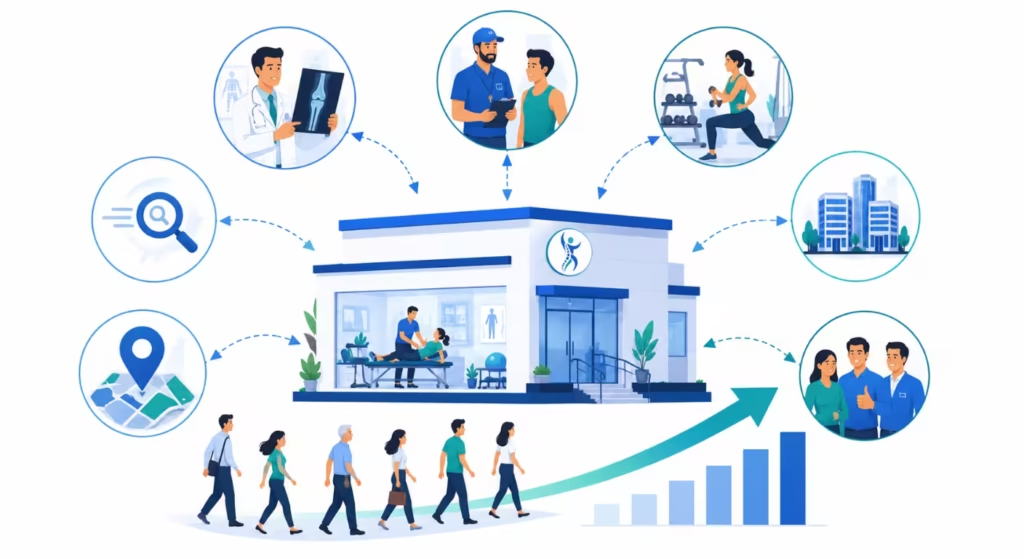
Why the Fastest-Growing Clinics Don’t Rely on Referrals Alone
Doctor referrals remain one of the highest-trust patient acquisition channels for physiotherapy clinics. A recommendation from an orthopaedic surgeon or sports physician carries significant credibility and should always remain an important part of a clinic’s growth strategy.
The challenge is that referral networks have a natural ceiling. Growth depends on how many doctors know your clinic, how frequently they refer patients, and whether new referral relationships continue to develop. Digital marketing removes that ceiling by allowing patients to discover your clinic directly when they actively search for treatment.
Check our detailed guide about Digital Marketing for Gynecologists in India.
| Referral-Only Clinic | Referral + Digital Marketing Clinic |
| Patient flow depends primarily on existing doctor relationships. | Receives patients from Google Search, Google Maps, referrals, corporate wellness programmes, and AI search. |
| Growth is limited by the size of the referral network. | Multiple acquisition channels create a more scalable and predictable patient pipeline. |
| Lower visibility among patients searching online. | Appears when patients search for treatments, symptoms, or nearby physiotherapists. |
| Difficult to predict monthly enquiries. | More consistent enquiry volume through diversified lead sources. |
| Limited brand recognition outside referring doctors. | Builds a recognisable local healthcare brand with reviews, content, and search visibility. |
| Vulnerable if referral patterns change. | Less dependent on any single acquisition channel. |
Insight: The most successful physiotherapy clinics don’t choose between referrals and digital marketing—they combine both. Referrals build trust, while digital marketing captures patients who are already looking for treatment today.
The goal of digital marketing is not to replace doctor referrals—it is to make sure your clinic is visible to patients who would never have reached you through referrals alone. The strongest physiotherapy practices combine trusted referral relationships with consistent online visibility, creating a sustainable long-term growth strategy.
Also Read:- Digital Marketing Agency in Ghaziabad That Generates Real Business Leads
Why Delhi NCR’s Physiotherapy Market Is a Genuine Opportunity
QUICK ANSWER: Delhi NCR has a dense, fragmented physiotherapy market with almost no large chains dominating digitally — combined with one of India’s largest corporate and IT workforces, creating strong demand for both consumer self-search visibility and corporate wellness partnerships.
- Sedentary lifestyle and long commutes across Delhi NCR drive high rates of back, neck, and knee complaints among the working-age population
- Large corporate and IT hubs — Gurugram, Noida, Ghaziabad’s industrial belt — represent an underused corporate wellness opportunity most clinics have never approached systematically
- An ageing population and rising sports/fitness participation (running clubs, gyms, marathons) are both expanding demand for injury rehabilitation and post-op physiotherapy
- Unlike diagnostics or large hospital chains, physiotherapy in Delhi NCR remains largely independent-clinic-driven — meaning no single large player dominates local search yet
Check our guide about Advanced On-Page SEO Services.
Get a FREE Digital Marketing Audit
Discover why your physiotherapy clinic isn’t attracting enough patients online. We’ll analyse your Google Business Profile, website, competitors and local search visibility to identify new growth opportunities.
Why Patients Choose One Physiotherapy Clinic Over Another
QUICK ANSWER: Patients rarely choose the first physiotherapy clinic they find. Before booking an appointment, they compare multiple clinics based on trust, convenience, reviews, expertise, and the confidence your online presence creates.

Many clinic owners assume patients simply visit the nearest physiotherapist. In reality, most people compare two or three clinics before making a decision—especially when dealing with chronic pain, sports injuries, or post-surgical rehabilitation. Even when your clinic appears in Google Search or Google Maps, the patient still needs a reason to choose you over nearby competitors.
Check our detailed guide about Digital Marketing for Gynecologists in India.
| What Patients Compare | Why It Matters | How Digital Marketing Helps |
| Google Reviews & Ratings | Patients trust real experiences before booking. | Ethical review generation and reputation management build social proof. |
| Google Maps Visibility | Most patients contact one of the first clinics they see. | Local SEO and Google Business Profile optimisation improve visibility. |
| Website Quality | A professional website creates confidence before the first call. | A fast, modern, mobile-friendly website increases trust and enquiries. |
| Treatment Information | Patients want to know whether you treat their specific condition. | Condition-specific pages answer patient questions before they contact you. |
| Doctor & Clinic Credibility | Qualifications, experience, and specialisations influence decisions. | Professional profiles, certifications, and patient success stories strengthen authority. |
| Clinic Photos | Patients want to see the environment before visiting. | High-quality photos make your clinic feel more trustworthy and welcoming. |
| Convenience | Parking, location, timings, and appointment availability matter. | Clear business information reduces friction and increases bookings. |
| Response Speed | Patients often contact the clinic that replies first. | WhatsApp integration, enquiry forms, and call tracking improve responsiveness. |
The Real Decision Happens Before the First Phone Call
By the time a patient calls your clinic, they have often already compared your reviews, website, photos, and treatment information with nearby competitors. In other words, your digital presence becomes your first consultation. A strong online reputation builds confidence before the patient ever speaks to your team, making them far more likely to book an appointment.
The clinics that consistently attract more self-referred patients are not always the most experienced—they are often the clinics that make it easiest for patients to trust them online.
Also Read:- Digital Marketing for Gyms: 15 Proven Strategies to Grow Memberships
Common Digital Marketing Mistakes Physiotherapy Clinics Make
QUICK ANSWER: Most physiotherapy clinics don’t struggle because they provide poor treatment—they struggle because potential patients never discover them online. The following are some of the most common digital marketing mistakes that limit patient enquiries and long-term growth.
1. Treating Google Business Profile as a One-Time Setup
Many clinics claim their Google Business Profile but never update photos, services, posts, or reviews. An inactive profile gradually loses visibility compared to competitors who keep their listings current.
2. Having a Generic Website
A homepage with a basic list of treatments rarely answers the questions patients are searching for. People look for specific conditions such as back pain, frozen shoulder, sports injuries, or post-surgical rehabilitation—not just “physiotherapy services.”
3. Ignoring Patient Reviews
Reviews influence both Google Maps rankings and patient trust. Many satisfied patients are willing to leave feedback but are never asked.
4. Not Explaining Treatment Clearly
Patients often compare multiple clinics before booking. If your website doesn’t explain what conditions you treat, how treatment works, or what patients can expect, they may choose a competitor who provides clearer information.
5. No Local Content Strategy
Many clinics try to rank with a single homepage instead of creating pages for the conditions, treatments, and local areas patients actually search for.
Get More Patients, Not Just More Website Visitors
Our customised SEO and Local SEO strategies help physiotherapy clinics attract high-intent patients through Google Search, Google Maps and AI-powered search experiences.
Are Any of These Limiting Your Clinic’s Growth?
You don’t need to fix everything at once. In most cases, addressing just two or three of these issues—such as improving your Google Business Profile, collecting more patient reviews, and creating condition-specific content—can significantly increase your visibility and enquiries over time.
Check our guide about Physiotherapy Clinic SEO: The Complete Guide to Getting More Patient Appointments.
Successful physiotherapy clinics rarely grow because they spend the most on marketing. They grow because they make it easier for patients to discover, trust, and contact them.
Our Digital Marketing Services for Physiotherapy Clinics
1. Local SEO and Google Maps Ranking
When a patient searches ‘physiotherapist near me’ or ‘physiotherapy clinic in [Delhi NCR locality]’, the Google Maps 3-Pack captures the large majority of resulting calls. A clinic outside that top 3 is effectively invisible to that self-search patient, however strong its referral network.
What Determines Google Maps Rankings for Physiotherapy Clinics?
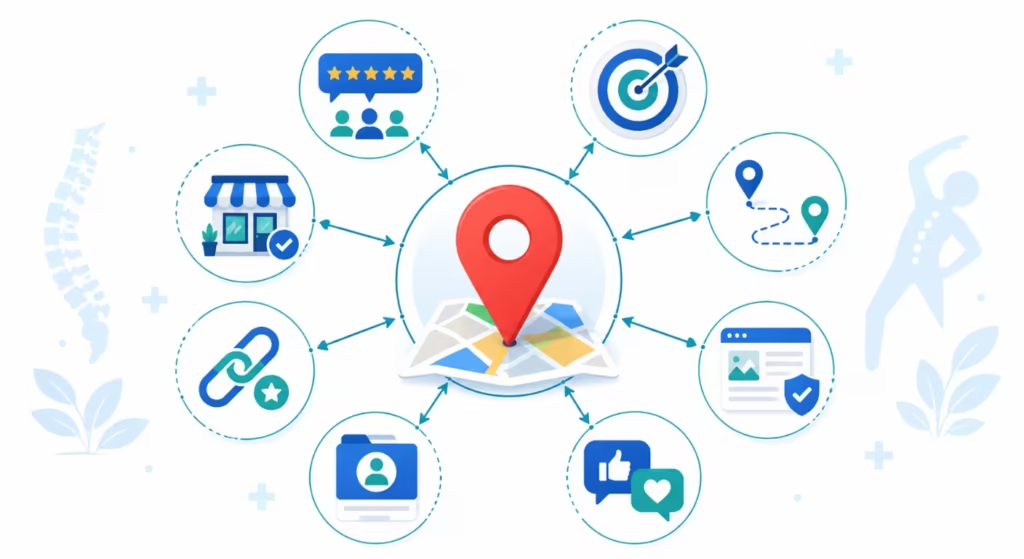
QUICK ANSWER: Google doesn’t rank physiotherapy clinics based on who has the biggest clinic or the largest advertising budget. Instead, Google evaluates a combination of relevance, distance, prominence, and trust signals to decide which clinics appear in the Google Maps 3-Pack.
When someone searches “physiotherapist near me” or “back pain treatment in Noida”, Google compares dozens of local businesses before deciding which three clinics deserve the most visibility. Understanding these ranking factors helps explain why some clinics consistently receive calls while others remain almost invisible.
| Ranking Factor | Why It Matters | How We Improve It |
| Google Business Profile Completeness | Complete profiles help Google understand your clinic and services. | Optimise categories, services, descriptions, hours, and business information. |
| Relevance | Google wants to match the clinic with the patient’s exact search intent. | Create condition-specific pages and optimise your Google Business Profile with relevant services. |
| Distance | Patients usually prefer clinics that are conveniently located. | While location cannot be changed, we maximise visibility within your service area. |
| Prominence | Google favours clinics with a strong online reputation and authority. | Build reviews, local citations, backlinks, and high-quality website content. |
| Patient Reviews | Reviews influence both Google’s algorithm and patient trust. | Implement an ethical review generation strategy focused on recent, genuine feedback. |
| Website Authority | A strong website reinforces the credibility of your Google Business Profile. | Improve Local SEO, technical performance, internal linking, and healthcare-focused content. |
| Business Information Consistency | Consistent contact details across the web increase trust. | Audit and standardise your Name, Address, and Phone Number (NAP) across directories. |
| User Engagement Signals | Calls, direction requests, website visits, and interactions indicate that users find your listing useful. | Optimise listings to encourage meaningful engagement from potential patients. |
Google Maps Is More Than Just a Listing
Many clinic owners believe that simply claiming a Google Business Profile is enough. In reality, Google Maps rankings are influenced by how trustworthy, relevant, and active your clinic appears over time. A well-optimised profile supported by a strong website, recent patient reviews, and accurate business information consistently performs better than a profile that has been left untouched for months.
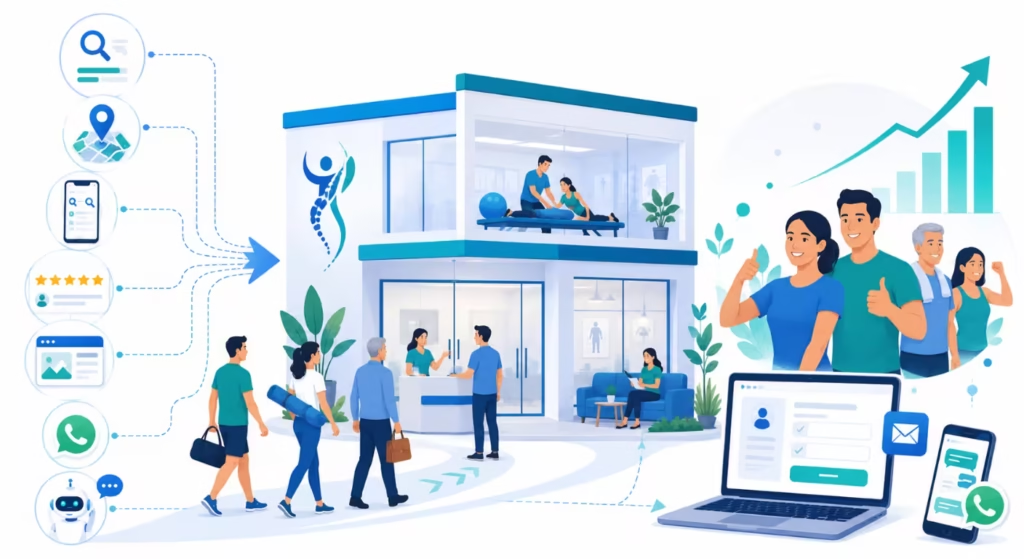
The clinics that dominate Google Maps are rarely the ones spending the most on advertising—they are usually the ones that provide Google with the strongest local trust signals.
- Google Business Profile optimisation with correct categories (Physical Therapist, Physiotherapy Clinic) and complete service listings
- Locality-specific keyword targeting across Delhi NCR — Gurugram, Noida, Ghaziabad, South Delhi, Dwarka — matched to where your actual patients live and work
- Systematic, ethical review generation — patients who complete a treatment course are a natural, high-conversion review request opportunity
This builds on our Local SEO services for Delhi NCR and Google Business Profile services frameworks, applied to physiotherapy-specific search behaviour.
2. Condition-Specific Content and Pages
A single ‘Services’ page cannot rank for the specific conditions patients are searching. Back pain, knee pain, sports injury, and post-surgical rehabilitation are each searched separately, with different intent and urgency.
- Individual pages for major conditions — back pain, frozen shoulder, sports injury, post-knee-replacement rehab, neurological rehabilitation
- ‘Physiotherapy vs surgery’ comparison content — a genuinely high-intent search category, since many patients research this before committing to either path
- Cost transparency content — reduces the anxiety and back-and-forth that often delays a patient’s decision to book
3. Corporate Wellness Lead Generation
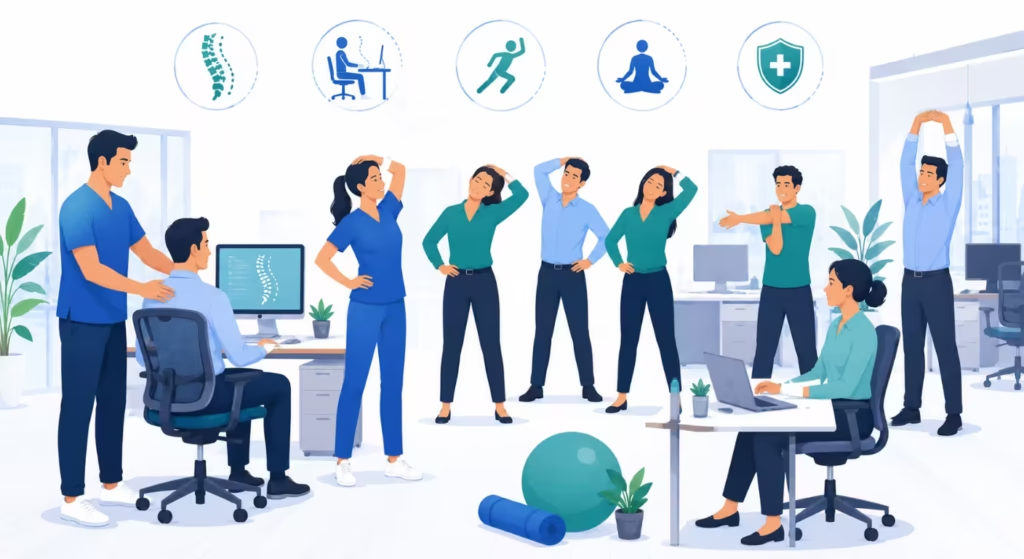
This is the single most underused channel in physiotherapy marketing — a structured corporate wellness offering can deliver the highest patient volume at the lowest cost per patient for clinics near office hubs.
- A dedicated corporate wellness landing page targeting HR managers and occupational health coordinators
- LinkedIn outreach content targeting companies in Gurugram, Noida, and Ghaziabad’s corporate belts
- Clear packaging — on-site camps, retainer-based employee access, or referral-discount structures that are easy for a company to say yes to
4. Referral Partnership Systems
Digital marketing should strengthen your existing orthopaedic and sports referral relationships, not compete with them.
- A professional, credibility-focused website that referring doctors are comfortable sending patients to
- Simple referral tracking so doctors see the outcomes of patients they send — reinforcing the relationship
- Content and case studies (with consent) that referring doctors can confidently share with their own patients
Ready to Grow Your Physiotherapy Clinic?
Book a free consultation today and discover how Local SEO, Google Maps optimisation and AI-focused content can help you generate more patient enquiries and long-term growth.
How AI Search is Changing Physiotherapy Marketing
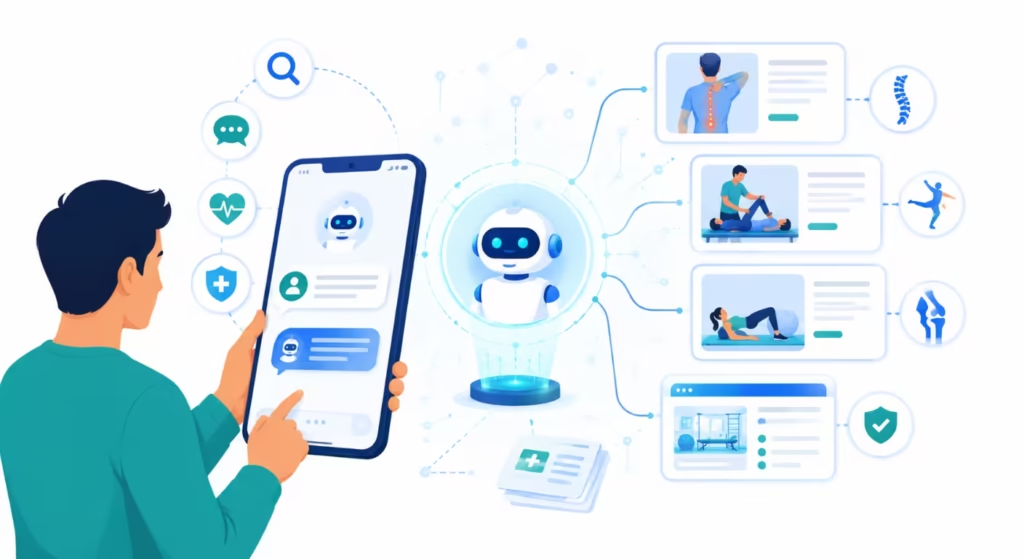
QUICK ANSWER: More patients are beginning their healthcare journey by asking AI tools questions instead of typing short keywords into Google. This means physiotherapy clinics need content that answers real patient questions clearly, accurately, and in depth—not just pages that target individual keywords.
A patient suffering from persistent back pain today is just as likely to ask an AI assistant:
- “Do I need physiotherapy or surgery for a slipped disc?”
- “Can physiotherapy help frozen shoulder?”
- “How many sessions are usually required after knee replacement surgery?”
- “Which type of physiotherapist should I consult for a sports injury?”
Rather than displaying only a list of websites, AI-powered search tools summarise information from trusted sources and recommend relevant clinics, treatments, or next steps. Clinics with comprehensive, well-structured, and trustworthy content are more likely to be referenced in these AI-generated answers.
What Makes a Physiotherapy Website AI-Friendly?
Modern AI search systems favour content that demonstrates expertise, answers patient questions directly, and is easy to understand.
A clinic website is better positioned for AI search when it includes:
- Dedicated pages for individual conditions and treatments.
- Clear explanations written in patient-friendly language.
- Frequently Asked Questions that address common concerns.
- Evidence of clinical expertise, qualifications, and experience.
- Helpful comparisons, such as physiotherapy vs surgery or sports rehabilitation vs home exercises.
- Well-structured content with logical headings, summaries, and internal links.
AI search doesn’t replace Google Search—it builds on it. Clinics that invest in high-quality educational content today are more likely to benefit from both traditional search rankings and AI-generated recommendations in the years ahead.
Did You Know? Patients no longer search only for “physiotherapist near me.” Many now ask complete questions such as “What’s the best treatment for frozen shoulder?” or “Should I see a physiotherapist for lower back pain?” Clinics that publish clear, evidence-based answers are better positioned to appear in both traditional search results and AI-generated responses.
Real Proof — Our Approach in Practice
Rather than vague promises, here is what the same structured approach has delivered across our existing healthcare content, verifiable in Google Search Console:
| Page | What Was Applied | Result |
| SEO for Dentists in Ghaziabad | Hyperlocal sector-level targeting, condition-specific content | Cited in Google AI Overview within 2 hours of publishing |
| Digital Marketing for Doctors Delhi NCR | Specialty-specific content, GBP framework, review strategy | Ranking across multiple doctor-specialty searches |
| GMB Services Delhi | Complete Google Business Profile framework | 76 clicks, 1.88% CTR — our highest-converting service page |
Pricing — Digital Marketing for Physiotherapy Clinics
| Service | Cost | Timeline | Best For |
| Local SEO + GBP Management | ₹15,000–₹22,000/month | 3–6 months | Clinics wanting consistent Maps visibility and self-search patients |
| Condition-Specific Pages | ₹10,000–₹18,000 (one-time) | 2–3 weeks | Clinics wanting to capture back pain, sports injury, post-op searches |
| Corporate Wellness Lead Gen | ₹10,000–₹18,000/month | 2–4 months to first partnership | Clinics near corporate hubs wanting high-volume, low-CAC patients |
| Full Digital Marketing | ₹25,000–₹40,000/month | 3–12 months | Clinics wanting complete SEO + content + corporate outreach |
Ready to Grow Your Physiotherapy Clinic Beyond Referrals?
Referrals built your clinic, and they remain valuable — but they cap your growth at the size of your existing doctor network. The patients researching ‘physiotherapist near me’ or ‘knee pain treatment without surgery’ right now in Delhi NCR are choosing a clinic today, and it should be findable.
Free audit covers:
- Your current Google Maps visibility versus nearby competing clinics
- Review count and completeness of your Google Business Profile
- Corporate wellness opportunity assessment for your clinic’s location
- 3 specific fixes for immediate impact
Frequently Asked Questions — Digital Marketing for Physiotherapy Clinics
1. How do physiotherapy clinics get more patients in India?
Through a combination of Google Maps visibility for self-search patients, strengthened orthopaedic and sports referral partnerships, corporate wellness tie-ups with nearby companies, and increasingly, visibility in AI search tools patients use to research treatment options before choosing a clinic.
2. Is SEO worth it for a small, independent physiotherapy clinic?
Yes — independent clinics often see faster results than large hospital-affiliated physiotherapy departments, because local search rewards proximity and relevance over brand size. A well-optimised Google Business Profile with genuine, recent reviews frequently outranks larger competitors for locality-specific searches.
3. How much does digital marketing cost for a physiotherapy clinic?
Local SEO and Google Business Profile management typically range from ₹15,000-₹22,000 per month. Condition-specific website content and page setup is often a one-time cost of ₹10,000-₹18,000. Corporate wellness lead generation campaigns vary based on scope, generally starting around ₹10,000/month plus outreach effort.
4. What is the best way to get corporate wellness clients as a physiotherapy clinic?
Start with companies within a short commute of your clinic, since convenience is the primary factor for corporate wellness decisions. A dedicated landing page explaining your corporate packages, combined with direct LinkedIn outreach to HR and occupational health contacts, is more effective than waiting for inbound enquiries.
5. Should a physiotherapy clinic focus on Google Ads or SEO first?
Google Business Profile optimisation and Local SEO should come first — they capture patients with immediate, high-intent local searches at a lower ongoing cost than paid ads. Google Ads are most useful for launching a new clinic quickly or promoting a specific service like sports injury rehabilitation to a defined audience.
6. How long does it take to see results from physiotherapy clinic marketing?
Google Maps visibility improvements are often visible within 4-8 weeks of GBP optimisation and the start of a review-generation process. Corporate wellness partnerships typically take longer to close — often 2-4 months from first outreach to a signed arrangement, but deliver a sustained patient volume once established.