
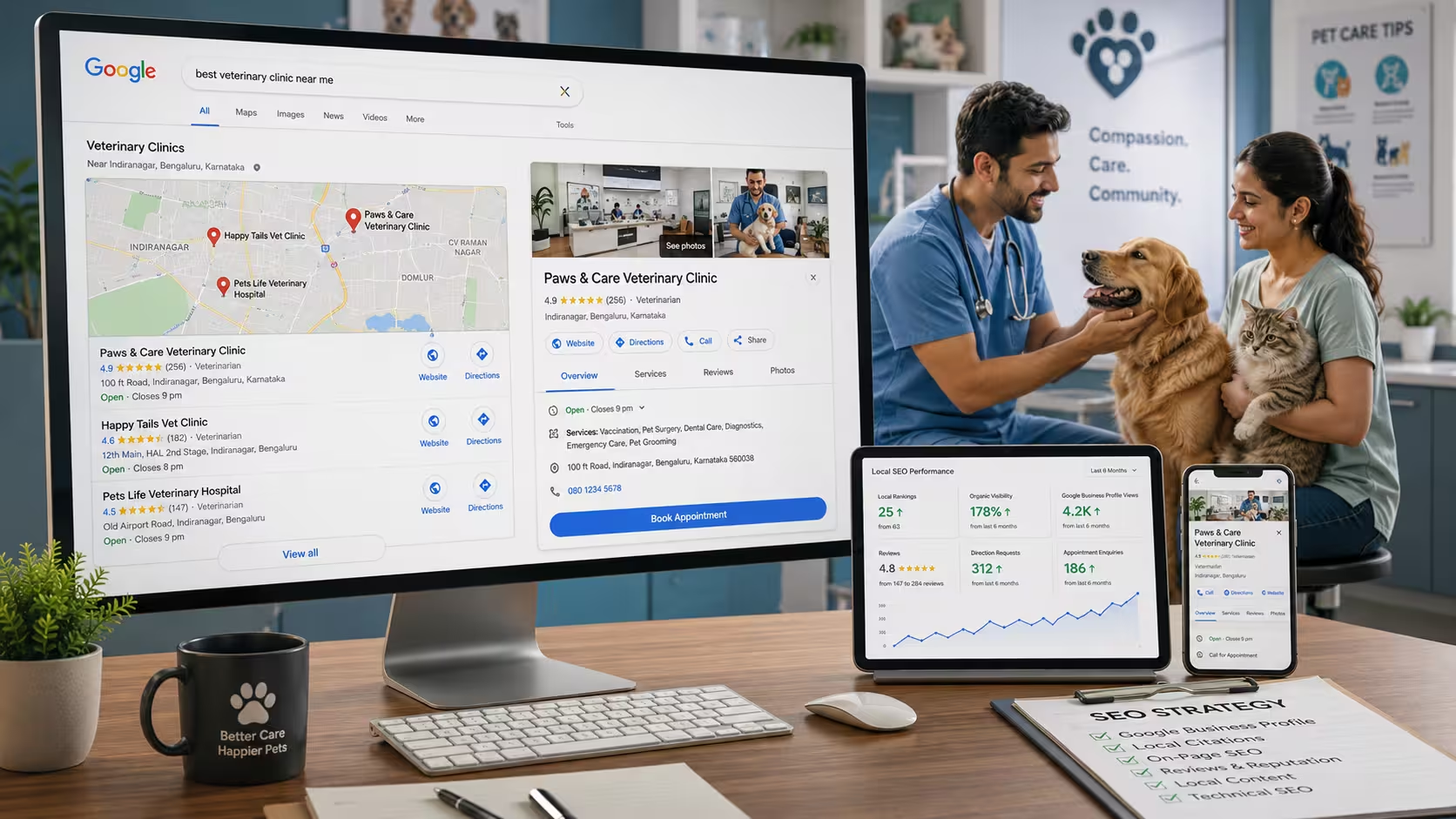
A veterinary clinic can have a decent website, a filled-in Google Business Profile, and still lose the client to a competitor three streets away with fewer years in practice but a stronger Maps presence. That’s not an unusual story — it’s the default outcome of treating Local SEO as a one-time setup task instead of an ongoing part of running the clinic.
Local SEO for a veterinary clinic isn’t really about “ranking” in the abstract. It’s about showing up, with the right information, at the exact moment a pet owner is standing in their kitchen at 11pm deciding which of three nearby options to call. Get that moment right consistently, and strong local visibility can become one of the clinic’s most valuable sources of new enquiries, helping it attract pet owners without relying entirely on paid advertising.
This is a practical, India-specific guide to improving a veterinary clinic’s visibility in Google Maps and local organic search — what to prioritise first, what most clinics get wrong, and the parts of veterinary Local SEO that generic “how to rank on Google Maps” guides often overlook.
Table of Contents
Why Local SEO Matters More for Veterinary Clinics Than Most Local Businesses
Local search can be especially important for veterinary clinics because many pet owners search for a nearby provider at the moment they need care. For clinics that depend on attracting new clients from their surrounding area, appearing prominently in local search results can directly influence enquiries, calls and appointment requests.
One of the first things to understand is how potential clients search in the clinic’s actual service area. Searches such as “vet near me”, “veterinary clinic in [area]”, “dog vaccination near me” and other location-based queries can trigger prominent local results, often including Google Maps listings alongside organic pages. If a clinic has weak visibility for its most valuable local searches, it may be missing potential clients who are actively looking for veterinary care nearby.
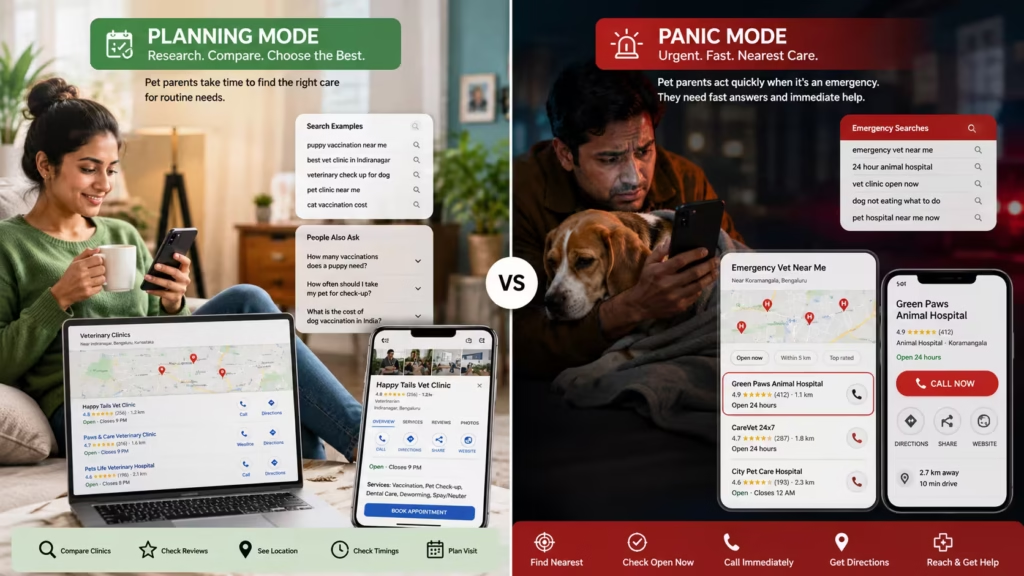
Veterinary care can also involve very different search situations. Routine care — such as vaccinations, wellness check-ups, dental care or a new puppy’s first visit — may give pet owners time to compare clinics, reviews, services and location before making a decision. Emergency searches are different. When a pet suddenly becomes unwell or is injured, the decision may be made much faster, with factors such as proximity, current opening hours and the ability to contact the clinic immediately becoming far more important.
There is also a third category worth considering: service-specific or specialist searches. A pet owner may search directly for a particular treatment or type of care, such as pet dental treatment, veterinary diagnostics or a clinic that treats a specific type of animal. A strong Local SEO strategy should identify which routine, emergency and service-specific searches matter to the clinic and create the right combination of Google Business Profile information, website pages and local signals around them.
Related:- Local SEO Services Google Maps & 3-Pack Ranking Experts
Help Local Pet Owners Find Your Clinic
Improve your visibility on Google Search and Maps so pet owners can discover your veterinary clinic when they need local care.
How Google Decides Which Veterinary Clinics Appear in Local Results
Google does not rank every veterinary clinic using a single Local SEO score. Local visibility can vary depending on the search itself, the searcher’s location and the information Google has about each business. Broadly, three factors help determine which businesses are shown for relevant local searches: relevance, distance and prominence.
Relevance
Relevance is about how well Google understands that a veterinary clinic matches what the pet owner is searching for.
For example, if someone searches for “dog vaccination near me”, Google needs to understand whether the clinic actually provides vaccination services. If someone searches for “emergency vet”, the business information and website should accurately reflect whether emergency care is genuinely available.
This is why the following matter:
- Choosing the most accurate Google Business Profile category
- Listing genuine veterinary services clearly
- Creating useful pages for major services
- Keeping business information accurate and complete
- Using clear, descriptive website content
The goal is not to add every possible veterinary keyword. The goal is to make it easy for Google and pet owners to understand exactly what services the clinic actually offers.
Also Read:- Complete Google Business Profile Optimization Checklist 2026
Distance
Distance is based on how close the business is to the searcher or, when a location is included in the search, to that specified location.
This is particularly important for veterinary clinics because a pet owner may prefer a nearby clinic, especially when dealing with an urgent situation. A clinic cannot simply “optimise” its way around distance for every search.
However, it can make sure Google clearly understands its correct physical location, service information and the areas it genuinely serves.
That means:
- Keeping the clinic address accurate everywhere
- Avoiding incorrect or outdated location information
- Maintaining a properly configured Google Business Profile
- Creating useful location-specific website content where it represents a genuine location or service area
For emergency searches, proximity may be especially important, which is why accurate location and opening-hour information can directly affect whether a potential client considers the clinic.
Also Read:- Google Business Profile Suspended in India — Complete Recovery Guide (2026)
Prominence
Prominence refers broadly to how established and well-known a business appears based on the information available online.
For a veterinary clinic, this can include factors such as:
- The clinic’s online reputation and reviews
- Links and mentions from relevant websites
- References from trusted local or industry-related sources
- The clinic’s overall visibility and reputation on the web
Prominence is one reason Local SEO should not be reduced to simply adding keywords to a Google Business Profile. A clinic may have complete information and still struggle against a stronger local competitor with a better-established reputation and broader online presence.
Please check our guide if your Google Business Profile Edits Not Showing? Here’s What’s Actually Happening.
The Practical Takeaway
A strong veterinary Local SEO strategy should work across all three areas:
Relevance — Make it clear what veterinary services you provide.
Distance — Make sure your location information is accurate and consistent.
Prominence — Build a trustworthy local reputation through reviews, relevant mentions and a strong overall online presence.
The rest of this guide focuses on how to improve each of these areas without relying on shortcuts or trying to manipulate Google’s local results.
Check our comprehensive guide about Digital Marketing for Veterinary Clinics: Why Pet Owners Still Can’t Find You.
Google Business Profile: The Foundation, Not an Afterthought
Most veterinary clinics treat their Google Business Profile as something to fill in once and leave alone. That’s the single biggest gap between clinics that dominate their local map pack and clinics that don’t — Google increasingly rewards profiles that show ongoing activity, not just complete information.
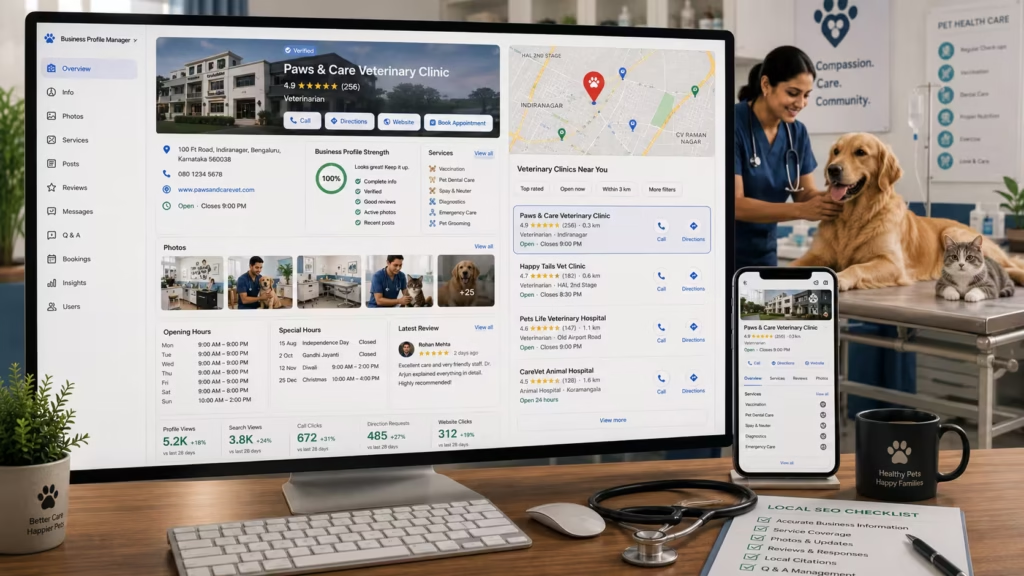
What actually moves a veterinary GBP:
- Correct primary category — “Veterinarian” or “Animal Hospital” for general practices, “Emergency Veterinary Service” as a secondary category if genuinely offered. Category choice is one of the strongest local ranking factors Google uses, and it’s frequently set incorrectly or too broadly.
- Every service listed individually in the Services section — vaccinations, spay/neuter, dental cleaning, diagnostics, grooming, boarding, emergency care — rather than a single generic line. Google matches service-line text against long-tail searches like “cat vaccination near me,” so a clinic that hasn’t listed vaccinations specifically has a weaker shot at ranking for it.
- Accurate, current hours — including holiday hours and whether after-hours or emergency care is genuinely available. A profile showing “Closed” when the clinic is actually open (or vice versa) is one of the more common reasons a nearby, weaker competitor gets the call instead.
- A steady stream of recent photos of the actual clinic, team and equipment — not a logo and nothing else.
- Regular Posts and an actively monitored Q&A section — most clinics set these up once and never touch them again, which is a missed, free ranking and trust signal.
What I’d check first on almost any underperforming veterinary GBP: category accuracy and service completeness, before touching anything else. It’s the fastest fix with the most direct effect on which searches the profile is even eligible to appear for.
Check our complete guide about Google Ads for Veterinary Clinics in India: Beyond Clicks to Booked Appointments.
Get Found When Pet Owners Search Nearby
From “veterinary clinic near me” searches to local Google Maps results, the right Local SEO strategy can help your clinic compete where it matters.
Beyond the Profile: What the Website Needs to Do
Google Business Profile wins the map pack. The website is what wins the organic results underneath it, and gives Google more to evaluate the clinic’s actual expertise and service range on.
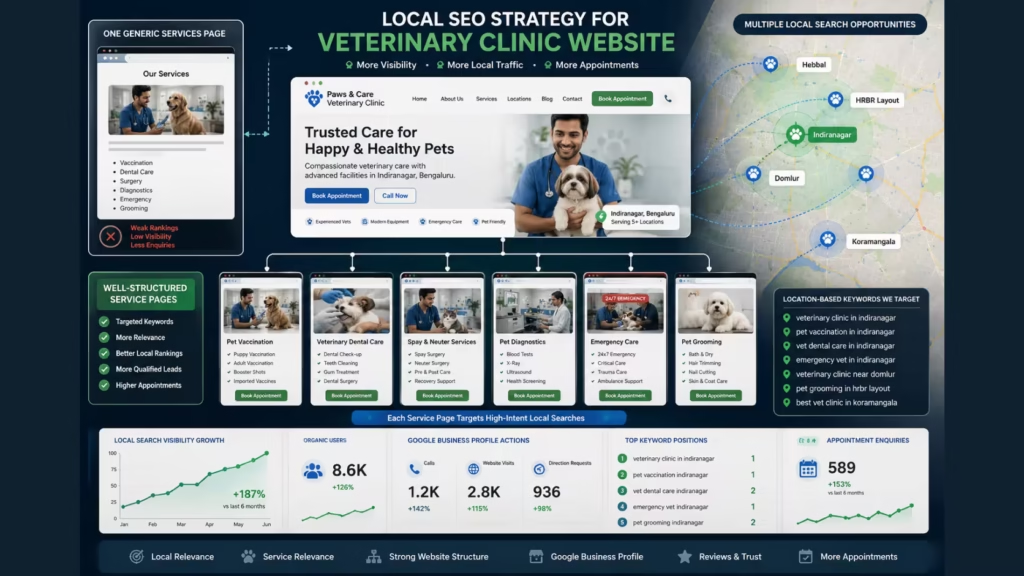
The most common structural mistake on veterinary websites is a single “Services” page trying to cover everything the clinic does. Dedicated pages for each major service — vaccinations, spay/neuter, dental care, diagnostics, emergency care, grooming — give each one a real shot at ranking for its own specific searches instead of all of them competing against each other on one thin page. A page built specifically around “dog dental cleaning [city]” will consistently outrank a generic services page for that exact search, because it answers the question the search implies far more directly.
For clinics operating in more than one neighbourhood, or planning to, dedicated location pages matter too — not thin pages that just swap the city name, but pages with genuinely local content: which areas the clinic serves, parking or access notes, and services specific to that location if they differ. A common mistake is publishing near-duplicate location pages with barely any unique content, which tends to get filtered out of rankings rather than helping them.
Local Citations: Where Veterinary Local SEO in India Actually Differs
This is the part most generic Local SEO guides get wrong for the Indian market — they default to citation advice built around Yelp and US directories that carry little to no weight here.
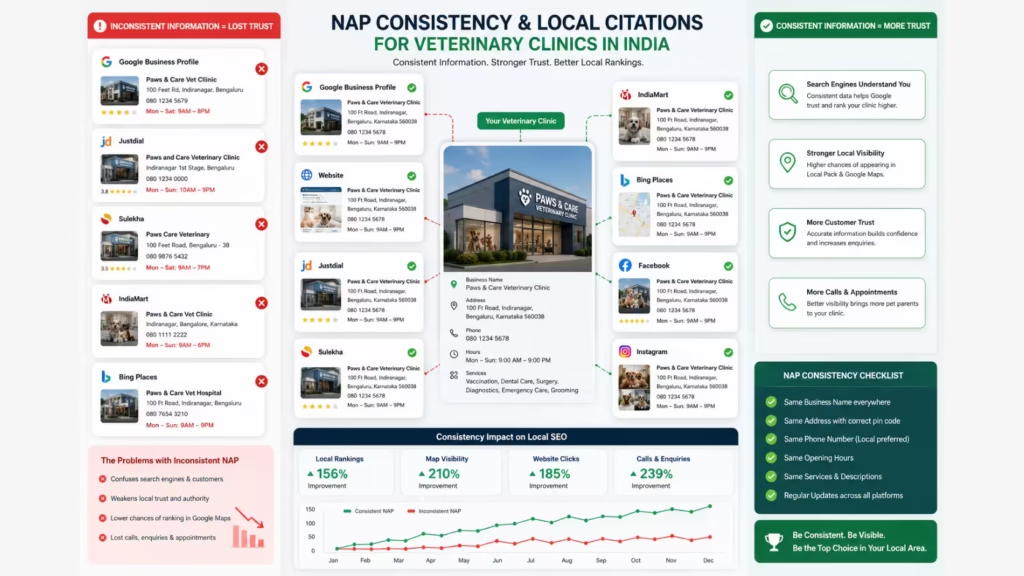
In India, Google’s local ranking algorithm weighs citation corroboration — when several independent, credible sources describe a business with consistent name, address and phone number (NAP) data, Google’s confidence in that listing increases. For a veterinary clinic in India, the citation sources that actually carry weight are different from a US business:
- Google Business Profile — the anchor listing everything else needs to match exactly
- Practo — India’s largest healthcare-specific directory, and for a patient-facing (or in this case, pet-owner-facing) practice, arguably the second most important citation after GBP
- JustDial — broad local business directory with strong recognition across tier-1 and tier-2 Indian cities and an actively used veterinary category
- Sulekha — India’s second-largest general local directory, with a healthy, active veterinary listings section in most major metros
- Local and city-specific directories relevant to the clinic’s specific area
What often goes wrong here: a clinic listed on Practo with one address, on JustDial with a slightly different one (maybe an old location, or a phone number that’s since changed), and on Google Business Profile with a third version. Each inconsistency chips away at Google’s confidence in which information is correct, and it’s a more common problem than most clinic owners realise — a quick search of the clinic’s name plus city, checked across a few of these platforms, usually surfaces it immediately.
Reviews: The Trust Signal That Also Happens to Be a Ranking Signal
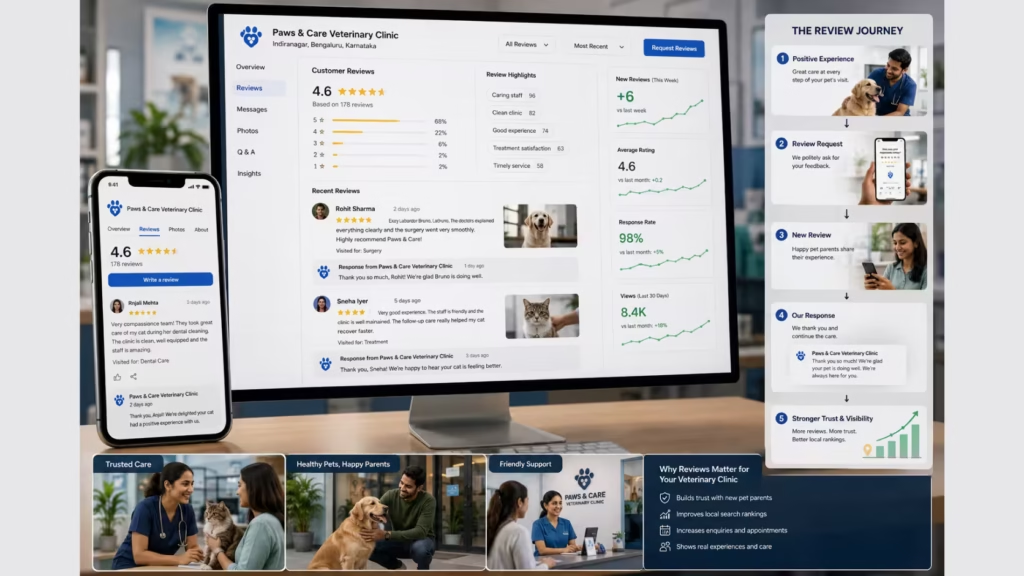
Reviews do double duty for a veterinary clinic — they influence whether a pet owner calls, and they’re a direct input into Google’s local ranking algorithm. Review volume, rating, and recency all factor into map pack visibility, not just how the clinic looks to a human reading them.
Recency matters more than most clinic owners assume. A profile with forty reviews from the last six months tends to hold its ranking position more reliably than one with two hundred reviews that are mostly two or three years old. Google’s algorithm reads an active, ongoing stream of reviews as a signal that the business is genuinely active and trusted right now — not just historically.
A workable review system for a veterinary clinic doesn’t need software or automation to start:
- Ask for a review at the end of every positive visit — build it into the front-desk process rather than relying on remembering to ask
- Respond to every review, positive and negative — a calm, specific response to a negative review (addressing the actual concern, not a generic apology) often does more for a prospective client’s trust than the negative review does damage
- Never get defensive or argue in a public reply, even when the clinic is clearly right — move specifics to a phone call and keep the public response short and professional
- Avoid review-gating (asking only happy clients to leave public reviews while routing unhappy ones elsewhere) — Google’s guidelines prohibit it, and it tends to produce a review profile that looks unnaturally perfect, which experienced pet owners are quick to distrust
NAP Consistency and Technical Local SEO Basics
Name, address and phone number consistency sounds like a minor detail, but it’s one of the more common reasons an otherwise well-run clinic underperforms in local search. Every version of the clinic’s NAP — on the website, on Google Business Profile, on Practo, JustDial, Sulekha, and any other directory — needs to match exactly, down to how the address is abbreviated and which phone number is listed as primary.
A few other technical basics worth getting right: the website should have schema markup identifying it as a local business/veterinary clinic, which helps Google understand what the business is and where it operates even before it starts evaluating content quality; the site needs to load quickly and work properly on mobile, since the large majority of local veterinary searches happen on a phone, often the moment someone needs the information; and every location or service page should have a unique, descriptive title tag and meta description rather than a templated one repeated across pages.
Build Local Trust Before Pet Owners Call
Strong reviews, accurate business information and better local visibility can help your veterinary clinic stand out from competing practices.
How Routine and Emergency Searches Should Shape Content Differently
A pet owner researching a wellness check-up for a new puppy and a pet owner searching “emergency vet open now” at 1am are looking for completely different things, and content built for one poorly serves the other.
For routine-care searches, what tends to convert: clear service pages that explain what happens during a visit, transparent information about what the clinic treats and doesn’t, and content that builds comfort and trust before the visit (team bios, clinic photos, what a first visit looks like). This is a comparison-shopping moment, even if it’s a quick one — the pet owner has time to read a page or two before deciding.
For emergency-intent searches, none of that matters as much as three things being instantly visible: is the clinic open right now, how far away is it, and can the pet owner call immediately. A dedicated emergency-care page (if the clinic genuinely offers it) with the phone number and “open now” status above the fold, paired with a Google Business Profile that has emergency hours set accurately, does more for this moment than any amount of well-written service copy buried below it.
Common Local SEO Mistakes Veterinary Clinics Make
- Choosing too broad or slightly incorrect a GBP category instead of the one that actually matches how pet owners search
- Listing services generically instead of naming each one, missing the specific long-tail searches pet owners use
- Inconsistent NAP data across the website, GBP, Practo, JustDial and Sulekha
- Letting the Google Business Profile go stale — no new photos, no posts, an unanswered Q&A section
- No consistent process for requesting reviews, so the profile’s activity looks inactive even when the clinic is busy
- Publishing thin, near-duplicate location pages instead of genuinely useful, location-specific content
- No dedicated emergency-care page or accurate emergency hours, for clinics that do offer after-hours care
- Treating Local SEO as a one-time project instead of an ongoing habit — most of what moves rankings here compounds over months, not days
What a Complete Local SEO Strategy for a Veterinary Clinic Should Include
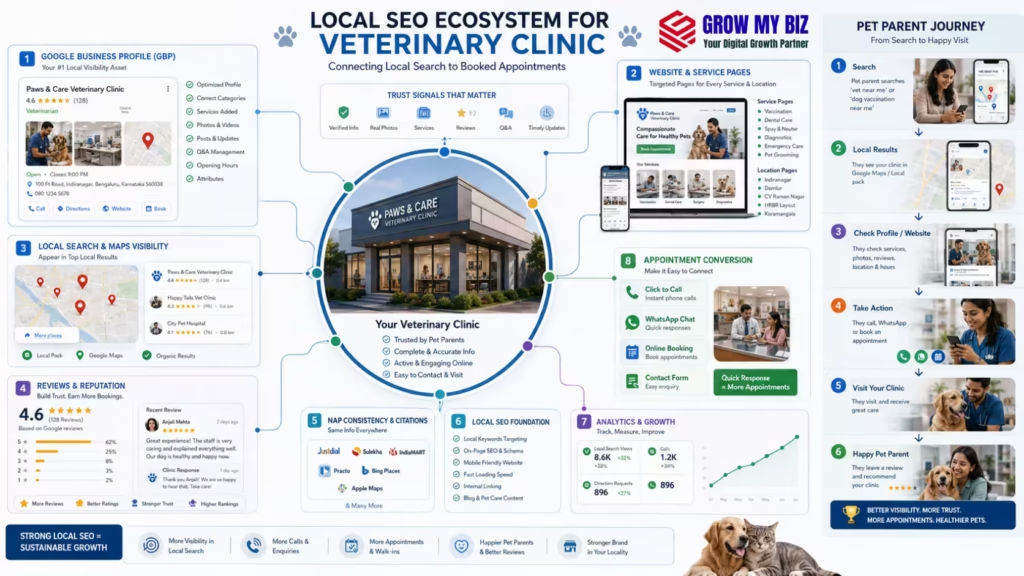
“We’ll optimise your Google listing” is a starting point, not a strategy. A genuinely complete Local SEO approach for a veterinary clinic covers each of the following as a distinct, ongoing piece of work:
- Google Business Profile — correct category, complete services, accurate hours, ongoing photos and posts
- Website structure — dedicated service pages and, where relevant, genuinely unique location pages
- Citation building and cleanup — GBP, Practo, JustDial, Sulekha and relevant local directories, all matching exactly
- Review generation — a consistent, built-into-the-process system, not an occasional reminder
- Technical basics — schema markup, mobile performance, unique titles and meta descriptions per page
- Content built for search intent — routine-care content that builds trust, emergency-care content built for speed and clarity
- Ongoing monitoring — tracking map pack position for core “near me” and service searches, not just overall traffic
What to Look for in a Local SEO Agency for a Veterinary Clinic
Plenty of clinic owners can manage the basics themselves, particularly claiming and filling out the Google Business Profile — that alone doesn’t require outside help. Bringing in a specialist tends to make more sense once the clinic wants citation building done properly across the Indian directory landscape, once there’s more than one location to manage consistently, or once the owner’s time is genuinely worth more spent treating animals than chasing directory listings and review requests.
A few questions worth asking any Local SEO agency or freelancer being considered for veterinary work:
- Do they understand the difference between routine and emergency search intent, or is every recommendation generic “more content, more links” advice?
- Will they actually build and clean up citations across Practo, JustDial and Sulekha, or only touch the Google listing?
- Do they have a concrete, ongoing review-generation process, or does it stop at a one-time suggestion?
- Can they explain how they’ll track map pack position for the clinic’s actual service and location terms, not just generic traffic numbers?
- Are they upfront that Local SEO compounds over months, not weeks — or do they promise fast rankings no legitimate agency can honestly guarantee?
Ready to Grow Your Veterinary Clinic Locally?
Build a stronger local presence, improve your Google visibility and make it easier for the right pet owners to choose your clinic.
Budget and Realistic Timelines
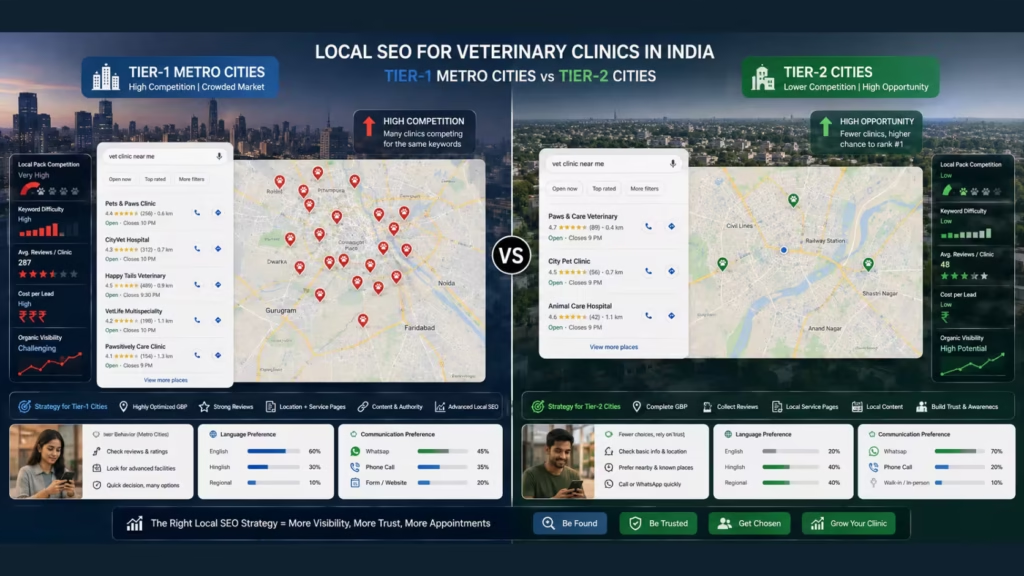
What a veterinary clinic should expect to spend and how long results take depends heavily on the starting point — a clinic with an unclaimed or barely-filled GBP and no citations has more foundational work (and often faster early wins) than one refining an already solid presence in a competitive metro.
A few things worth keeping in mind regardless of budget:
- Foundational work — GBP completion, core citation building, initial review requests — typically shows the fastest visible movement, often within the first couple of months
- Map pack position for competitive “near me” and emergency-intent terms in dense metros usually takes longer to solidify and needs sustained review generation and content work to hold, not just an initial push
- Local SEO is compounding, not one-off — the clinics reliably in the map pack a year from now are the ones that kept the review-request and profile-maintenance habit going, not the ones that did a big setup push and stopped
- Cost-per-click platforms like Google Ads can fill gaps quickly while Local SEO builds, but they stop producing enquiries the moment spend stops — Local SEO is what keeps working in the background afterward
Ready to Own Your Local Map Pack?
At Grow My Biz Digital, we build and maintain the specific Local SEO setup a trust-driven, urgent-intent category like veterinary care actually needs — Google Business Profile management, India-specific citation building across Practo, JustDial and Sulekha, and a review-generation system that keeps working after the initial setup is done. If you’d like a straightforward look at where your clinic’s local visibility is currently losing enquiries, get in touch and we’ll walk you through it.
Frequently Asked Questions Local SEO for Veterinary Clinics in India
What’s the most important Local SEO factor for a veterinary clinic in India?
A correctly categorised, fully completed and actively maintained Google Business Profile has the single biggest impact on map pack visibility for “vet near me” and emergency searches — the highest-intent queries in the category.
Which directories matter most for veterinary clinic citations in India?
Beyond Google Business Profile itself, Practo (as India’s largest healthcare-specific directory), JustDial and Sulekha carry the most citation weight for veterinary clinics in the Indian market — more relevant here than international directories most generic SEO guides default to.
How many Google reviews does a veterinary clinic need to rank well?
There’s no fixed number — recency and consistency matter as much as total volume. A steady stream of recent reviews tends to support map pack rankings more reliably than a large but stale review count.
How long does Local SEO take to show results for a veterinary clinic?
Foundational fixes (GBP completion, core citations) can show movement within a couple of months. Holding a strong map pack position in a competitive area takes sustained, ongoing work — reviews, content and citation maintenance — typically over several months, not weeks.
Can a single-location veterinary clinic outrank a larger multi-location chain locally?
Yes — proximity to the searcher is one of the strongest Google Maps ranking factors, so a well-optimised, single-location clinic close to the pet owner often outranks a larger chain located further away. A complete profile and consistent reviews matter more here than brand size.