
Here’s a pattern I see constantly in this industry: a designer with a large, engaged Instagram following and a portfolio strong enough to compete with any established studio, but an enquiry count that doesn’t reflect either. When the leads that do come in trace back almost entirely to referrals, not to social media or search, that gap — beautiful work, weak enquiries — is rarely a design-quality problem. It’s a findability and trust problem.
Interior design is a strange category to market. It’s visual, which makes people assume marketing is just about posting nice photos. It’s also high-ticket, high-trust, and slow-decision — closer to hiring an architect than buying a sofa. Most digital marketing for interior designers gets built around the first assumption and ignores the second, which is exactly why so many designers with great work still struggle to fill their project pipeline.
Why Referrals Alone Stop Being Enough
Referrals built most interior design businesses in India, and they still matter. The problem is they don’t scale, and they don’t give you control. A slow month in referrals is a slow month in revenue, full stop.
Meanwhile the number of designers competing for the same client has gone up sharply — every city now has dozens of studios, modular kitchen specialists, and turnkey firms all chasing the same 2BHK and 3BHK renovation clients. A prospective client comparing designers for a ₹8–25 lakh project isn’t calling the first name that comes up. In my experience, that client is quietly comparing five to ten designers — checking their Google reviews, scrolling their Instagram, reading their website — days or weeks before anyone gets a call. Digital marketing for interior designers is really about winning that invisible comparison stage, not just generating a lead.
Check our full guide about Digital Marketing Services That Actually Generate Leads.
What I’ve seen fail most often: designers who are only visible when someone already knows their name. Being visible only to people who already trust you isn’t marketing — it’s just a digital business card. Real marketing gets you found by the client who has never heard of you but is already searching.
How People Actually Search for an Interior Designer
Not every search means the same thing, and treating them the same is where a lot of keyword strategy goes wrong.
- Discovery searches — “modern living room ideas,” “small apartment interior ideas” — the person isn’t hiring anyone yet, they’re forming taste.
- Research searches — “interior design cost for 2BHK,” “interior designer vs contractor” — budgeting and educating themselves before they commit.
- Commercial/comparison searches — “best interior designer in Gurgaon,” “interior design company near me” — actively shortlisting.
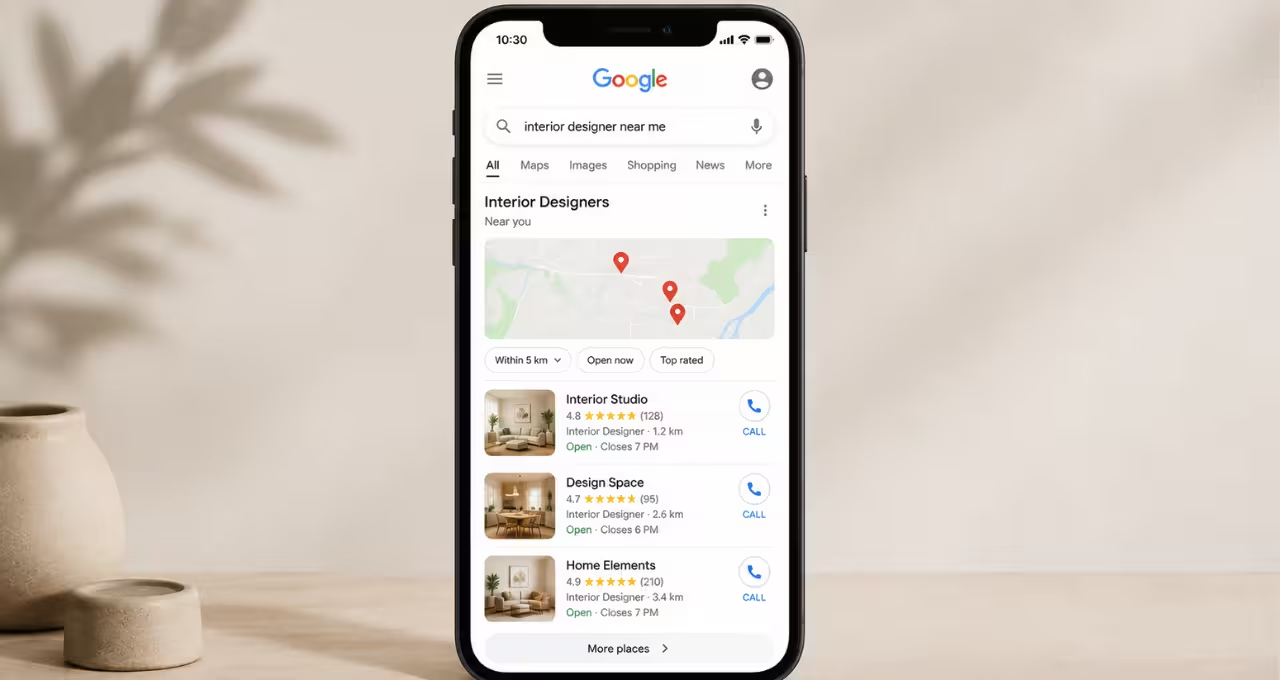
- High-intent searches — “interior designer near me,” “modular kitchen designer near me,” “3 BHK interior designer [city]” — ready to contact someone within days.
A designer who only shows up for discovery-stage searches gets traffic and likes. A designer who shows up for the high-intent searches gets the phone to ring. Both matter, but if you can only fix one first, fix the high-intent layer — that’s where Google Search and Google Maps do the heavy lifting.
Free Website & Google Visibility Audit
Is Your Portfolio Website Actually Generating Enquiries?
We’ll audit your website, Google Business Profile, and local search visibility — and tell you exactly what’s costing you client enquiries. No cost. No obligation.
Google Is Your Highest-Intent Lead Source
Instagram is where people discover design ideas they didn’t know they wanted. Google is where people go once they’ve already decided they need an interior designer. That distinction matters more than most designers realise: ranking for “interior designer near me” is commercially worth far more than getting traffic on a generic design-inspiration keyword, even if the second one brings ten times the visitors.
Most of that high-intent traffic splits across three things: the Google Maps local pack, organic search results, and “near me” mobile searches done on the spot, often while someone is scrolling through options on their phone during a slow evening. If your Google Business Profile and website aren’t built for that moment, someone else’s is.
Check our Local SEO Services guide.
Google Business Profile: A Lead Engine, Not a Listing
Most interior designers set up their Google Business Profile once, add a logo, and never touch it again. That’s a mistake — a stale, half-filled profile signals inactivity to Google’s local algorithm, and inactivity gets outranked.
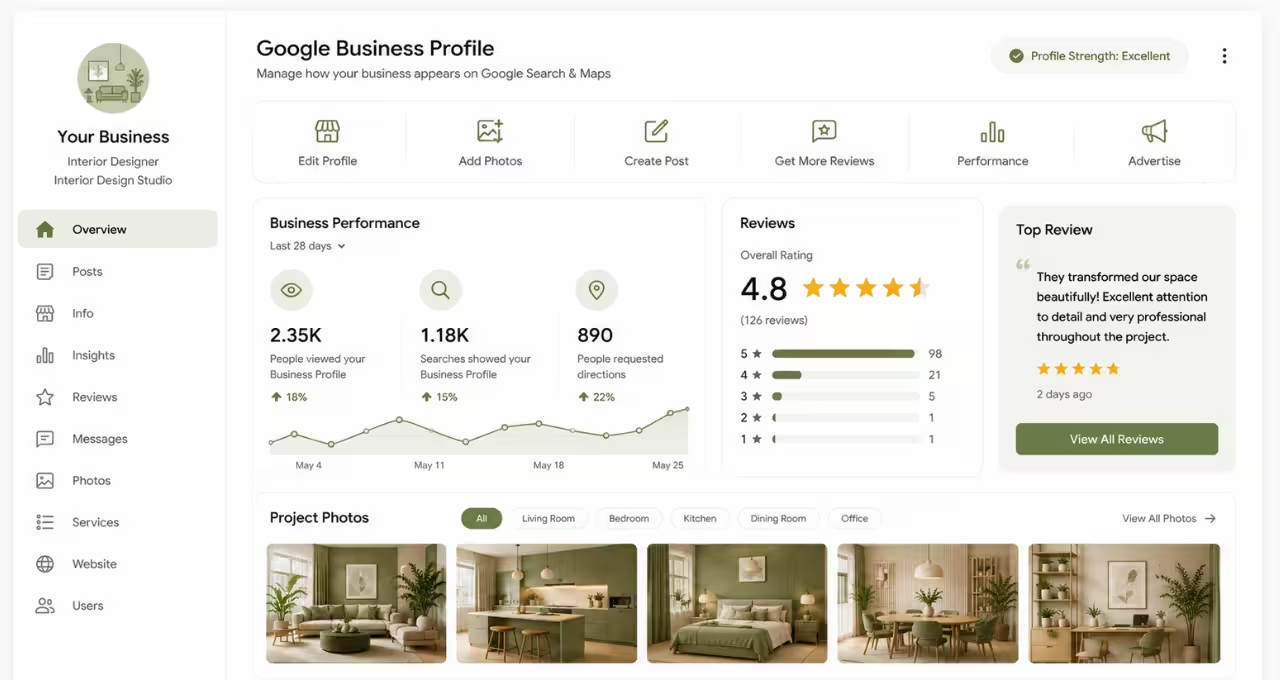
- Primary category should be the closest accurate match — “Interior Designer” — with relevant secondary categories (Interior Decorator, Kitchen Remodeler) added only where genuinely true.
- Business description should state real specifics: residential vs commercial focus, cities served, turnkey vs design-only, rather than vague adjectives like “creative” or “passionate.”
- Services section listed explicitly — 2BHK interior design, modular kitchen design, office interior design — matching how people actually search.
- Photos matter more here than almost any other business category. Real project photos, uploaded regularly, outperform a one-time upload of ten images.
- Reviews and review responses, Google Posts for new project reveals, and correct service-area settings for designers who cover multiple cities.
Treat the profile like a small landing page that happens to sit inside Google Maps, because that’s functionally what it is.
SEO for Interior Designers
QUICK ANSWER SEO for interior designers means ranking for three keyword types: service keywords (“modular kitchen designer,” “office interior design”), location keywords (“interior designer in Noida”), and combined service-plus-location keywords (“2 BHK interior designer in Gurgaon”) — supported by dedicated service pages, location pages, and real project pages rather than one general “portfolio” page trying to rank for everything. |
Dedicated pages beat one crowded homepage every time. A page built specifically around modular kitchen design, with real project photos and pricing guidance, will out-rank a homepage that mentions kitchens in one paragraph among six other services. The same logic applies to cities — a firm serving Delhi, Noida, and Gurgaon needs three distinct location pages with locally specific content, not one page listing all three cities in a sentence.
Underneath that: basic technical health still decides whether any of it shows up at all — mobile page speed, image compression (interior design sites are notoriously image-heavy and slow), clean URL structure, and schema markup identifying the business as a LocalBusiness/HomeAndConstructionBusiness entity rather than generic content.
Check our SEO Services Guide.
Why a Beautiful Portfolio Alone Doesn’t Generate Enough Leads
This is where I’ll be blunt: a portfolio website and a lead-generation website are not the same thing, and most interior designers only have the first one.
A portfolio answers “is this designer talented?” A lead-generation site answers the questions a prospective client is actually holding in their head before they’ll pick up the phone: What kind of projects do you take on? Which areas do you serve? What’s your design style, and does it match mine? Do you handle turnkey execution or design only? What’s the rough budget range for a project like mine? What makes you different from the other five tabs I have open? What happens after I fill this form — do I get a call, a site visit, a quote?
Most people get this wrong because they assume gorgeous photography answers all of that on its own. It doesn’t. A client can love your work and still not enquire if they can’t quickly tell whether you’re the right fit for their budget, their property type, and their timeline.
See Where You Rank
Not Showing Up When Someone Searches “Interior Designer Near Me”?
Most clients pick from the first 3 names on Google Maps. We’ll show you exactly where your studio ranks today — and what’s keeping you off that shortlist.
Social Media: Attention, Trust, Desire, Then Enquiry
Instagram, Pinterest, and YouTube are where interior design is genuinely built for. The mistake isn’t being on these platforms — it’s using them only as a gallery. A feed of finished-room photos with no context builds followers, not clients.
Check our ultimate guide about Social Media Marketing Services What Actually Works for Local Businesses
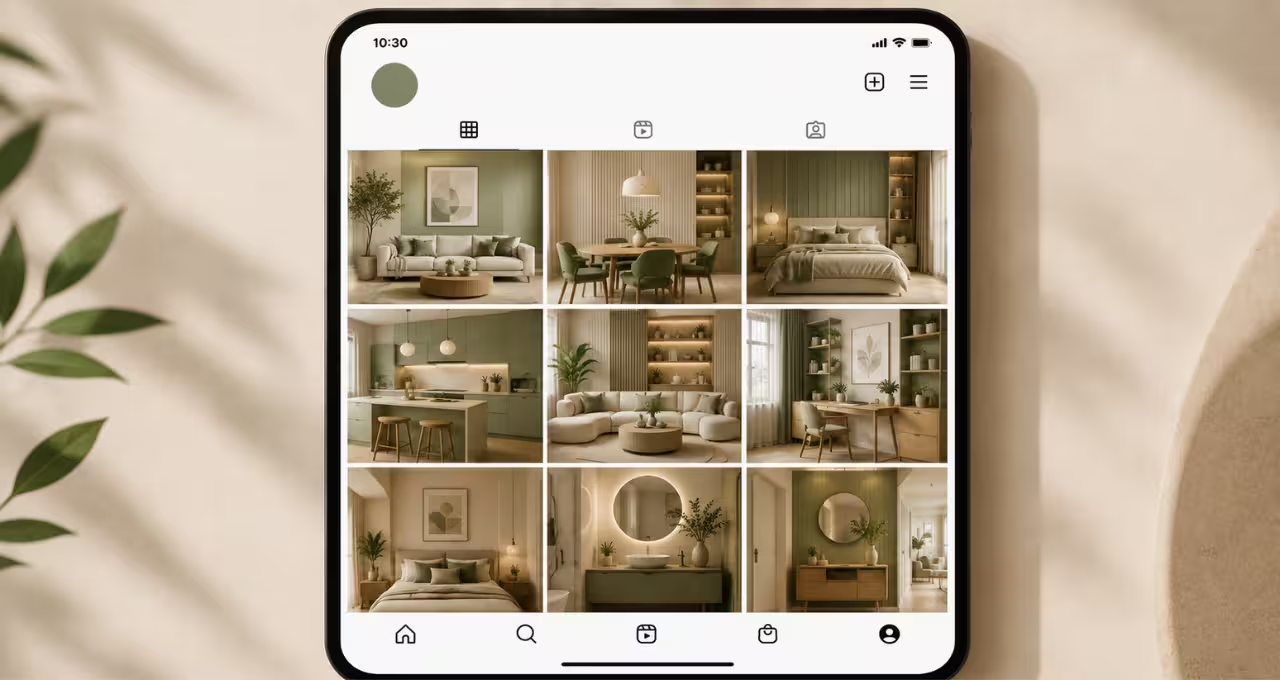
What actually moves someone from scrolling to enquiring is a mix: project walkthroughs and reels, honest before/after transformations, short explainers on material choice or budget trade-offs, client testimonials with real context, and behind-the-scenes site-visit content that shows the process, not just the result. That mix takes a stranger through attention, then trust, then desire, and only then does an enquiry make sense — skipping straight from a pretty photo to a “DM us” caption asks for too much too soon.
Check our guide about Instagram Content Ideas 2026: 30 Posts That Actually Get Patients
Instagram vs Google: not a competition
Instagram creates visual discovery — someone finds you before they know they’re looking for a designer. Google captures active demand — someone finds you after they’ve already decided to hire one. A strategy that only invests in one of these leaves money on the table at the other end of the buying journey.
Before/After Content and Project Case Studies
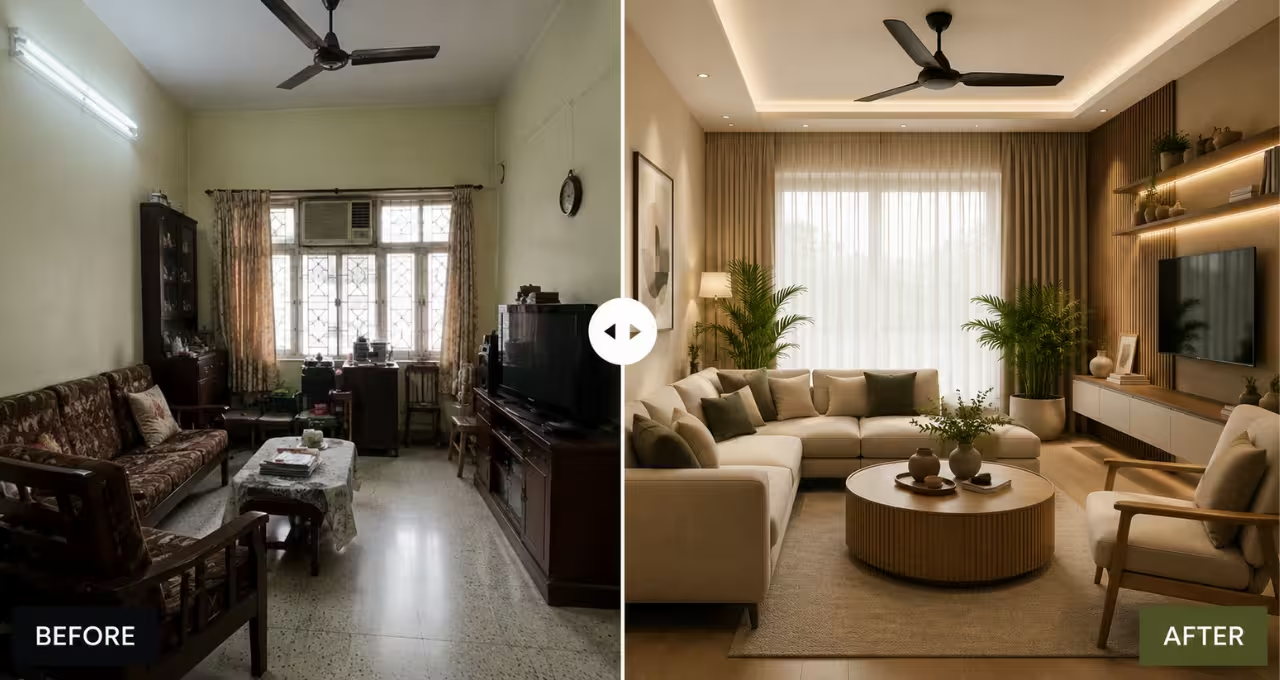
A finished room looks nice. A transformation is persuasive. Showing the cramped, dated original space next to the final result does more to build trust than another polished hero shot, because it demonstrates problem-solving, not just aesthetics — and problem-solving is what a client is actually paying for.
A proper project case study goes further than a before/after pair. The structure that works: client’s original requirement and property type, the location, the specific design challenge (budget constraint, small space, awkward layout, structural limitation), the approach taken, key material and budget decisions, execution timeline, the final outcome, genuine client feedback, and a clear next-step CTA. One detailed case study like this, published as its own page, is worth more in trust-building than fifty scattered portfolio images with no story behind them.
Content That Captures Clients Before They’re Ready to Hire
A large share of future clients are searching months before they contact anyone — “interior design cost for 2 BHK,” “modular kitchen cost,” “how to choose an interior designer,” “interior designer vs contractor,” “small apartment interior ideas,” “false ceiling cost.” Answering these honestly, with real ranges and real trade-offs instead of vague marketing language, keeps a firm in front of someone during the months they spend researching — so that by the time they’re ready to shortlist, the firm that already answered their questions has an obvious head start.
Google Ads: When It Works, When It Wastes Money
Google Ads can shorten the runway when organic SEO would take months, but it’s also where I’ve seen the most wasted budget in this category. The problem is rarely the platform — it’s broad keywords, no negative keyword list catching irrelevant searches (“interior design courses,” “interior design jobs,” DIY searches), and paid traffic landing on a generic homepage instead of a page built for that exact search.
Check out complete guied about Google Ads Services for businesses.
Why some campaigns generate enquiries but still fail commercially: a poorly targeted campaign can produce a steady stream of form fills that are all budget-mismatched, out of service area, or just tyre-kickers — the cost-per-lead number looks fine on a dashboard while the sales team is quietly drowning in unqualified enquiries. Call tracking and basic conversion tracking aren’t optional here; without them, you can’t tell a good campaign from an expensive one.
WhatsApp: Removing Friction Between Interest and Contact
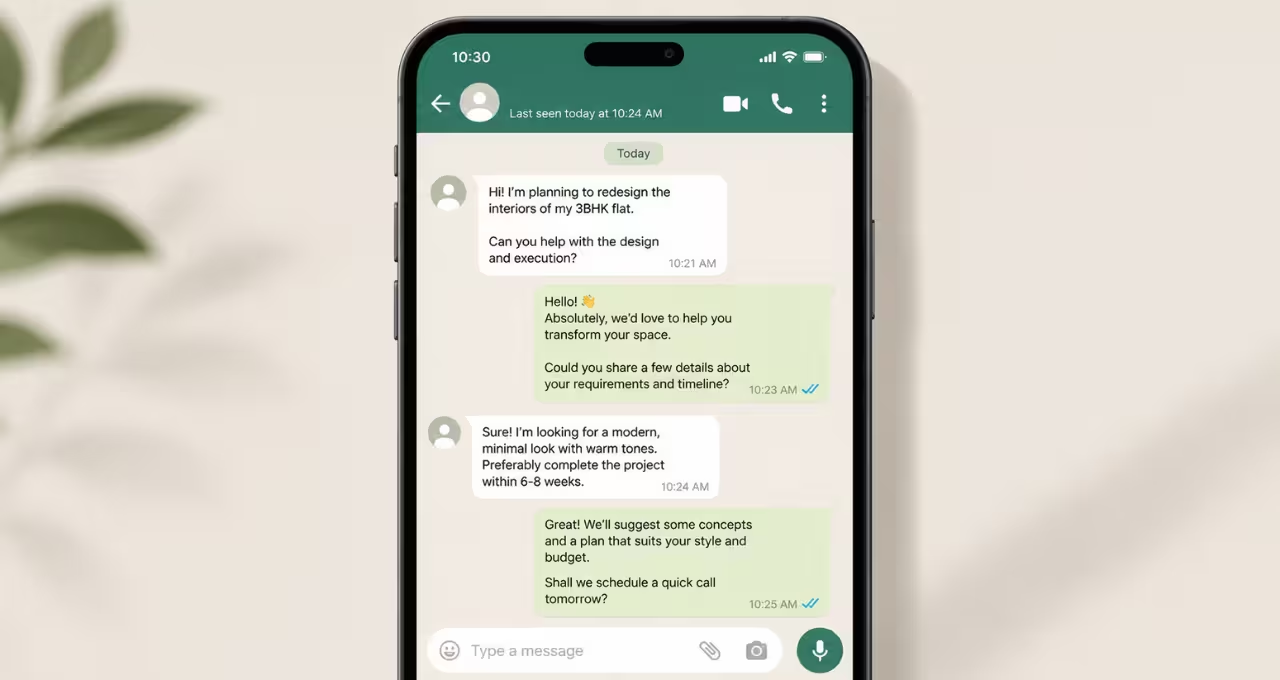
A contact form with six fields loses people who were ready to enquire thirty seconds ago. A WhatsApp button doesn’t. For a category where a lot of enquiry happens on mobile, often at night while someone’s browsing options, reducing the gap between “I’m interested” and “I’ve messaged you” has a real, measurable effect on enquiry rate — click-to-WhatsApp ads, a persistent WhatsApp button on the website, and a WhatsApp CTA on Instagram bios and story highlights all serve the same purpose: catch the moment of interest before it cools off.
What a High-Converting Interior Designer Website Actually Needs
Above the fold, a visitor should immediately understand what the firm does, which cities it serves, and what to do next — not scroll through three slides of ambient photography before finding a way to contact anyone.
- A homepage with a clear value proposition and immediate next step, not just a hero image
- Dedicated service pages (modular kitchen, residential, commercial, turnkey) and dedicated location pages
- Real project case study pages, not just a scrolling image gallery
- Designer credentials, years of experience, and an honest “about” section
- Testimonials and Google reviews embedded, not just linked out
- An FAQ section addressing budget, timelines, and process
- WhatsApp CTA and call CTA visible on every page, not buried in a contact page
- Fast mobile load speed — heavy, uncompressed images are the single biggest performance killer on design sites
Check our guide about Website Designing that Built for Speed, SEO and Conversions
Local SEO: “Near Me” and “In [City]” Are Different Searches
“Interior designer in Delhi” is a broader, research-stage search — someone scoping out who exists in the city. “Interior designer near me” is a narrower, ready-to-act search tied to the searcher’s exact location, usually surfaced through the Google Maps pack. Both deserve targeting, but they need different content: the city page can be broader and more informational, while Maps visibility depends on the Google Business Profile fundamentals covered earlier, plus consistent NAP data and genuine local reviews.
Also Read:- Google Business Profile Suspended in India — Complete Recovery Guide (2026)
See What’s Possible
Want More Signed Projects Like the Ones Above?
We’ll map out a simple, no-jargon growth plan for your studio’s online visibility — what to fix first, and what kind of results are realistic in your timeline.
Reviews and Trust Signals: Context Beats Praise
“Excellent service, highly recommend” is a weak review. It says nothing to the next reader. A review that mentions the property type, the specific challenge, how communication went during execution, and how the final result turned out does real work — it lets a prospective client see themselves in that story. Encouraging clients to mention specifics when leaving a review, rather than just asking for “a good review,” is a small habit that compounds over time into a genuinely persuasive review section.
Common Digital Marketing Mistakes Interior Designers Make
- Relying only on Instagram and treating it purely as a portfolio gallery.
- A beautiful website that’s technically weak — slow, uncompressed images, no service or location pages.
- An abandoned or half-filled Google Business Profile.
- No location strategy — one page trying to serve every city the firm works in.
- Posting on social media randomly, with no attention-trust-desire arc.
- Buying followers — it inflates a vanity number and does nothing for enquiries.
- Running Google Ads with no conversion tracking or call tracking.
- Sending paid traffic to a generic homepage instead of a matching landing page.
- No WhatsApp CTA, which quietly loses mobile-intent enquiries.
- No structured reviews strategy — waiting for reviews to happen instead of asking with context.
- Using stock images instead of real project photography.
- Slow or no follow-up on leads that do come in.
Why Some Interior Designers Get Leads While Others With Similar Work Don’t
Two hypothetical designers, same city, similar quality of work:
Designer A has a strong portfolio, weak Google presence, a slow website, a handful of generic reviews, and posts on Instagram whenever there’s time. No clear next step anywhere on the site.
Designer B has similar project quality, but a Google Business Profile that’s actively maintained, dedicated service and location pages, detailed project case studies, reviews with real context, consistent social content built around a trust-building arc, and a visible WhatsApp CTA on every page.
Designer B wins more projects — not because the design work is better, but because every stage of a prospective client’s research and decision process has an answer waiting for them. Design quality gets you shortlisted once someone finds you. Digital marketing decides whether they find you at all, and whether they trust you enough to reach out.
The Digital Marketing Funnel for Interior Designers
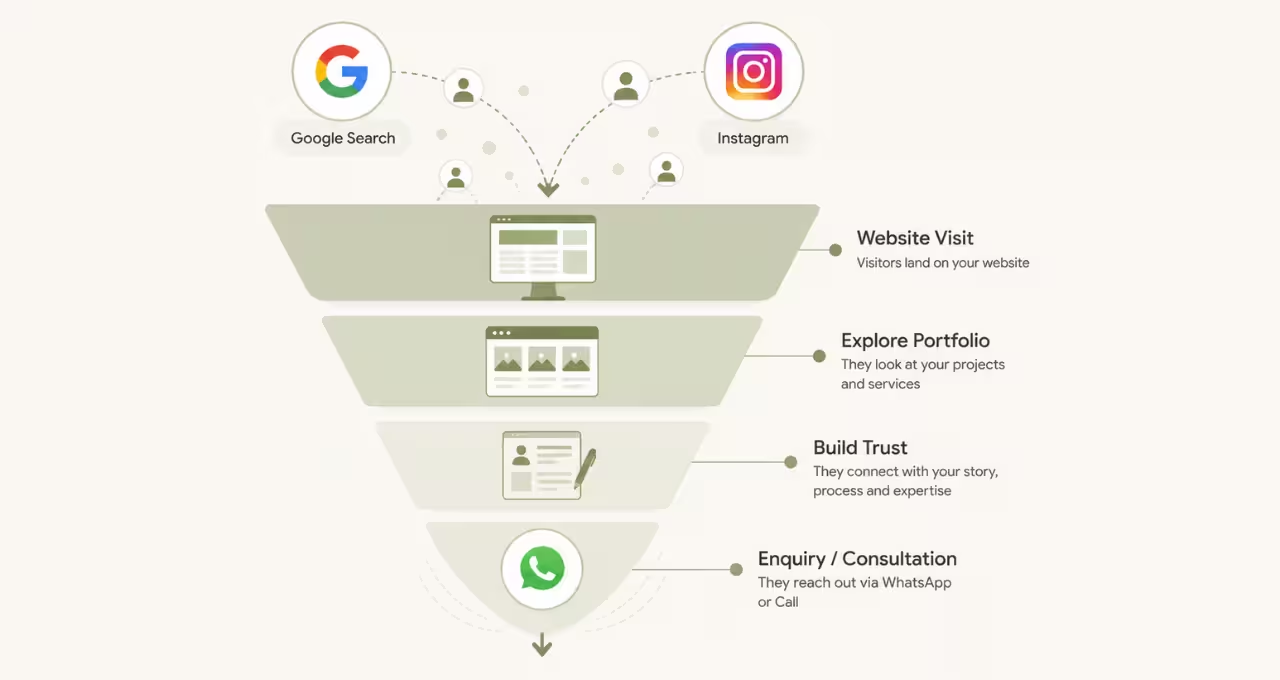
Marketing for this category has to support the entire journey, not just drive traffic to a homepage:
Google / Instagram / YouTube / Ads → Website / Google Business Profile / Social Profile → Portfolio / Case Studies / Reviews → Trust → WhatsApp / Call / Enquiry Form → Consultation → Site Visit → Proposal → Project.
A campaign that only optimises the first step — getting more people into the top of that funnel — while ignoring the trust and conversion stages in the middle will show great traffic numbers and mediocre project numbers. Most of the actual leverage in this industry sits in the middle of that funnel, not the top.
How to Measure Success (It’s Not Followers or Traffic)
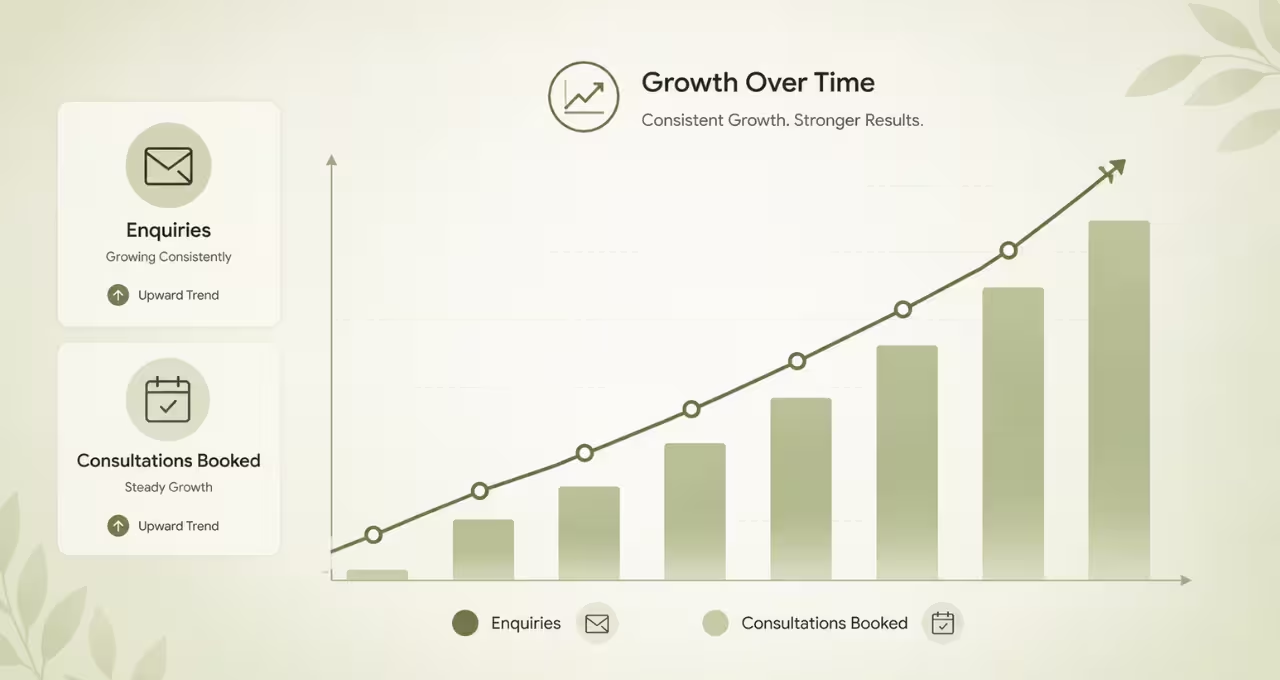
Follower count and raw website traffic are the two most misleading numbers in this industry — they feel good on a screenshot and tell you almost nothing about business impact. What actually matters:
- Calls and WhatsApp enquiries generated, and how many were genuinely qualified
- Google Maps visibility and local ranking movement for the service-plus-location terms that matter
- Consultation bookings and site visits scheduled, not just form submissions
- Cost per qualified lead, not cost per click
- Projects actually won, tracked back to the channel that originated them
A page with modest traffic but a steady trickle of qualified WhatsApp enquiries is doing its job better than a viral reel that brought 50,000 views and zero contacts.
What Should an Interior Designer Actually Invest?
There’s no universal number that makes sense here — it depends on the size of the business, how many cities are served, how competitive the local market already is, average project value, and how much of the current online presence is already working versus needs to be rebuilt from scratch. A designer with a strong website and just a weak Google Business Profile needs a much smaller intervention than one starting with no real digital presence at all.
What is worth saying plainly: the cheapest package isn’t automatically the cheapest option. A low-cost campaign that generates unqualified, out-of-budget, out-of-city leads costs more in wasted sales time than a properly targeted, slightly pricier one that sends fewer but genuinely convertible enquiries.
New Designer vs Established Firm: Different Starting Points
A designer just starting out
Priorities are foundational: get the Google Business Profile live and complete, build a small but real portfolio, put up basic service pages, collect the first handful of genuine reviews, and keep Instagram consistent. Paid ads can wait until there’s enough of a foundation for that traffic to land somewhere credible.
An established firm
The gains come from depth: multiple location pages, a real library of case studies, stronger topical SEO authority, structured Google Ads with proper tracking, remarketing to past website visitors, video content, and a lead-tracking system so nothing that comes in gets lost or answered late.
Start This Month
Every Month Without a Lead System Is a Project Going to a Competitor
Get a free, no-obligation review of your studio’s website and Google visibility today — and a clear next step, whether or not you work with us.
A Practical 90-Day Framework
Month 1 — Foundation
- Complete and optimise the Google Business Profile — category, description, services, photos
- Fix the website’s technical basics — speed, mobile experience, WhatsApp and call CTAs
- Build or clean up two to three core service pages
Month 2 — Visibility
- Publish location pages for the primary cities served
- Start a consistent Instagram content mix (walkthroughs, before/after, process content)
- Begin collecting reviews with context from recent, satisfied clients
Month 3 — Lead generation and optimisation
- Publish the first one or two detailed project case studies
- Test a small, tightly targeted Google Ads campaign with proper conversion tracking, if budget allows
- Review calls, WhatsApp enquiries, and Maps visibility data, then double down on whatever channel is actually converting
When Should an Interior Designer Hire a Digital Marketing Agency?
Outsourcing makes sense when there’s genuinely no internal bandwidth to manage this consistently, when Google visibility is weak or non-existent, when paid ads are running but producing poor-quality leads, when the firm operates across multiple locations, or when leads are coming in but nobody is tracking or following up on them properly.
It doesn’t need to be the first move for every designer. A solo designer just starting out with a small service area can often handle the basics — Google Business Profile setup, a simple website, consistent Instagram — without outside help. An agency earns its cost once the complexity (multiple cities, paid ads, content volume, lead tracking) outgrows what one person can manage alongside actually designing spaces.
If your portfolio is strong but your enquiries aren’t matching it, the gap is usually fixable and specific. Grow My Biz Digital works with interior designers and design studios on exactly this — Google Business Profile optimization, local SEO, and website conversion fixes built for how design clients actually search and decide. Happy to take a quick look at where things currently stand. |