

If your law firm is difficult to find when potential clients search Google for terms like “property lawyer in Delhi,” “criminal lawyer near me,” or “divorce lawyer in Gurgaon,” you are likely missing valuable local search opportunities. Local SEO for law firms in India helps improve your visibility across Google Search and Google Maps so that your firm can appear when people are actively looking for legal services in their area.
Unlike generic SEO, local SEO for a law firm needs to account for the firm’s practice areas, target locations, Google Business Profile, local search signals, website authority, and the professional restrictions that apply to advocates in India. The objective is not simply to increase website traffic—it is to build stronger local visibility and attract more relevant legal enquiries from people searching for the services your firm provides.
At the same time, legal marketing in India requires a more careful approach than many other industries. SEO strategies and website content need to remain factual, professional, and consistent with the applicable Bar Council requirements. That makes law-firm-specific local SEO fundamentally different from simply applying a standard local SEO checklist to a legal website.
If your firm currently ranks mainly for its own name but struggles to appear for relevant practice-area and location-based searches, a structured local SEO strategy can help identify and address the gaps holding your visibility back.
Want More Visibility for Your Law Firm?
Get a focused local SEO strategy designed to improve your law firm’s visibility across Google Search and Google Maps.
Why Generic SEO Playbooks Don’t Work on Law Firms
Local SEO can help a law firm appear when potential clients search for legal services in a specific city or neighbourhood, but the strategy cannot simply be copied from another local business category. Law firms operate in a highly competitive search environment where practice area, location, Google Business Profile visibility, website authority, and professional requirements all need to be considered together.
A law firm may have a well-designed website and still struggle to appear for searches such as “property lawyer in Delhi,” “criminal lawyer in Gurgaon,” or “divorce lawyer near me.” Ranking for these searches requires more than adding keywords to a website. The firm needs a properly optimized local presence, relevant practice-area and location content, consistent business information, genuine local signals, and a website that demonstrates appropriate expertise and credibility.
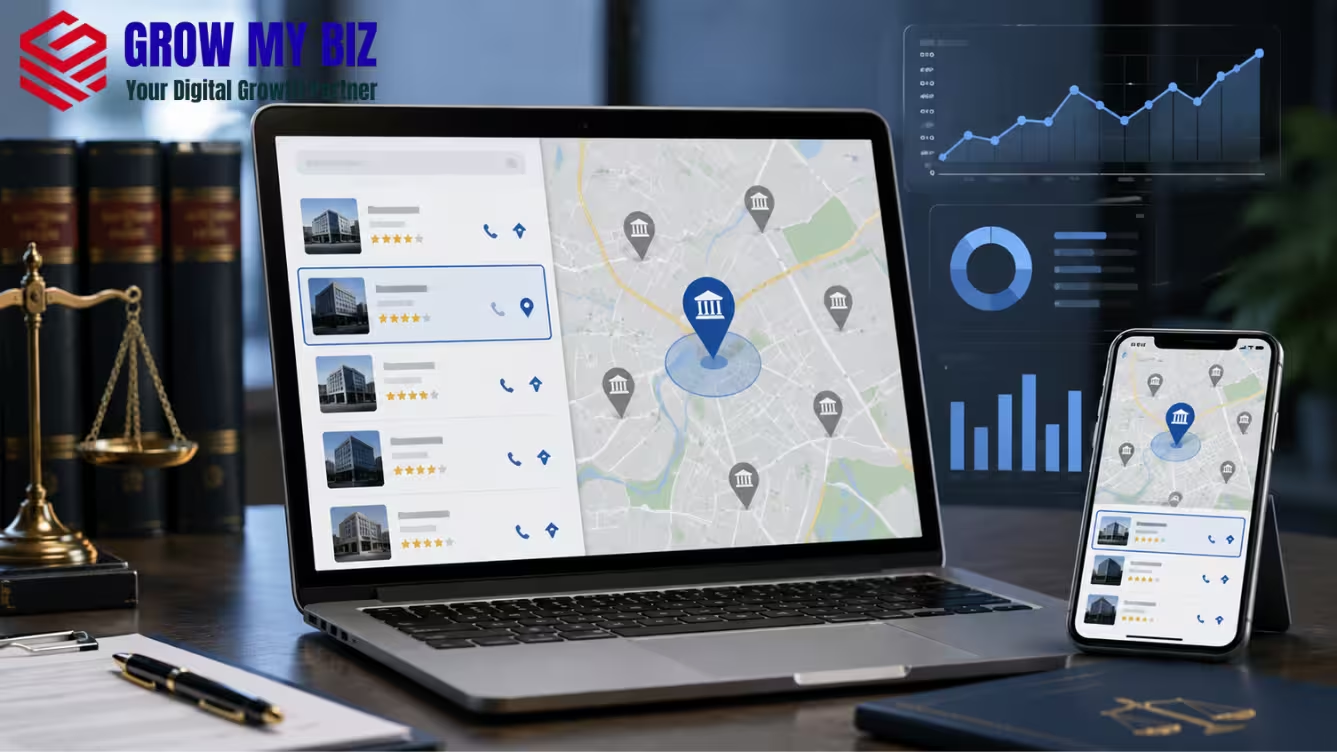
There is another important difference: legal marketing in India is subject to professional restrictions. Rule 36 of the Bar Council of India Rules restricts advocates from soliciting work or advertising, while the 2008 amendment permits certain basic informational details to be published on an advocate’s website, including contact information, qualifications, enrollment details, and areas of practice.
This means a local SEO strategy for a law firm should not blindly use promotional tactics commonly seen in other industries. Aggressive claims, comparative language, exaggerated results, or sales-focused messaging can create unnecessary compliance concerns while also making the firm’s online presence less credible.
The better approach is to build strong local search visibility around useful, factual, and professionally appropriate information—so the firm can be discovered for relevant searches without turning its website or Google Business Profile into an advertising-heavy sales page.
What This Means for Your Local SEO Strategy
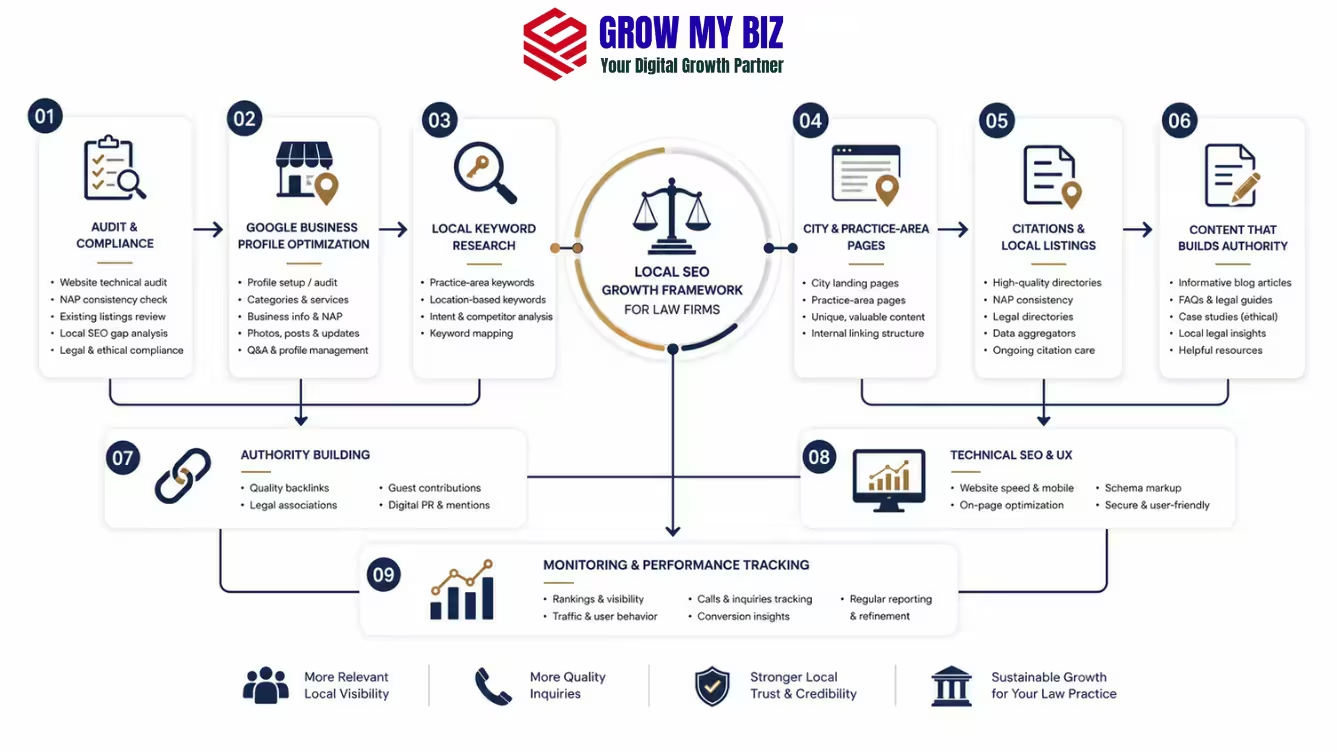
For a law firm, effective local SEO should bring together:
- Google Business Profile optimization
- Practice-area and location-based keyword targeting
- Dedicated city and practice-area pages
- Consistent local business information
- High-quality, genuinely useful legal content
- Relevant local and professional citations
- Appropriate authority and reputation signals
- Technical and on-page SEO
- Ongoing monitoring of local search performance
The goal is not simply to rank for the firm’s name. It is to build visibility for the legal services and locations that matter to the firm’s growth, while maintaining a professional and compliance-conscious online presence.
QUICK ANSWER Local SEO for law firms in India means improving visibility in the Google Maps 3-pack and local organic results for searches like “[practice area] lawyer near me” or “[practice area] advocate in [city]” — done through a compliant Google Business Profile, consistent local citations, genuine reviews, and educational (not promotional) content — while staying inside Bar Council of India Rule 36. |
What Local SEO Actually Involves for a Legal Practice
Strip away the jargon and it comes down to five things working together: a correctly set up Google Business Profile, consistent name-address-phone (NAP) data across the web, genuine client reviews, location and practice-area specific content, and basic technical SEO on the website itself. None of these five things is optional — a firm strong on content but with an abandoned GBP still won’t show up in the Maps pack, which is where most “near me” legal searches actually convert.
Also Read:- Why Is My Competitor Ranking Higher on Google Maps?
Is Your Law Firm Missing From Google Maps?
Let us identify the local SEO gaps affecting your Google Business Profile, Maps visibility and location-based searches.
Google Business Profile: The Part Most Law Firms Get Wrong
Category selection
Pick the category that matches what the firm actually does — Lawyer, Law Firm, Legal Services, or a more specific one like Divorce Lawyer or Criminal Justice Attorney — and resist the urge to add every remotely related category to “cover more searches.” Google increasingly checks category-to-service alignment, and an over-stuffed profile looks manipulative both to Google and to the Bar Council’s current scrutiny of digital listings.
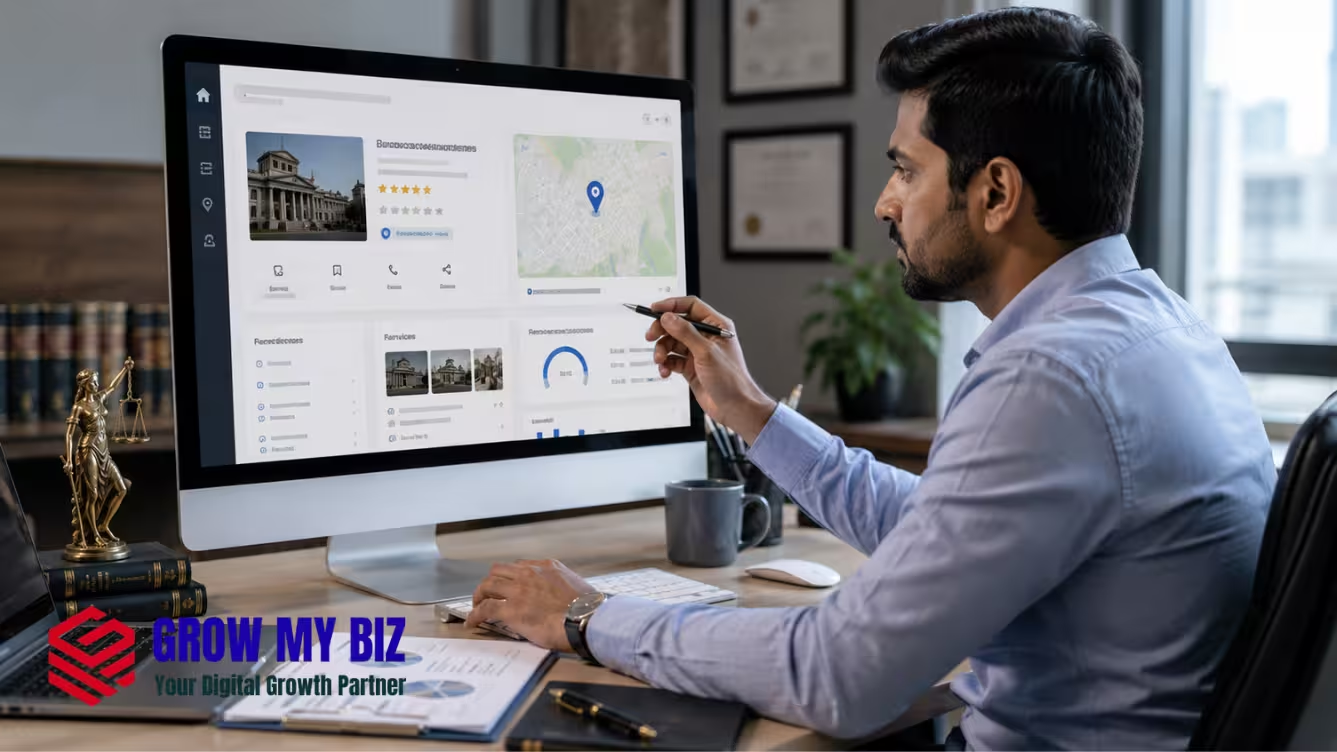
The business description field
This is where I see the most compliance risk. “Best divorce lawyer in Delhi with 500+ successful cases” is exactly the kind of comparative, results-guaranteeing language Rule 36 was written to stop, and it’s also the kind of claim Google’s own policies frown on for YMYL categories. Keep the description factual: practice areas, years of standing, courts the firm appears in, languages spoken. Boring, on paper. It’s also the version that survives scrutiny and still ranks.
NAP consistency and verification
Name, address, and phone number need to match exactly — down to the suite number — across the website, the GBP listing, and every directory the firm appears on. Mismatches are one of the quieter reasons a profile stalls outside the top 3 Maps results even when everything else looks fine.
Also Read:- Google Business Profile Suspended in India — Complete Recovery Guide (2026)
Multi-location and multi-partner firms
A firm with offices in Delhi, Noida, and Gurgaon needs a separate, individually verified GBP listing for each address — not one profile with three cities typed into the description. Google’s local algorithm is proximity-driven; a single listing simply can’t rank for “property lawyer Noida” if the verified address is in Delhi.
A mistake I see often with multi-partner firms: several partners individually claim overlapping profiles at the same address under near-identical names, effectively competing with each other in the same Maps pack. Pick one entity-level profile per office and route all enquiries through it, with individual partner pages living on the website instead.
Posts, Q&A, and keeping the profile active
Google Business Profile has a Posts feature and a public Q&A section, and both quietly influence how “alive” a profile looks to Google’s local algorithm. For a law firm, Posts work best as short, factual notes — a change in office hours, a new practice area added, a note about e-filing availability — not promotional announcements. The Q&A section is worth checking weekly; competitors occasionally seed it with misleading questions, and an unanswered, inaccurate public question sitting on a firm’s own profile does more damage than most people realise.
Reviews: The Trickiest Part of Legal Local SEO
Reviews are a top-3 local ranking factor for every industry, but law is the one vertical where asking for them is genuinely awkward. A client who just went through a divorce or a criminal matter usually doesn’t want a public Google review sitting next to their name confirming they needed a lawyer. That’s a real privacy concern, not a client-relations problem you can script your way around.

In my experience, the firms that build a healthy review base are the ones that ask selectively — corporate clients, IP and contract clients, real estate transaction clients — people who are comfortable being publicly associated with a business dispute or a property deal. Family law and criminal defence clients get asked far less often, if at all, and that’s the right call, not a missed opportunity.
Two rules that aren’t negotiable: never offer a discount or incentive for a review — Google can suspend a profile for this — and never respond to a negative review with case specifics. A generic, professional reply protects both client confidentiality and the firm’s Bar Council standing.
Also Read:- Google Ads Services | Complete Guide for Businesses (2026)
Local Citations and Directories: Be Selective, Not Everywhere
The standard local SEO advice is “get listed on 50+ directories.” For a law firm, that advice needs a filter. Given that a court has already ruled certain searchable, ranking-based legal listing platforms fall foul of Rule 36, I’d rather see a firm properly listed and verified on 15 clean, professionally appropriate directories — Google, Bing Places, industry and Bar association directories, chamber of commerce listings — than spread thin across dozens of generic local-business sites that display comparative rankings or “top lawyer” badges next to the firm’s name.
This is a judgment call, not a strict legal reading, and it’s worth a firm’s own counsel weighing in before an SEO agency mass-submits its listing to every citation site on the internet.
Also Read:- Website Designing Services — Built for Speed, SEO and Conversions
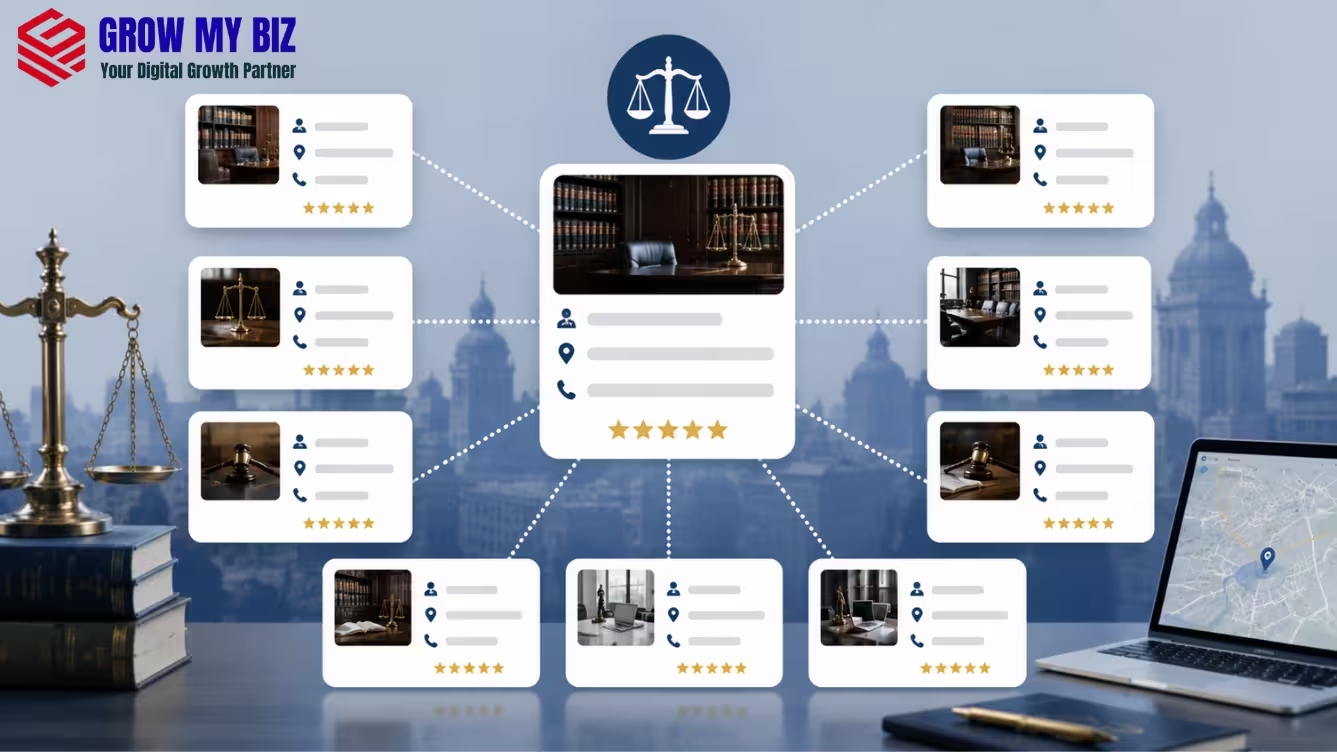
Content That Ranks Without Reading Like an Advertisement
This is where most of the real opportunity sits, and where most agencies default to thin, generic content because it’s faster to produce.
Educational content is the compliant path that actually works
An article explaining the property dispute process in Delhi, what happens after a cheque bounces under Section 138, or how mutual consent divorce timelines work in India informs the reader without soliciting them for a specific case. That distinction — inform versus solicit — is the one the Bar Council’s own commentary draws, and it happens to be exactly the kind of content Google’s Helpful Content system rewards for legal topics.
Location plus practice-area pages
A dedicated page for “Property Lawyer in Dwarka” or “Criminal Lawyer in Gurgaon” — written as a genuinely useful explainer of local court procedure, jurisdiction, and what a client should prepare, not as a sales pitch — is what shows up for the specific searches a prospective client actually types. One generic “Practice Areas” page trying to rank for six cities and eight practice areas at once almost never works; Google can’t tell which combination it’s supposed to rank for, so it ranks for none of them well.
Ready to Attract More Relevant Legal Enquiries?
Build stronger visibility for your practice areas and target locations with a structured local SEO approach for your law firm.
E-E-A-T matters more here than in almost any other local vertical
Legal content is Your-Money-Your-Life content in Google’s own classification. An author bio with the advocate’s Bar Council enrollment number, court experience, and specific acts or sections cited correctly does more for rankings than another thousand words of generic advice. Most people get this wrong because they treat the blog as a keyword-stuffing exercise instead of a credibility exercise — and Google’s systems are specifically built to tell the difference now.

Check our complete guide about Digital Marketing for Law Firms in India, Get More Client Consultations Online.
WHAT I’VE SEEN FAIL AI-generated “10 things to know before hiring a lawyer” posts with no India-specific law, no author credentials, and no local court references. These get buried by the Helpful Content system within weeks, sometimes days, of publishing — YMYL content gets far less benefit of the doubt than a recipe blog or a travel guide. |
Local Link Building and Authority for Law Firms
Generic link-building tactics — guest posts on random “write for us” blogs, paid link packages — don’t move the needle for a legal website, and some of them actively work against the E-E-A-T signals Google is checking for on YMYL content. What actually helps is authority that’s relevant to the profession itself.
- Contributing genuine, well-cited articles to legal publications and platforms like Bar & Bench or LiveLaw, written as commentary or analysis rather than firm promotion.
- Law school alumni pages and bar association member directories, which are both relevant and typically compliant since they’re informational listings, not advertising placements.
- Chamber of commerce and local business association directories, useful for firms handling corporate, contract, or commercial clients.
- Being quoted or cited by journalists covering legal developments — a slower channel, but the resulting links carry real authority and rarely raise compliance questions.
None of this replaces the fundamentals — GBP, citations, on-site content — but a firm with zero relevant external authority signals will plateau below firms that have even a handful of these in place, especially for competitive metro searches.
Measuring What Actually Matters
Rankings are a means, not the goal. The number that matters to a managing partner is qualified enquiries, and rank position alone doesn’t tell that story.
- Phone calls and direction requests logged directly in the Google Business Profile insights — the clearest signal of Maps pack performance.
- Which practice-area pages are generating contact-form submissions or calls, broken down by city, so budget can shift toward what’s converting.
- Website Q&A or contact-form enquiry quality — a spike in traffic with no genuine enquiries usually means the content is attracting the wrong intent, often students or researchers rather than prospective clients.
A firm chasing a #1 position for a broad, low-intent keyword while ignoring call volume from a #3 position on a specific, high-intent city-plus-practice-area search is optimising for the wrong number.
Technical and On-Page Basics Specific to Law Firms
- Use LegalService or Attorney schema markup, not generic LocalBusiness schema — it signals the correct entity type to Google.
- Mobile speed matters more than most categories realise: a large share of legal searches (“criminal lawyer near me open now,” late-night property disputes, urgent bail queries) happen on a phone, outside office hours, under time pressure.
- Each office location gets its own page with its own address, map embed, and locally relevant content — not a single shared “Contact Us” page.
- Internal linking between the practice-area pages and the Google Business Profile optimization work ties the whole local presence together instead of leaving them as disconnected efforts.
Common Mistakes I See Law Firms Make, Repeatedly
- Writing the GBP description like a newspaper ad, complete with superlatives and comparison claims.
- Buying reviews, or worse, offering fee discounts for them — a fast way to get a profile suspended.
- Copying US legal marketing tactics wholesale: aggressive PPC landing pages, countdown-timer “free consultation” pop-ups, billboard-style messaging that reads as solicitation under Indian rules.
- One catch-all “Practice Areas” page instead of dedicated pages per city and per practice area.
- Setting up the Google Business Profile once at launch and never touching it again — no photos, no posts, no monitoring — while competitors keep theirs active.
- Multiple partners at the same firm creating separate, competing listings at one address.
A Practical Starting Framework
If I were starting from zero with a law firm client, this is roughly the sequence:
Weeks 1–2: Audit and compliance review
- Full GBP audit — category, description language, NAP accuracy, photo and verification status.
- Site content review against Rule 36’s permitted-content list, flagging anything that reads as solicitation.
Weeks 3–8: Foundation
- Rebuild the GBP description and posts around factual, informational language.
- Clean up citations — fix inconsistent NAP, drop or de-prioritise listings on platforms with legal-advertising risk.
- Build the first two or three city-plus-practice-area pages, properly researched and locally specific.
Month 3 onward: Compounding work
- Selective, compliant review requests aimed at the right client segments.
- Steady publishing of educational content tied to real client questions.
- Monthly GBP insights review — calls, direction requests, and Maps pack position by keyword, not just website traffic.
What Results to Realistically Expect
For a less competitive city or a narrower practice area, Maps pack movement is usually visible within 60–90 days. For competitive metros — Delhi, Mumbai, Bangalore — and competitive practice areas like corporate law or high-value divorce and property litigation, six to nine months of consistent work is closer to reality before rankings stabilise in the top 3.
Any agency promising a guaranteed #1 ranking on a fixed date should be a red flag on its own — it’s an unrealistic SEO claim in any industry, and in this one it also echoes the exact “guaranteed result” language the Bar Council has explicitly warned advocates against using.
Let’s Build Your Law Firm’s Local Search Presence
Discuss your current rankings, Google Maps visibility, target locations and practice areas with our local SEO team.
Choosing a Local SEO Agency or Consultant for Your Firm
A few questions worth asking before signing anyone up:
- Have they worked with Indian law firms before, and do they know what Rule 36 actually restricts?
- Will they show you real GBP insights — calls, direction requests, Maps pack position — not just a generic traffic report?
- Do they offer to write or manage client testimonials for you? If yes, that’s a compliance problem waiting to happen, not a value-add.
- Do they build dedicated city and practice-area pages, or one thin “Practice Areas” page and a lot of promises?

Where Grow My Biz Digital Fits In
This is the exact gap I built our local SEO services for law firms around — a Delhi NCR-focused approach that treats the Bar Council’s rules as a starting constraint, not an afterthought, while still doing the unglamorous groundwork that actually moves a firm into the Maps pack: Google Business Profile optimization done correctly, city and practice-area content that reads as genuinely useful, and citation cleanup that doesn’t put a firm’s standing at risk. If your firm’s website currently only ranks for its own name, that’s usually a fixable, specific set of problems — not a reason to write off SEO for the legal profession altogether.
Want a straight, no-jargon audit of where your firm currently stands on Google Search and Maps? Get in touch with Grow My Biz Digital for a local SEO review built specifically for law firms in Delhi NCR — what’s working, what’s compliance-risky, and what to fix first. |