
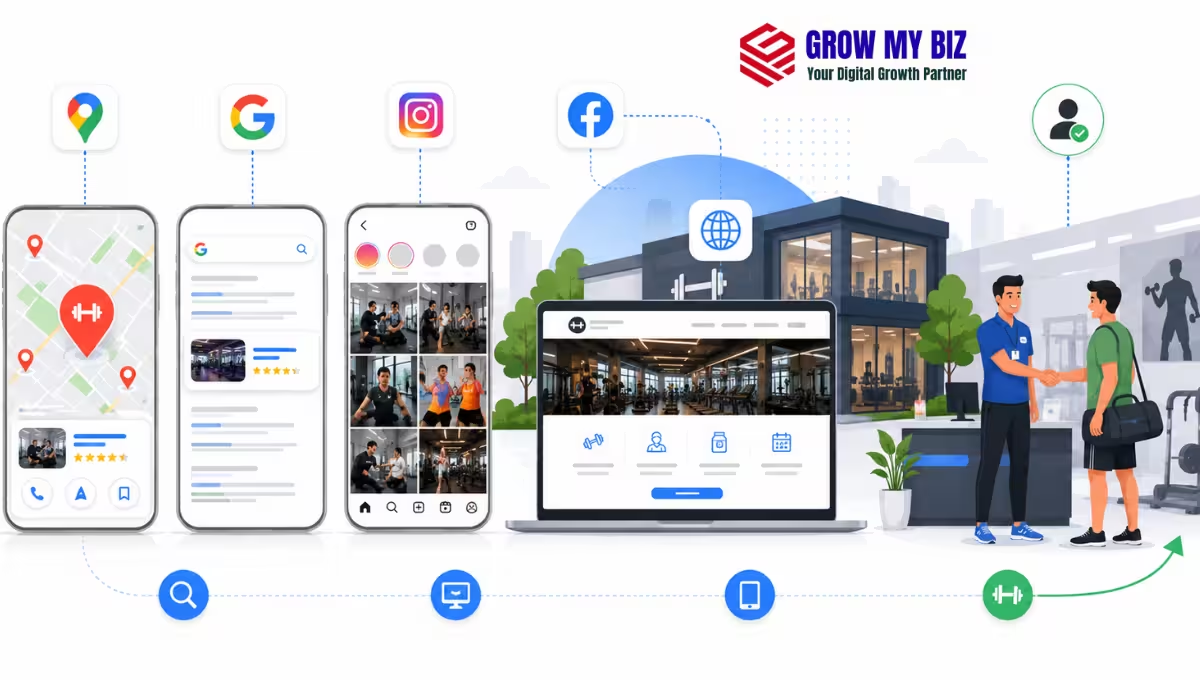
IN SHORT: Digital marketing for gyms means being visible in three places at once — Google Maps when someone searches ‘gym near me’, Google Search when they research fitness options, and Instagram/Facebook when they decide if your gym’s culture fits them. Most Indian gyms are strong on one of these and invisible on the other two.
Roughly 1 in 5 people now search online daily for local businesses, including gyms — and that number is higher among the 20-35 age group that makes up most new gym memberships. Yet walk into most independent gyms in Delhi NCR and you will find the same gap: an Instagram page with decent content, but a Google Business Profile that has not been touched in months, and a website that either does not exist or was never built to actually convert a visitor into a trial booking.
This guide is structured around the three digital marketing channels that actually drive gym memberships in India — Local SEO, Google Ads, and Social Media — with the specific tactics that work for the Delhi NCR market. It also covers where digital marketing fits alongside the other things that grow a gym: referrals, community, and retention.
Table of Contents
Local SEO for Gyms — The Highest-ROI Channel
IN SHORT: When someone searches ‘gym near me’, the three gyms shown in the Google Maps 3-Pack get the overwhelming majority of resulting calls and visits — a gym outside that top 3 is effectively invisible to that searcher, regardless of its equipment or trainers.
Local SEO for gyms is not the same as general SEO. It is specifically about how your gym appears in Google Maps and local search results when someone nearby is actively looking to join — the single highest-intent moment in the entire membership journey.
- Google Business Profile set up with the correct category (Gym, Fitness Centre) and every class/service listed individually — CrossFit, Zumba, personal training, group classes
- Weekly GBP posts — membership offers, new equipment, trainer introductions — signal an active, trustworthy profile to Google’s algorithm
- A systematic review request process — members who complete their first month are a natural, high-conversion review request moment
- NAP (Name, Address, Phone) consistency across Justdial, Sulekha, and fitness-specific directories
- Locality-specific keyword targeting — ‘gym in Indirapuram’, ‘gym near Sector 62 Noida’ — rather than a single generic ‘gym in Delhi’ target
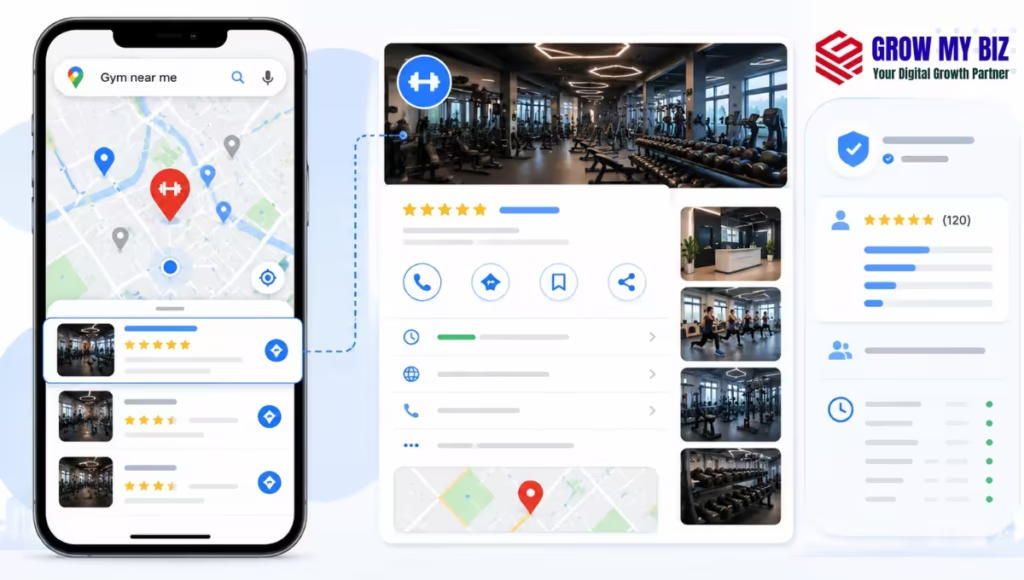
Local SEO is also one of the few digital marketing channels where visibility directly reflects trust. A complete Google Business Profile with recent reviews, updated photos, accurate business information, and regular activity gives prospective members confidence before they ever visit your gym. In competitive markets like Delhi NCR, that first impression often determines which gym receives the enquiry, even when several options are located within the same neighbourhood.
Google’s own guidance encourages businesses to keep their Business Profile complete, accurate, and regularly updated, as this helps customers find relevant information and engage with the business more easily. For gyms, maintaining accurate opening hours, recent photos, service details, and responding to reviews supports both customer confidence and long-term local visibility.
Google’s Search documentation consistently emphasises creating helpful, people-first content that answers real user questions. For gyms, that means publishing pages around the services, classes, and fitness goals prospective members are actively searching for, rather than creating content purely to target keywords.
Our Observation
Many independent gyms invest significant effort into Instagram while leaving their Google Business Profile unchanged for months. In practice, we’ve often seen simple improvements—such as updating photos, responding to reviews, publishing regular posts, and correcting business information—produce a noticeable increase in calls and direction requests before any major SEO campaign has even begun.
SEO for Gyms — Ranking Beyond Google Maps
IN SHORT: SEO for gyms means your website ranking organically for searches beyond ‘near me’ — comparison searches, specific class types, and questions people ask before choosing a gym, which Local SEO and Google Maps alone do not capture.
This is different from Local SEO, and most gym websites in India do not do it at all. A single homepage cannot rank for ‘best gym for weight loss in Gurugram’, ‘CrossFit classes in Noida’, and ‘gym with personal training in Ghaziabad’ simultaneously — each needs its own page.
- Individual pages for each class type and speciality — CrossFit, strength training, group fitness, personal training, women-only sessions
- Comparison and decision content — ‘gym vs home workout’, ‘how to choose a gym in Delhi NCR’ — captures researchers before they have picked a specific gym
- Membership pricing transparency on your website — reduces the ‘what does it cost’ friction that stops many enquiries before they start
- Technical SEO fundamentals — fast mobile load speed, proper schema markup, clean site structure
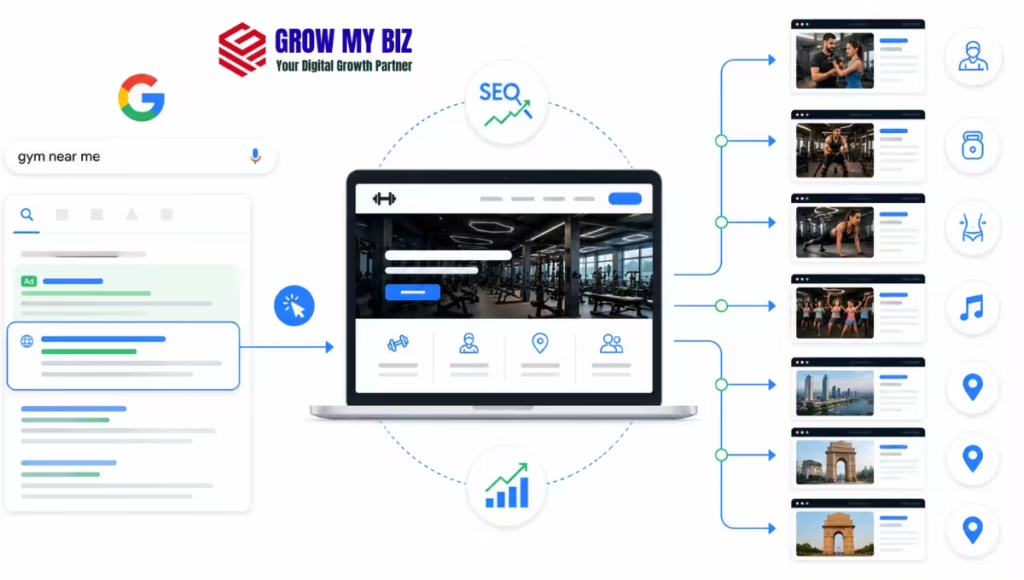
Gyms that invest in this layer consistently capture a segment of members that pure Google Maps optimisation misses entirely — the researcher who is comparing multiple gyms before deciding, not the person already standing outside your door.
Unlike Google Ads, SEO continues to generate enquiries long after a page has been published. A well-optimised guide, location page, or service page can attract prospective members month after month without increasing your advertising budget. For gyms planning long-term growth, this makes SEO one of the most cost-effective ways to build a consistent pipeline of organic enquiries.
Also Read:- Gym SEO Checklist : 30-Point Audit to Rank Higher on Google Maps.
Want More Local Gym Members from Google Maps?
If your competitors appear above your gym on Google Maps, you’re losing enquiries every day. Let us identify exactly what’s holding your Google Business Profile back and show you practical improvements that can increase your local visibility.
📞 Call Now 💬 Chat on WhatsAppGoogle Ads for Gyms — Fast Leads When You Need Them
IN SHORT: Google Ads deliver enquiries within days, making them the right channel for launching a new gym, filling a specific class, or running a January membership drive — where Local SEO and organic content take months to build the same visibility.
For a new gym, or one entering a competitive Delhi NCR locality, waiting 3-4 months for organic and Local SEO results is not always practical. A well-structured Google Ads campaign puts your gym in front of high-intent searchers immediately.
- Search campaigns targeting ‘gym near me’ and locality-specific queries — capturing the exact searches Local SEO is also targeting, for immediate paid visibility while organic builds
- Call-only ads on mobile — one tap connects a prospective member directly to your front desk
- Seasonal campaign timing — January resolution surge, pre-summer, post-monsoon restart — aligned to when gym search volume actually peaks
- Landing pages built specifically for ad traffic — not a generic homepage redirect, which loses the majority of paid clicks before they convert
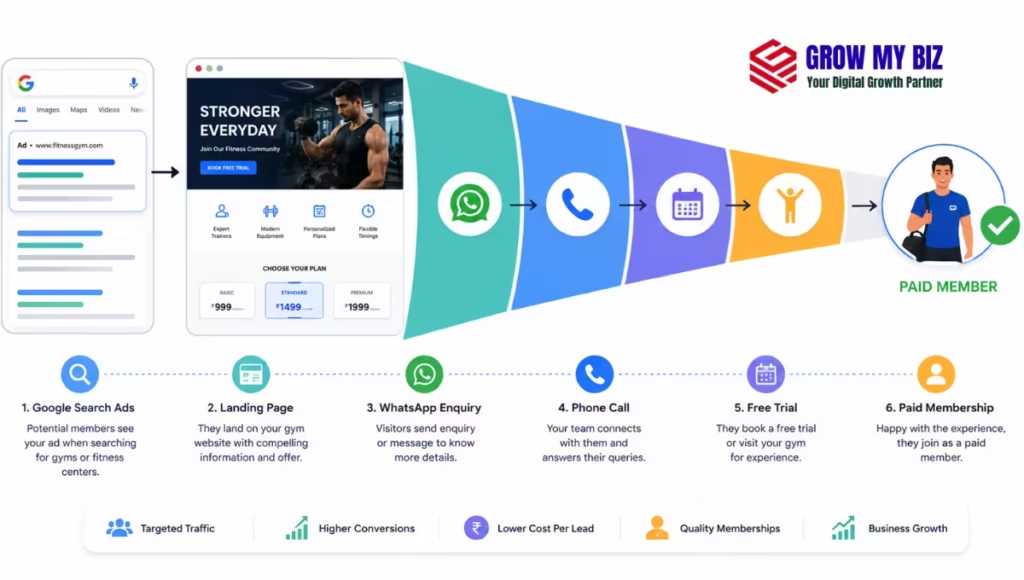
Google Ads delivers the strongest results when it complements, rather than replaces, your long-term organic marketing efforts. While paid campaigns can generate enquiries almost immediately, every click stops the moment the budget runs out. Combining Google Ads with Local SEO and a well-optimised website allows gyms to capture immediate demand today while steadily building a stronger source of organic enquiries for the future.
A realistic starting budget for a single-location gym in Delhi NCR is ₹8,000-₹15,000 in ad spend plus a management fee, generating leads from the first week of a properly configured campaign. However, actual budgets vary depending on locality, competition, and membership goals.
Also Read:- Google Ads Services Complete Guide for Businesses (2026)
Our Observation
Google Ads works best when the website and Google Business Profile are already prepared to convert enquiries. Sending paid traffic to an outdated website or an incomplete Business Profile often increases advertising costs without producing the same level of membership enquiries. Improving these foundations before scaling campaigns usually delivers a stronger return on advertising spend.
Choosing the Right Digital Marketing Channel for Your Gym
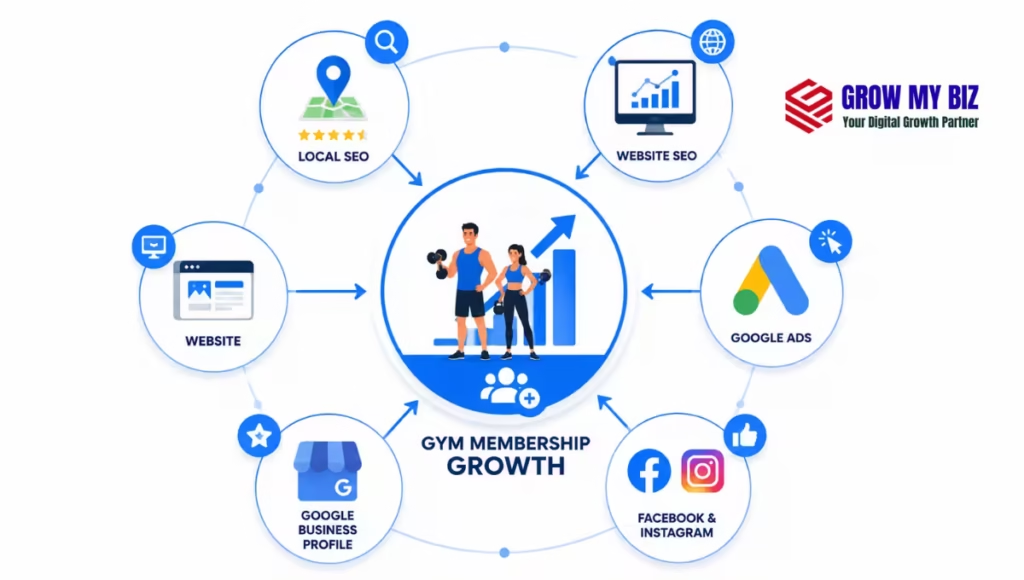
Every digital marketing channel serves a different purpose. The most effective strategy is rarely choosing one over another—it is understanding when each channel delivers the greatest value and how they work together to support long-term membership growth.
| Channel | Best For | Time to See Results | Long-Term ROI |
| Local SEO (Google Maps) | Generating enquiries from nearby high-intent searches | 1–3 months | Excellent |
| SEO (Website Content) | Building long-term organic visibility for services, classes, and local searches | 3–6 months | Excellent |
| Google Ads | Immediate enquiries, new gym launches, seasonal promotions | Within days | Moderate (while campaigns are active) |
| Social Media Marketing | Building trust, showcasing gym culture, and staying visible to prospective members | Ongoing | High when combined with Local SEO and SEO |
For most independent gyms, the strongest results come from combining these channels rather than relying on a single source of enquiries. Google Ads creates immediate visibility, Local SEO captures nearby searchers with strong purchase intent, SEO expands your organic reach over time, and social media reinforces the trust that helps prospective members choose your gym over competing options.
You can check our complete guide about Digital Marketing Services That Actually Generate Leads.
Need Gym Leads This Month?
A professionally managed Google Ads campaign can start generating enquiries within days—not months. We’ll build high-converting campaigns, optimise your landing pages, and help turn clicks into paying gym members.
📞 Call Now 💬 Chat on WhatsAppSocial Media Marketing for Gyms — Building Trust Before the Trial
IN SHORT: Social media does not usually convert a member directly — it builds the trust and culture-fit impression that makes someone comfortable enough to book a trial after finding your gym through Google Maps or a Google search.
Most gyms already post on Instagram, but posting is not the same as social media marketing. The gyms converting followers into members are doing something more specific — showing what membership actually feels like, not just posting workout clips.
- Member transformation content (with consent) — the single highest-trust content type for fitness businesses
- Trainer introduction Reels — reduces the anxiety a first-time gym-goer feels about an unfamiliar environment
- Facility walkthrough content — answers ‘what does it actually look like inside’ before someone ever visits
- Consistent posting — 3-4 Reels and 2-3 static posts per week outperforms sporadic bursts of content
- Instagram and Facebook paid campaigns for specific offers — free trial weeks, seasonal membership pricing — targeted to your gym’s actual service radius
Social media marketing for gyms works best paired with Local SEO, not instead of it — a prospective member typically checks your Google Maps listing and your Instagram before deciding, not one or the other.
Consistency matters just as much as creativity. A gym that posts regularly, responds to comments and messages, shares genuine member experiences, and keeps its branding consistent across Instagram and Facebook builds familiarity over time. Even if someone does not enquire immediately, that continued visibility often influences their decision when they are finally ready to join a gym.
Check our comprehensive guide about Social Media Marketing Services, What Actually Works for Local Businesses (2026).
Your Gym’s Website — The Piece Most Delhi NCR Gyms Skip
IN SHORT: A gym without a proper website loses every visitor who researches before visiting — even ones who found you through Google Maps often check a website before calling, and no website or a broken one ends that enquiry immediately.
- Mobile-first design — the large majority of gym searches and visits happen on smartphones
- Transparent membership pricing and plans clearly listed — removes the biggest single friction point in gym enquiries
- WhatsApp and click-to-call buttons visible on every page, not buried in a contact page
- Trainer profiles and facility photos — builds the same trust signal social media does, for visitors who land directly on the site
- Fast load speed — a slow site loses mobile visitors within seconds, especially on 4G connections
Beyond attracting visitors, your website should make it easy for someone to take the next step. Whether that means booking a free trial, requesting membership details, or starting a WhatsApp conversation, every important action should be simple to find and complete on a mobile device. The fewer barriers between a visitor and an enquiry, the more effectively your website supports every other digital marketing channel.
Also Read:- Website Designing Services — Built for Speed, SEO and Conversions
Is Your Website Converting Visitors into Members?
A great-looking website isn’t enough. It should encourage visitors to book a trial, enquire on WhatsApp, or call your gym. We’ll review your website and identify the improvements that can increase enquiries without increasing your advertising budget.
📞 Call Now 💬 Chat on WhatsAppBeyond Digital Marketing — What Else Grows a Gym
IN SHORT: Digital marketing brings new members to your door — referral programs, community building, and retention systems are what keep them once they arrive, and both should run together, not one instead of the other.
Digital visibility solves discovery. It does not solve retention or turn a satisfied member into an advocate on its own. A complete growth system includes:
- A structured referral programme — existing members remain one of the highest-trust sources of new leads, and a simple, clearly promoted incentive consistently outperforms an informal ‘tell your friends’ approach
- Community-building — WhatsApp groups, in-gym events, and fitness challenges increase retention, which compounds the value of every new member digital marketing brings in
- A basic sales process for handling enquiries — even excellent digital marketing loses value if a WhatsApp enquiry goes unanswered for a day
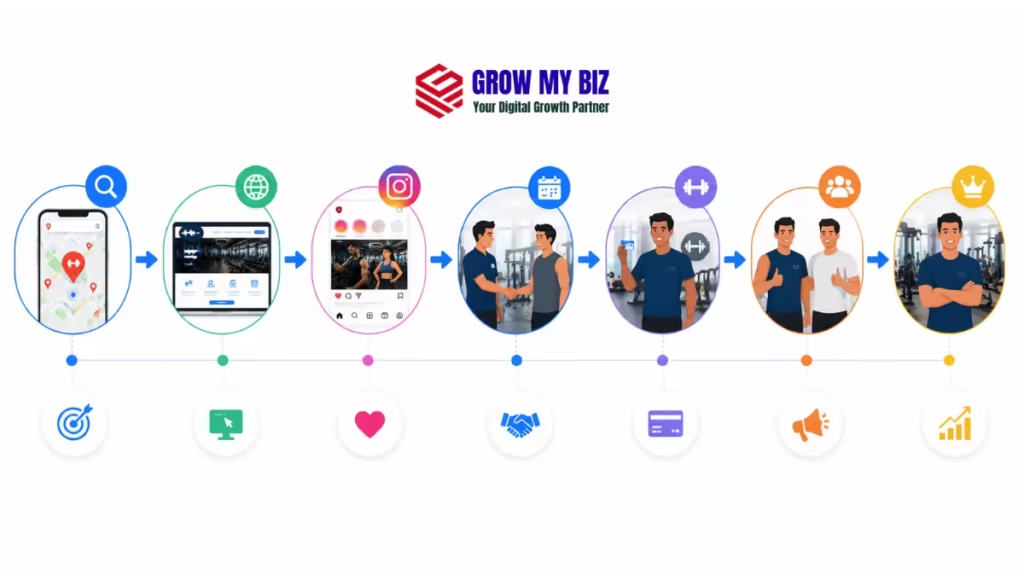
These are business fundamentals, not digital marketing tactics — but they determine whether the leads digital marketing generates actually become long-term, paying members.
Check our Advanced On-Page SEO Services — Built for Google’s AI-Driven Algorithm
Where Should a Gym Start?
For most independent gyms, trying to improve everything at once usually leads to inconsistent results. A more practical approach is to build your digital presence in stages. Start by optimising your Google Business Profile and ensuring your website provides accurate information and clear ways to enquire. Once those foundations are in place, invest in Local SEO to improve visibility in Google Maps, use Google Ads when you need enquiries quickly, and support both with consistent social media content that reflects your gym’s culture and community.
This staged approach allows each marketing channel to reinforce the next, creating a stronger and more sustainable source of enquiries than relying on any single tactic alone.
Real Results — What This Framework Has Delivered
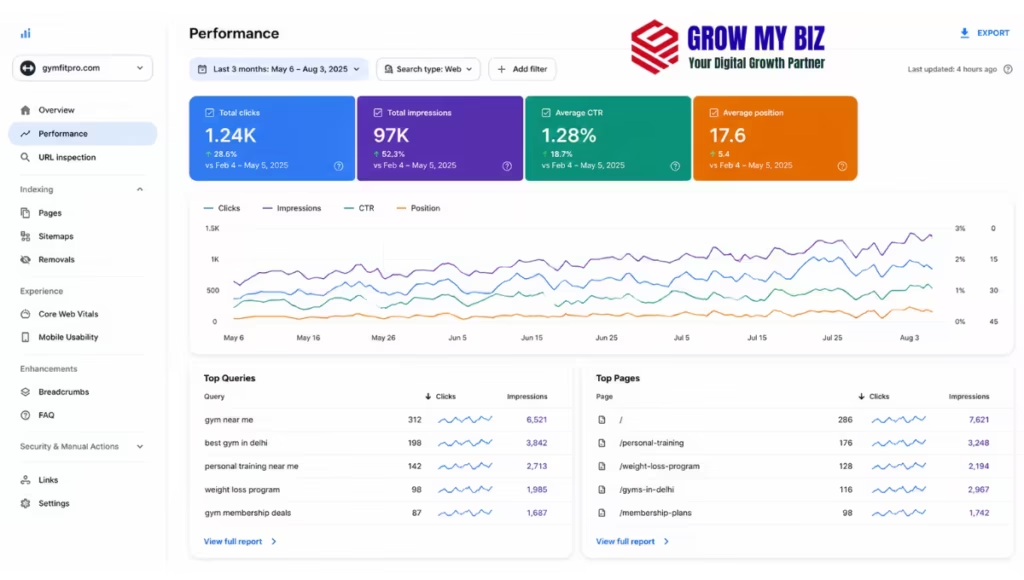
Rather than generic claims, here is what applying this exact framework has produced on our own gym and fitness content, verifiable in Google Search Console:
| Content | What Was Applied | Result |
| Gym SEO Checklist | Structured, scannable Local SEO framework | Cited in Google AI Overview; page 1 ranking |
| Local SEO for Gyms in India | Complete GBP + citation + review system | Page 1 ranking, AI Overview citation |
| This page (previous version) | Broad ‘digital marketing for gyms’ targeting | 970+ impressions on primary query, page 1-2 range |
These results reflect a broader principle rather than a one-off success. When Local SEO, well-structured content, and technical SEO work together, rankings become more sustainable because each element reinforces the others. While every gym operates in a different market with different levels of competition, the underlying strategy remains the same: build local visibility, answer the questions prospective members are already searching for, and make it easy for them to take the next step.
Ready to Grow Your Gym’s Membership Through Digital Marketing?
The gyms consistently filling their membership base in Delhi NCR are not necessarily the ones with the best equipment — they are the ones visible at every stage of a prospective member’s decision: Google Maps, Google Search, and Instagram.
If you’re unsure where your gym stands today, a professional audit is the fastest way to identify what is helping your visibility—and what is quietly costing you enquiries. Rather than relying on guesswork, you can see exactly how your Google Business Profile, website, local search presence, and competitors compare, along with practical recommendations you can start implementing immediately.
Free audit covers:
- Your current Google Maps ranking for key local searches
- Website and SEO gaps versus what prospective members are searching
- Social media presence review versus local competing gyms
- 3 specific fixes for immediate impact
Ready to Grow Your Gym with a Proven Digital Marketing Strategy?
Whether you’re launching a new gym or looking to increase memberships at an established fitness centre, we’ll analyse your Google Maps rankings, website, competitors, SEO, and advertising opportunities—and provide practical recommendations tailored to your locality and business goals.
✔ Free Digital Marketing Audit
✔ Google Maps Ranking Review
✔ Website & SEO Analysis
✔ Competitor Insights
✔ Google Maps Ranking Review
✔ Website & SEO Analysis
✔ Competitor Insights
📞 Call Now 💬 Chat on WhatsApp
Frequently Asked Questions — Digital Marketing for Gyms
Q1. What is the most effective digital marketing channel for a gym in Delhi NCR?
For most gyms with a physical location, Local SEO and Google Business Profile optimisation deliver the highest return, since they capture members with immediate, high-intent local searches. Google Ads work best for fast results — new gym launches or seasonal membership drives. Social media builds the trust and culture-fit impression that supports both.
This approach also aligns with Google’s recommendations for maintaining an active Business Profile with accurate information and genuine customer reviews, helping prospective members make informed decisions.
Q2. How much should a gym in Delhi NCR spend on digital marketing?
A realistic starting point is ₹15,000-₹25,000 per month for Local SEO and Google Business Profile management. Adding Google Ads requires a further ₹8,000-₹15,000 in management fees plus ad spend. A full digital marketing programme covering SEO, Ads, and social media typically ranges from ₹25,000-₹40,000 per month depending on competition in your specific locality.
Q3. How long does digital marketing take to bring new gym members?
Google Ads can generate enquiries within days. Local SEO and Google Maps visibility typically show meaningful improvement within 4-8 weeks, with strong, consistent rankings building over 3-4 months. Social media builds trust gradually — most gyms see meaningful membership conversion from their social presence after 3-6 months of consistent content.
Q4. Is SEO or Google Ads better for a new gym that just opened?
Start with Google Ads for immediate visibility while your Google Business Profile and website build organic authority in parallel. Relying on SEO alone in the first few months leaves a new gym invisible during the period it most needs enquiries.
Q5. Do small, independent gyms really need social media marketing, or is it only for big chains?
Independent gyms often benefit more — they can show a genuine, personal culture that large chains struggle to replicate at scale. A well-run Instagram presence for a single-location gym frequently outperforms a franchise’s generic corporate content in actual member trust and conversion.
Q6. Should gyms invest in Facebook Ads?
Facebook Ads can be highly effective for gyms when the objective is generating awareness, promoting limited-time membership offers, or encouraging free trial bookings within a specific locality. Unlike Google Ads, which captures people actively searching for a gym, Facebook and Instagram Ads introduce your gym to potential members who may not yet be looking but fit your target audience based on location, age, interests, and fitness behaviour. For most independent gyms, Facebook Ads work best as a complement to Google Ads and Local SEO rather than a replacement.
Q7. Do reviews affect Google Maps rankings?
Reviews are an important part of Local SEO because they help both Google and prospective members evaluate the quality and credibility of your gym. While reviews alone do not guarantee higher rankings, a steady flow of genuine customer reviews, thoughtful responses, and a well-maintained Google Business Profile can strengthen your local visibility over time. More importantly, positive reviews often have a direct impact on whether someone chooses your gym over another nearby option.
Q8. Should I build a website before running Google Ads?
Ideally, yes. A well-designed website gives prospective members the information they need before making an enquiry, including membership plans, trainer profiles, facilities, and contact options. While Google Ads can generate traffic immediately, sending visitors to a weak or incomplete website often reduces conversions and increases advertising costs. Even a simple, mobile-friendly website with clear calls to action provides a much stronger foundation for paid campaigns.
Q9. Can a single-location gym compete with large fitness chains?
Absolutely. Independent gyms often have advantages that larger chains cannot easily replicate, including personalised coaching, stronger community relationships, and greater flexibility. With a well-optimised Google Business Profile, targeted Local SEO, consistent social media activity, and a professional website, a single-location gym can compete effectively for local searches and attract members looking for a more personalised fitness experience.
Q10. How many Google reviews should a gym have?
There is no fixed number of reviews required to rank well in Google Maps. Instead of focusing on reaching a specific count, gyms should aim to collect genuine reviews consistently from satisfied members. A steady stream of authentic feedback, combined with regular responses and an active Google Business Profile, is generally more valuable than acquiring a large number of reviews in a short period. Consistency and quality matter more than volume alone.
Rather than comparing your gym with businesses in other cities, compare your review profile with the highest-ranking gyms in your own locality. This provides a far more realistic benchmark for understanding the level of trust and visibility needed to compete in your market.
Q11. What is the biggest digital marketing mistake gyms make?
One of the most common mistakes is relying on a single marketing channel while neglecting the others. Some gyms invest heavily in social media but ignore Google Business Profile optimisation, while others run paid ads without a website designed to convert visitors into enquiries. The strongest results usually come from an integrated strategy where Local SEO, Google Ads, social media, and a high-converting website work together to support every stage of the member journey.