
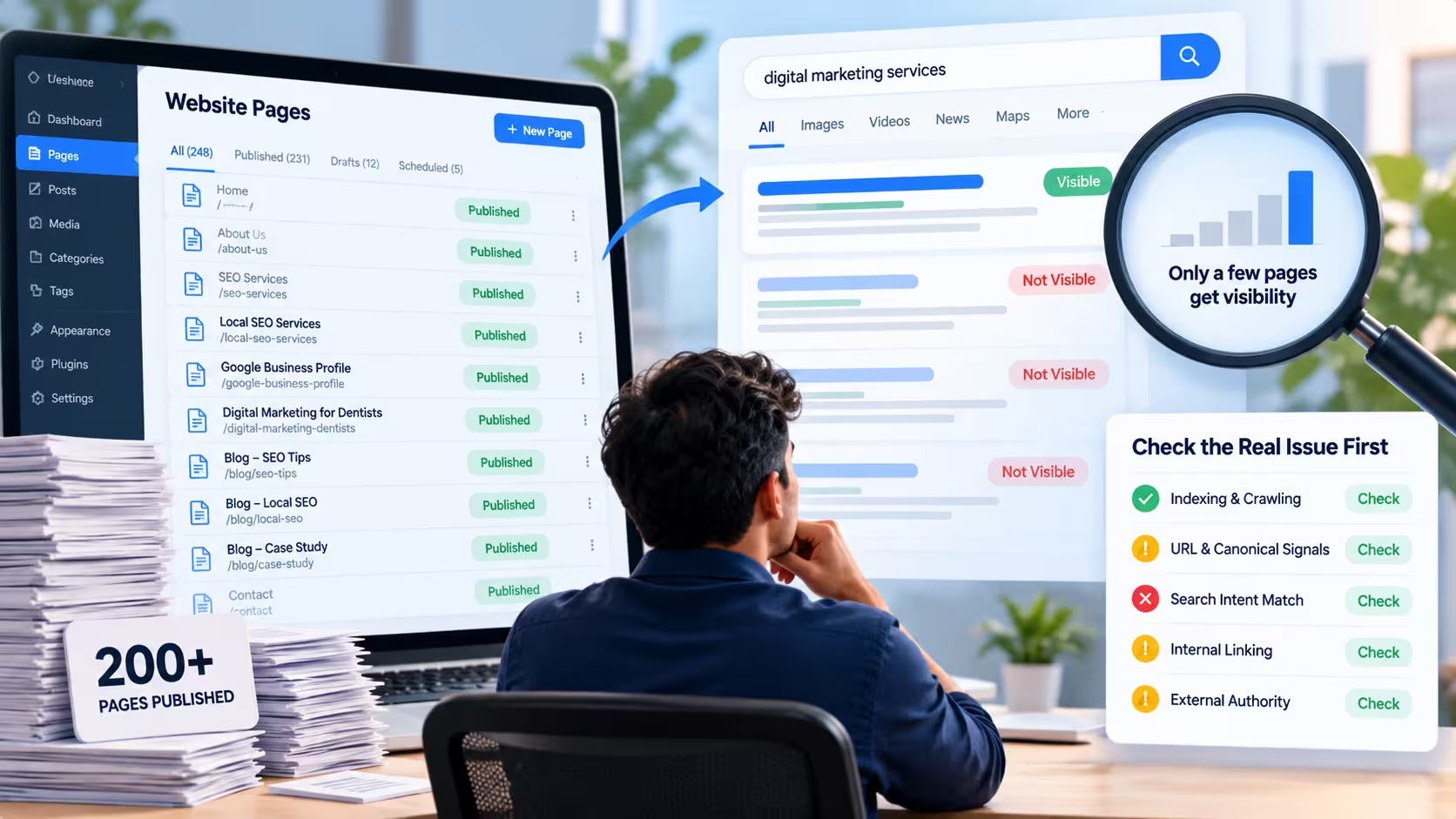
Publishing more pages only helps when the pages you already have are being discovered, indexed, understood, linked and trusted. Check five things in order: indexing, URL signals, search intent, internal links and external authority. Fix the first weak link before you commission the next batch of content.
When organic traffic slows down, the instinctive response is often to publish more. More service pages, more city pages, more blog posts, more FAQs. Sometimes that is exactly what a site needs. But on many websites, additional publishing does not solve the underlying problem because content volume was never the main constraint.
A website can have hundreds of pages and still struggle if search engines cannot discover important URLs efficiently, if canonical and redirect signals conflict, if pages target the wrong search intent, if internal links fail to distribute relevance, or if the site simply lacks enough external authority to compete for the terms it is pursuing.
The useful question is therefore not, “How many more pages should we publish?” It is, “What is currently preventing the pages we already have from performing?” The following five-step framework is designed to answer that question before a business spends more time or money on content production.
In This Guide
Step 1: Check discovery and indexing before judging content quality
A page cannot rank if search engines do not reliably discover, crawl and index it. This sounds obvious, but indexing problems are easy to miss when a site is publishing at scale. A content team may see 300 live URLs in the CMS while Google sees only a fraction of them as index-worthy.
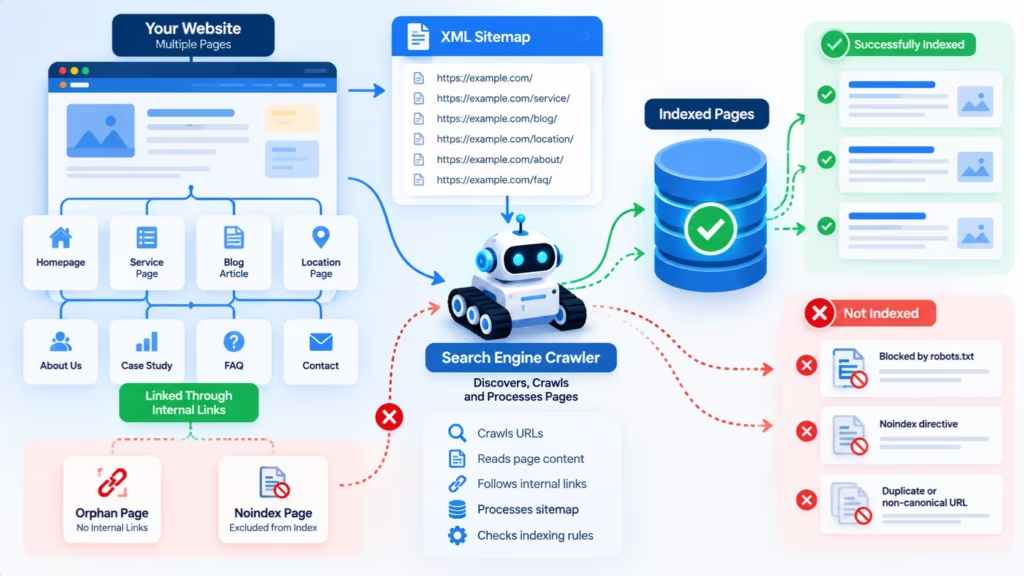
Start with Google Search Console rather than a spreadsheet of published URLs. Compare the URLs that matter commercially with the pages Google reports as indexed. Review the Page Indexing report, inspect representative URLs individually, and check whether important pages appear in the XML sitemap. The goal is not to force every URL into the index. The goal is to confirm that the pages you expect to generate search demand are discoverable and eligible to be indexed.
Common warning signs include pages that are excluded as duplicates, URLs that are crawled but not indexed, accidental noindex directives, robots.txt rules that block important pages or resources, broken internal links, orphan pages and sitemap entries that point to redirects or non-canonical URLs. A newly published article that receives no internal links may technically exist, but it is sending a weak discovery signal compared with a page that is connected to relevant category, service or hub pages.
If indexing coverage is the bottleneck, publishing another 50 pages can make the diagnosis harder. Fix the discovery path first, then measure whether the existing content begins to earn impressions.
A quick discovery checklist
- Is the important URL included in a clean XML sitemap?
- Can it be reached through normal internal navigation or contextual links?
- Does the page return a 200-status code?
- Is it free of accidental no-index or robots’ restrictions?
- Does Search Console show the intended canonical URL?
- Is the page receiving any impressions after a reasonable discovery period?
Step 2: Audit canonical, redirect and URL signals
The second constraint is signal conflict. A site may publish strong content, but ranking signals can become diluted when multiple URL versions compete or when redirects and canonicals disagree.
Typical examples include HTTP and HTTPS versions remaining accessible, www and non-www inconsistencies, trailing-slash variants, duplicate parameter URLs, old pages redirecting through unnecessary chains, or a canonical tag pointing to a different URL from the one included in the sitemap. Individually, each issue may seem small. At scale, they create uncertainty about which version of a page should represent the content.
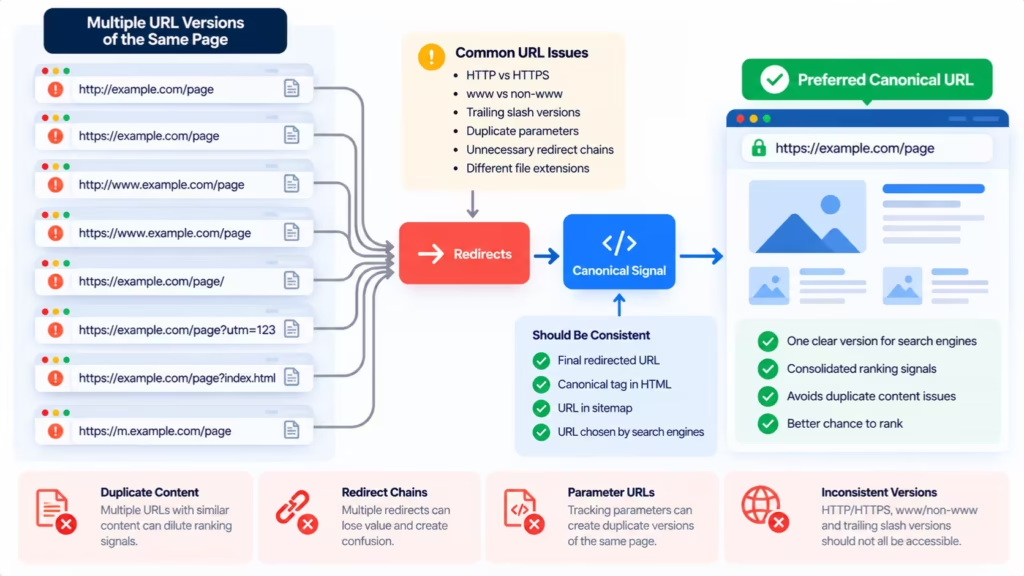
A useful audit compares four things for every important page: the live URL, the final redirect destination, the canonical declared in the HTML and the canonical Google has selected. These should usually tell the same story. The sitemap should then reinforce that story by listing the preferred 200-status URL rather than an alternate or redirected version.
Redirects also matter during redesigns, migrations and slug changes. If a strong historical URL is replaced without a clean one-to-one redirect, the new page may start with less accumulated value than expected. Similarly, broad redirects that send many unrelated pages to a homepage preserve less relevance than specific redirects to equivalent destinations, and Google may treat irrelevant mass redirects as soft 404s rather than passing the old page’s value forward.
Before adding new pages, make sure the website has one stable URL for each important piece of content and that every technical signal supports that preferred version.
Not Getting Results From More Content?
Before publishing another batch of pages, find out what is actually limiting your organic growth. We can diagnose your indexing, technical SEO, search intent, internal linking and authority signals to identify the real constraint.
Step 3: Validate search intent, not just keyword relevance
A page can be perfectly written and still underperform because it answers the wrong type of query. Search intent is the reason behind the search, and Google’s results often reveal what users are actually expecting more clearly than a keyword list does.
Consider a phrase such as “website development company in Mumbai.” The searcher is likely evaluating providers, so the results may favour commercial service pages with proof, process, pricing signals, portfolios and calls to action. A long informational blog post about choosing a developer may be relevant to the topic, but it is not necessarily the format people want for that query.
The reverse problem also occurs. A business may create a sales page for a query where users primarily want a tutorial, comparison or explanation. In that case, adding more commercial copy does not solve the mismatch.
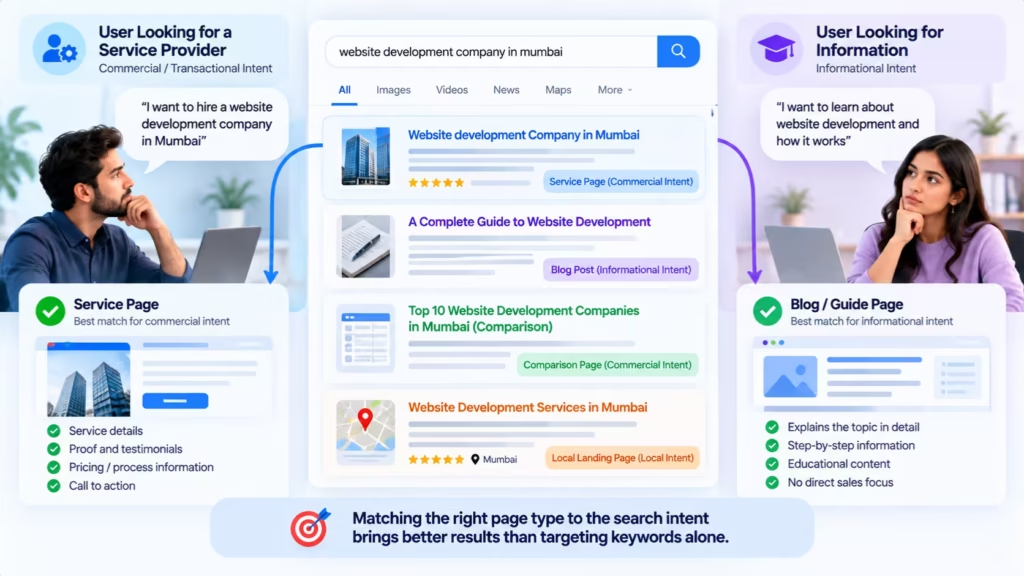
For each priority keyword, review the current search results and classify the dominant page type. Are the top results service pages, category pages, product pages, tools, guides, listicles or local landing pages? Then compare your page with that pattern. You do not need to copy competitors, but your format should satisfy the same underlying need.
This is especially important for large-scale content programs. If 100 keywords with service-page intent are automatically turned into 100 blog posts, the site may look productive while creating a systematic intent mismatch. In those situations, fewer properly structured commercial pages can outperform a much larger blog archive.
Step 4: Fix internal linking and site architecture
Internal links do more than help visitors move around a website. They show which pages are related, which pages are important and how information is organized. A page with no meaningful internal links can become isolated even if its content is strong.
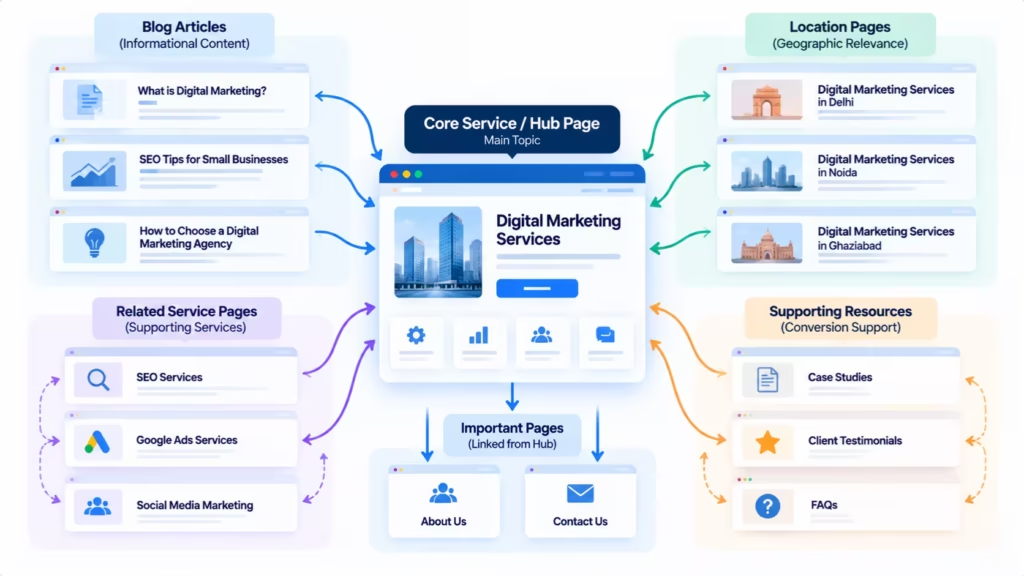
Start by identifying the pages that matter most to the business: core services, profitable product categories, high-intent location pages and a small set of authoritative guides. Then map supporting content toward those pages using natural contextual links. A blog about Shopify conversion mistakes, for example, can logically link to a Shopify development service page. A guide about technical SEO audits can link to a relevant SEO service or website-development page when the connection is useful to the reader.
Avoid creating a mechanical network where every page links to every other page. That produces clutter and weakens context. A better architecture resembles topic clusters: supporting pages link upward to a relevant hub or commercial page, hub pages link to the most useful supporting resources, and related pages cross-link only when the relationship is genuine.
For a working example of a topic cluster on this site, see our guide to local SEO for CA firms in India, which sits alongside closely related pages such as SEO for chartered accountants in India and can CA firms advertise in India. Each page serves a different question, and they point to one another only where the connection helps the reader.
Internal linking is also a practical way to rescue older content. Before publishing a new article on a topic, search the site for existing pages that already discuss the same subject. You may find that updating one page and strengthening its links is more valuable than creating another overlapping URL.
For development and SEO teams working together, launch QA should include a link-distribution review rather than treating internal linking as a post-launch content task. An integrated website-development workflow, such as the approach used by Digital Excellence, helps keep architecture, technical SEO and content relationships aligned from the start.
Are Your Important Pages Actually Being Indexed?
A website can have hundreds of published URLs while Google discovers and indexes only a fraction of the pages that matter. We can check your indexing coverage, canonical signals, redirects, sitemap and crawl paths to uncover technical barriers affecting organic visibility.
Step 5: Decide whether the real constraint is authority
If the site is technically clean, the page matches intent, internal linking is sensible and the content is genuinely useful, the remaining constraint may be external authority rather than content volume.
This matters because publishing more pages does not automatically make a domain more competitive. A new website can produce excellent content in a competitive niche and still take time to earn trust, mentions and links from other reputable websites. The more competitive the query, the more likely it is that strong external signals separate the sites that already rank from the sites that are merely relevant.
Authority should not be reduced to chasing a single third-party metric. Look instead at the quality and relevance of sites linking to your domain, whether important pages attract natural references, whether the brand is mentioned in its industry, and whether the site has earned editorial links that make sense for real readers.
If competitors consistently have stronger real-world visibility and stronger editorial link profiles, the next marginal hour may be better spent on digital PR, partnerships, original research, directories that matter in the industry, expert contributions or genuinely useful assets that deserve references. Publishing 30 additional articles on near-duplicate themes is unlikely to close that gap by itself.
How to run the diagnostic in practice
A good diagnostic does not need to become a six-week audit. For most small and mid-sized business websites, you can get a strong directional answer by sampling the pages that matter most and moving through the five steps in order.
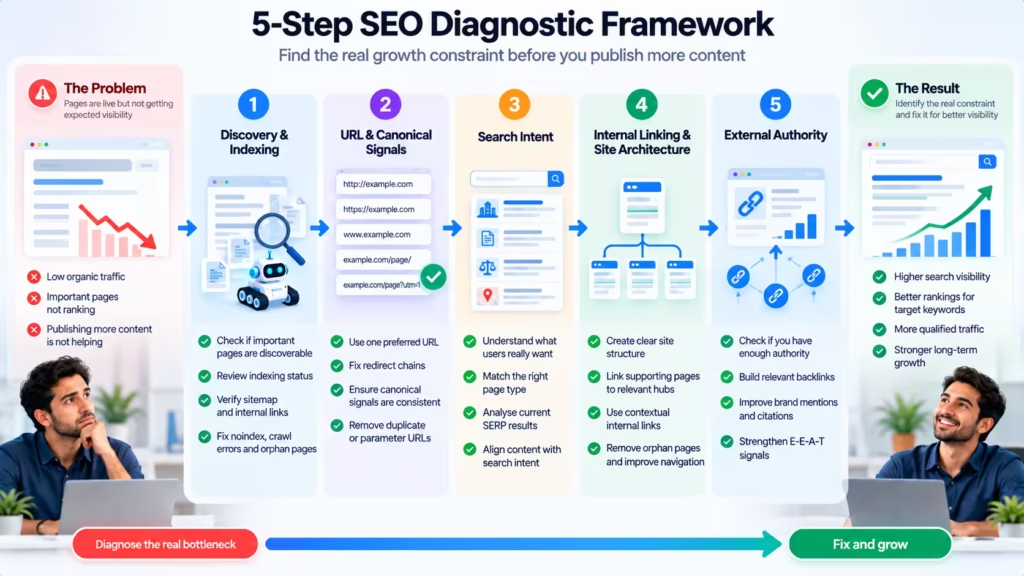
First, choose 10 to 20 priority URLs rather than auditing every page. Include the homepage, core service pages, important location or category pages and a few articles that should already be generating impressions. Then record the status of each URL across indexing, canonical consistency, search intent, internal links and external authority.
The pattern usually becomes visible quickly. If most priority pages are excluded or barely discovered, work on indexing and architecture. If they are indexed but the wrong page types are targeting the keywords, rebuild around intent. If the pages are sound but isolated, strengthen internal links. If the site is technically and structurally healthy but consistently loses to well-established competitors, shift some effort from publishing to authority-building.
| Likely bottleneck | Typical symptom | What to improve first |
| Discovery/indexing | Important URLs are missing from the index or rarely crawled | Sitemaps, internal links, crawl/index directives, orphan pages |
| Signal conflict | Google selects unexpected canonicals or multiple URL versions exist | Redirects, canonical tags, URL consistency, sitemap cleanup |
| Intent mismatch | Page is indexed but impressions/clicks remain weak for target terms | Page type, SERP format, content purpose, conversion structure |
| Weak internal architecture | Priority pages have few relevant internal links | Topic hubs, contextual links, navigation, content consolidation |
| Authority gap | Strong pages still lose on competitive queries | Editorial links, PR, partnerships, original assets, brand mentions |
When more content actually is the answer
This framework is not an argument against publishing. Content growth is powerful when a site has genuine coverage gaps. If customers repeatedly search for questions you do not answer, if competitors cover valuable subtopics you have ignored, or if your commercial pages need supporting expertise, new content can expand reach and strengthen topical depth.
The difference is that publishing should follow diagnosis. Once discovery, URL signals, intent and architecture are healthy, new pages are more likely to enter a system that can actually support them. The same 20 articles can perform very differently on a well-structured site than on a site with hundreds of disconnected or conflicting URLs.
Is Your SEO Problem Really a Content Problem?
Your page may be indexed and still fail to perform because it targets the wrong search intent, has weak conversion structure or lacks meaningful internal links. Get an SEO review focused on the pages and keywords that matter most to your business.
What this means for local businesses in Delhi NCR
The five steps apply to any website, but Step 5 looks different for a local business. A clinic, CA firm or law firm in Delhi, Noida, Ghaziabad or Gurugram is rarely competing for national digital-PR links. Its authority usually comes from a well-optimised Google Business Profile, a steady flow of genuine reviews, consistent business details across directories such as Justdial and Sulekha, and service pages that clearly state the area they serve.
Before you commission another batch of blog posts for a local site, check these four things first:
- Do your Google Business Profile categories, services and description match the pages you want to rank?
- Are your business name, address and phone number identical on your website, Google Business Profile and directory listings?
- Are your reviews recent, genuine and answered?
- Does each location page carry genuinely different information, rather than the same text with the city name swapped?
Regulated professions have one more layer. CA firms and law firms must stay within their councils’ advertising rules, which is why compliant content matters as much as ranking content. Our explainer on what ICAI allows CA firms to do online is a good starting point for accountants.
If you want to see how these ideas apply in practice, these pages are a good next read:
- Local SEO services in Delhi NCR, for how local visibility is built beyond just publishing content
- Google My Business services in Delhi, for profile setup, posts and review strategy
- Digital marketing for dentists in Delhi, as an example of a healthcare niche
- Digital marketing services in Delhi NCR, for the full overview of what we offer
- Our case studies, for results from local businesses
Final takeaway
SEO growth is rarely a pure volume game. More pages can create more opportunities, but only when the rest of the system allows those pages to be discovered, understood and trusted.
Before approving the next content batch, ask five questions: Are the right pages indexed? Are technical URL signals consistent? Does each page match search intent? Are important pages supported by internal links? And does the site have enough real authority to compete?
If one of those answers is clearly “no,” fixing that constraint may produce more growth than publishing another hundred URLs.
Frequently Asked Questions
Does publishing more content improve SEO?
Only when the site has real coverage gaps and the existing pages are already indexed, correctly targeted, well linked and supported by enough authority. If one of those conditions fails, extra content usually adds volume without adding results, and it can make the real problem harder to see.
How do I check whether my important pages are indexed?
Use Google Search Console. Review the Page Indexing report, inspect representative URLs with the URL Inspection tool, and compare the pages that matter commercially with the ones Google reports as indexed. Also confirm that those pages are in your XML sitemap and reachable through internal links.
How many pages should I audit first?
Start with 10 to 20 priority URLs: the homepage, core service pages, important location or category pages, and a few articles that should already earn impressions. For most small and mid-sized sites, that sample gives a strong directional answer without a six-week audit.
What is a search intent mismatch?
It happens when a page’s format does not match what searchers expect for a query, for example a long blog post targeting a keyword where Google mainly shows service pages. Checking the current top results for each priority keyword shows which page type users are being served.
What matters more than new blog posts for a local business?
Usually a complete Google Business Profile, genuine reviews, consistent name, address and phone details across directories, and clear service and location pages. Once those are healthy, new content has a stronger foundation to build on.
Find the Real SEO Constraint Before You Publish More
If your organic growth has stalled, more pages may not be the answer. We can review your priority URLs across indexing, URL signals, search intent, internal linking and external authority — then identify where your SEO effort is most likely being held back.