
Most yoga studio owners have already tried Meta Ads. The story is usually the same: a boosted post or two, a “Join Now” campaign that ran for a couple of weeks, a few thousand rupees spent, a handful of likes, maybe two or three enquiries — and then the campaign quietly gets shelved as “didn’t work for us.”
That’s rarely a Meta Ads problem. It’s usually a setup problem.
Yoga is a decision people make emotionally and locally — someone scrolling Instagram at 9pm thinking about their back pain, their stress, or a New Year resolution is exactly the kind of person Meta’s targeting is built to find. The platform isn’t the weak link. What tends to be weak is the campaign structure, the offer, and what happens after someone actually messages the studio.
This guide walks through what a properly structured Meta Ads setup for a yoga studio actually looks like — not a generic “how Facebook Ads work” explainer with the word “yoga” dropped in, but the specific decisions that separate a campaign that fills batches from one that burns budget.
Table of Contents
Why Yoga Studios Struggle With Meta Ads More Than They Should
Three mistakes show up repeatedly in underperforming yoga studio campaigns, and none of them are really about targeting or budget.
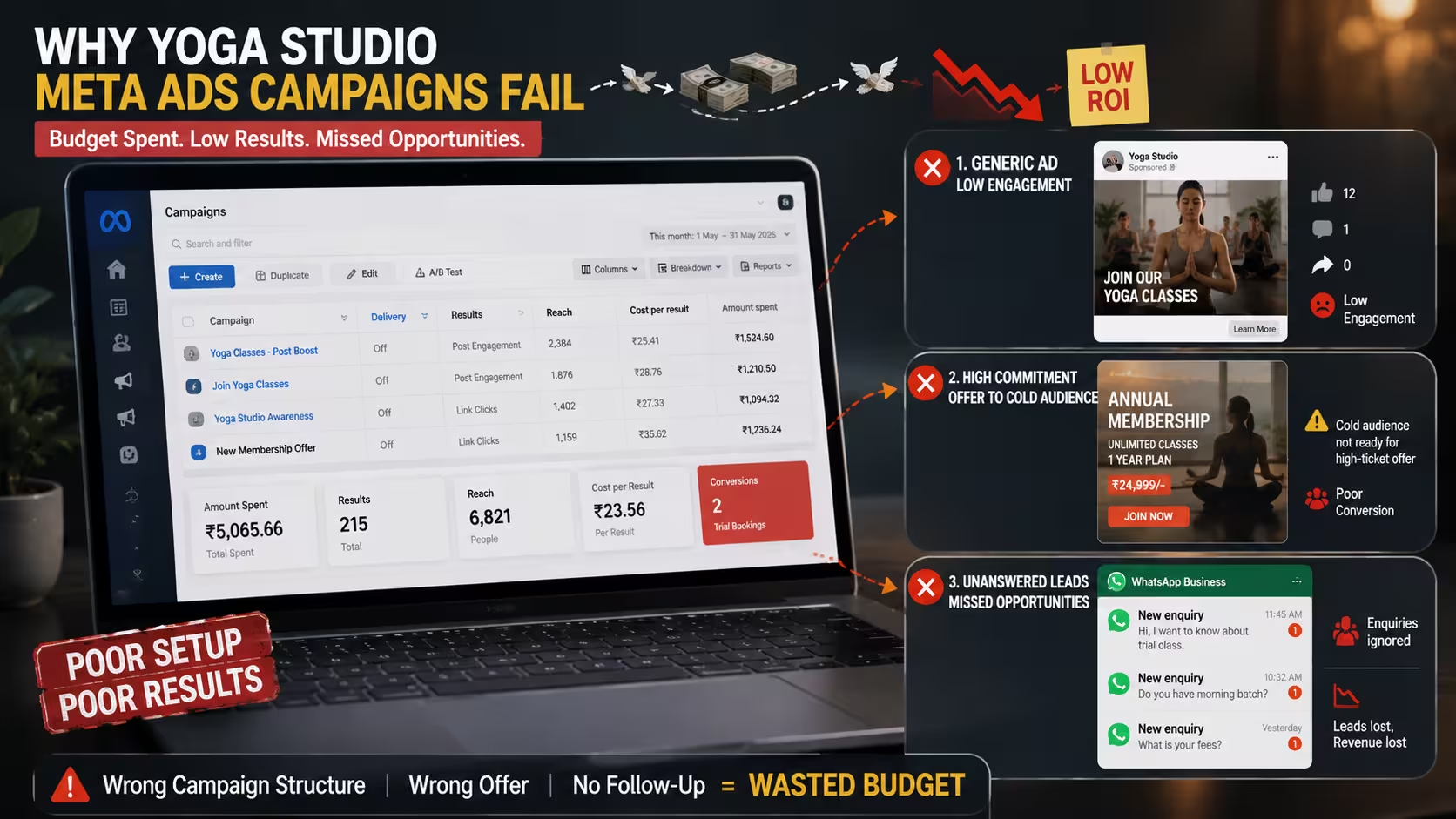
The first is advertising the studio instead of the outcome. “Join our yoga classes” is a business talking about itself. “Struggling to sit through a full workday without your back giving up?” is a business talking about the person scrolling past. Ads that lead with the studio’s features rather than the visitor’s problem consistently underperform, because they never earn the thumb-stop in the first place.
The second is sending cold traffic straight to a membership decision. Nobody who has never stepped into a studio is going to commit to a monthly package from an ad. What tends to convert cold local audiences is a low-friction offer — a free trial class, a discounted first week, a beginner’s workshop — not a direct ask to “Sign up for our 3-month program.”
The third is the quiet budget-killer: no real follow-up system. A studio runs ads for two weeks, gets a batch of WhatsApp enquiries, replies to some within a day, and never circles back to the rest. The ads did their job — the process after the ad didn’t. This is one of the most common reasons studios conclude Meta Ads “don’t work,” when the leads simply went unanswered.
Related:- Digital Marketing for Yoga Studio | Grow Your Yoga Studio With Result-Driven Online Marketing
What Makes Yoga Studio Advertising Different
A gym, a salon, and a yoga studio look similar on paper — local service business, recurring revenue, membership model. But the way people decide to try yoga is different, and campaign strategy should reflect that.
It’s usually a considered, slightly hesitant decision. People worry about flexibility, about being “the beginner in the room,” about whether a studio feels too spiritual or not spiritual enough for them. That hesitation is why trust-building creative — instructor-led videos, real students, an honest look inside an actual class — tends to outperform polished, stock-style ads for this category.
It’s also a category where the buyer is overwhelmingly local and radius-sensitive. Very few people travel far across Delhi NCR traffic for a daily yoga class, which is why targeting radius for a yoga studio usually needs to be tighter than the default an agency might use for other local categories — often a few kilometres around the studio in a dense urban market, widened only for a weekend workshop or retreat people would make a special trip for.
Check our guide about Digital Marketing for Yoga Studios in Pune — Get More Students from Google
META ADS FOR YOGA STUDIOS
Ready to Get More Trial Class Bookings?
Stop running ads just for likes and reach. Let’s build a Meta Ads strategy focused on qualified enquiries, trial class bookings and potential long-term yoga students.
Choosing the Right Campaign Objective
“Boosting a post” is not a campaign objective — it’s the easiest button Meta gives you, and it’s built to optimise for engagement, not enquiries. Trial-class bookings and membership enquiries need proper Leads, Messages, or Engagement campaigns run through Ads Manager, not the boost button inside the Instagram app.
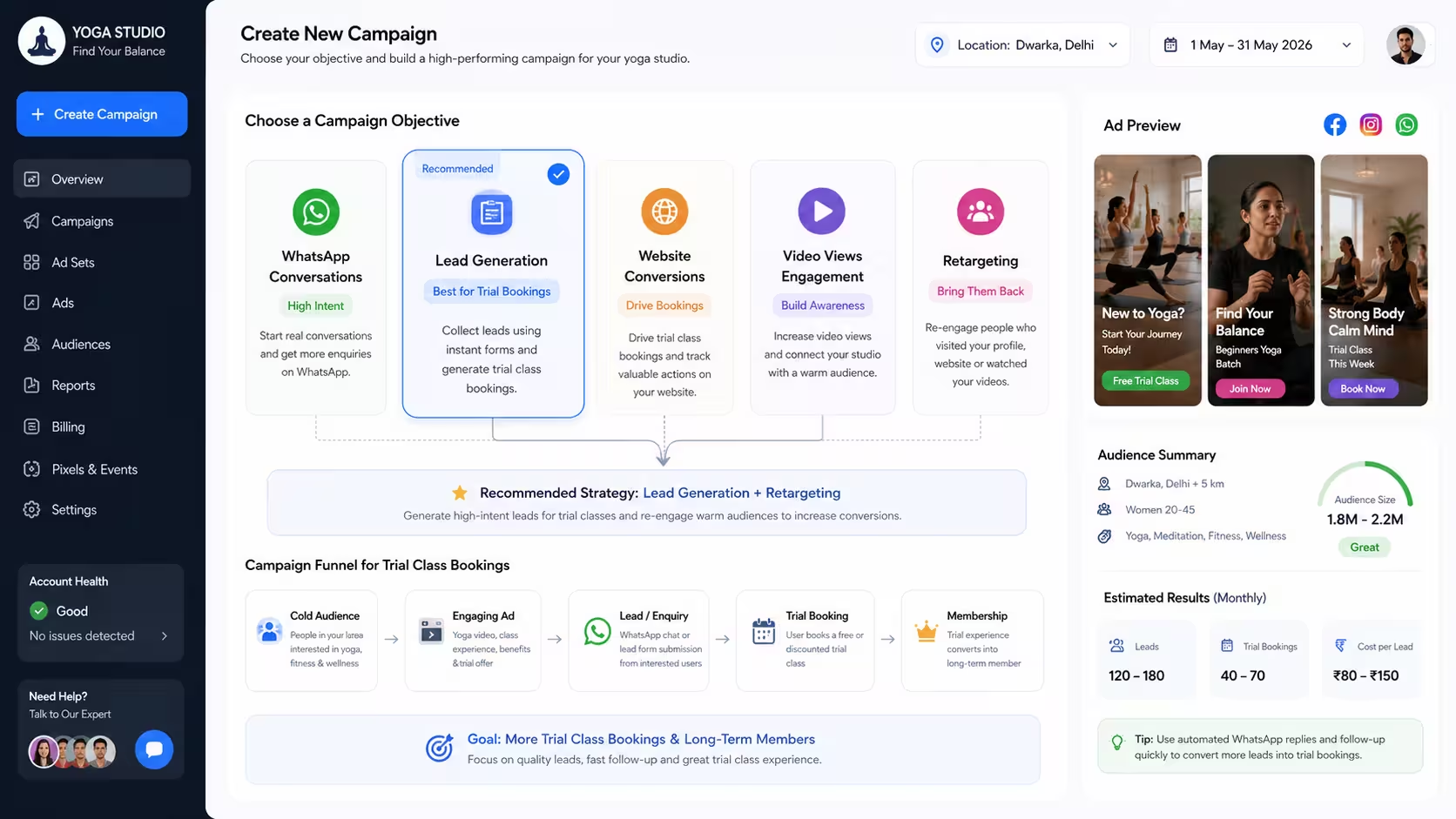
Click-to-WhatsApp Campaigns
For yoga studios in India, this is usually the strongest-performing objective, and WhatsApp’s dominance as a business-messaging channel here is well documented — a Kantar study cited by Meta found that 91% of online adults in India message a business at least once a week, which is a different level of comfort than most other markets.
Meta’s WhatsApp campaign setup now supports automated first-reply sequences: when someone taps the ad and opens WhatsApp, a pre-built greeting can ask a qualifying question (which batch, beginner or experienced, morning or evening) and point them toward booking a trial slot, even before a staff member is online.
One thing worth taking seriously: WhatsApp Business accounts carry an official Quality Rating from Meta, based on how recipients respond to your messages, including block and report rates. Multiple industry guides on click-to-WhatsApp campaigns also report that slow or generic first responses hurt conversation-to-conversion rates, and several point to fast, specific first replies as one of the biggest levers in campaign performance.
Meta hasn’t published an exact response-time threshold that affects ad delivery, so treat “reply fast” as a best practice worth following rather than a precise rule to hit — but the direction of the evidence is consistent: slow first responses cost you leads either way.
Also Read:- SEO Tips for Yoga Practitioners: 35-Point Guide to Get More Students Online
Instant Lead Forms
Good for capturing name, phone number and a qualifying question or two directly inside Facebook or Instagram, without the person leaving the app. These typically produce a higher volume of enquiries than WhatsApp campaigns, but lead quality tends to be a notch lower — filling a form takes less commitment than starting a real conversation, so some names are curious clicks rather than serious prospects. Lead Forms work best paired with a team member who can call every lead within the hour.
You can check our detailed guide about Google Ads for Yoga Studios in India : A Complete Guide to Attract More Students and Increase Class Bookings
Engagement and Video View Campaigns
These aren’t for direct enquiries — they’re for warming up a local audience before asking them to book anything. Running a short, low-cost video campaign for a couple of weeks to build a retargeting audience, then switching that same audience into a WhatsApp or Lead campaign, tends to produce a cheaper, higher-quality result than going straight for the ask with cold traffic.
Audience Targeting That Actually Fits a Yoga Studio
Meta’s Advantage+ audience tools have gotten genuinely capable, and the smarter approach in 2026 is usually to run Advantage+ audiences alongside a couple of manual, tightly-defined campaigns rather than manually stacking many interest layers the way agencies did a few years ago.
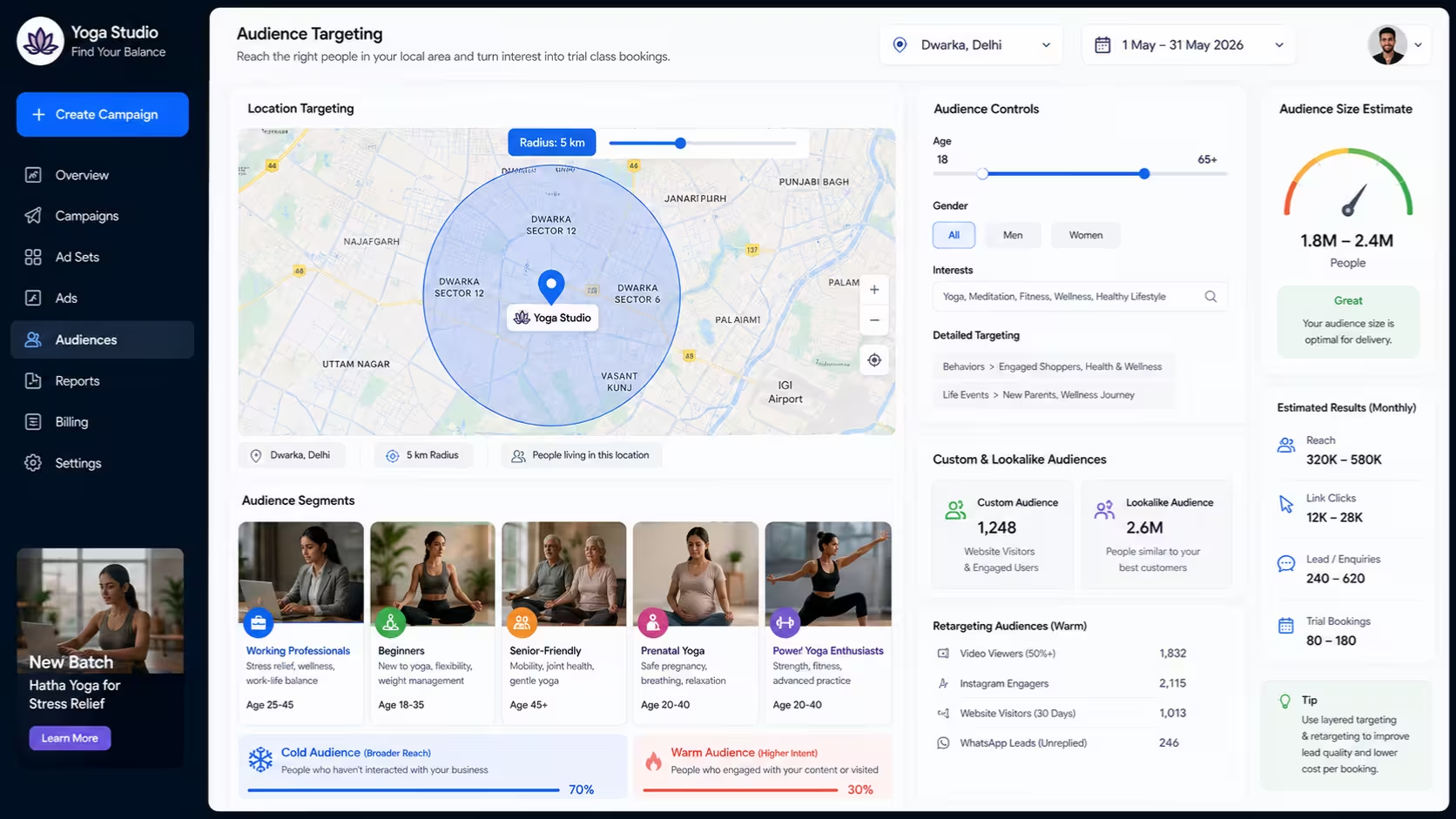
A few things are still worth setting deliberately for a yoga studio:
- Radius: keep it tight for daily class promotion, widening only for workshops, retreats, or teacher-training programs people will travel for.
- Age and gender: don’t default to a broad 25–45 bracket. A prenatal batch, a senior-friendly gentle yoga class, and a power yoga batch for working professionals are three different audiences that deserve three different ad creatives, not one generic ad.
- Platform gender skew in India: Instagram and Facebook usage in India skews noticeably male overall, according to DataReportal and Statista figures — which matters for a category like yoga where the walk-in customer base often skews female. Left on fully automatic targeting, delivery can drift toward the platform’s broader male-heavy audience rather than the people most likely to actually book a class, so it’s worth checking who your ads are reaching, not just how many people they’re reaching.
- Interest layers: useful to seed the algorithm early (wellness, meditation apps, fitness studios nearby, Ayurveda), then let Advantage+ expand once there’s real conversion signal to learn from.
- Lookalike audiences: once there’s a base of people who’ve messaged the studio or booked a trial, a lookalike built from that list tends to outperform interest-based targeting once it has enough data to work with.
- Retargeting: anyone who watched a meaningful chunk of a video, visited the website, or messaged but didn’t book should never see a fresh “discover us” ad again — they should see a direct offer with urgency instead.
Also Read:- Yoga Studio SEO Checklist: 49-Point Audit to Rank on Google Maps
The Offer Is Doing More Work Than the Targeting
No amount of targeting precision fixes a weak offer. “Join our yoga classes today” asks for a decision from someone who has never met the studio. A free trial class, a discounted first week, or a beginner-friendly workshop asks for a much smaller decision — one people are far more willing to make from a scroll on their phone.
MAKE YOUR AD BUDGET WORK HARDER
Spending on Meta Ads but Not Getting Enough Students?
The problem is often not Meta Ads itself. It can be the offer, audience, creative, lead follow-up or campaign structure. Let’s identify where your yoga studio is losing potential students.
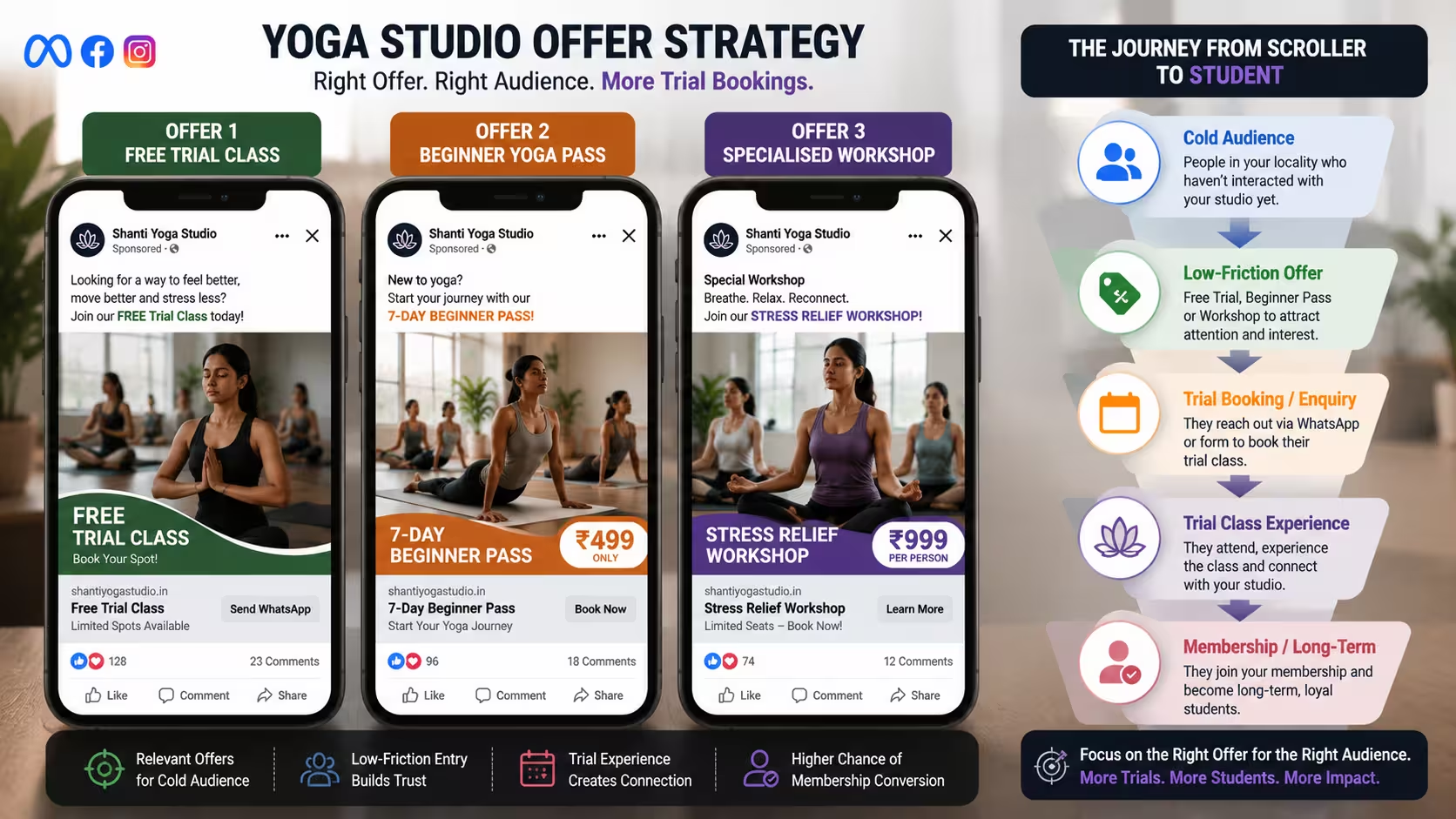
Offers That Tend to Work for Yoga Studios
- A free or heavily discounted trial class — usually the single biggest lever for cold traffic
- A short, low-priced beginner pass covering the first week or two
- A themed workshop (stress relief, back pain, prenatal, weight management) as a lower-commitment entry point than a full membership
- A referral or “bring a friend” offer aimed at the warm/retargeting audience rather than cold traffic
- A limited-batch urgency offer for retargeting once someone has already shown interest, tied to a real seat count rather than an artificial deadline
What Tends Not to Work
Straight membership-price ads to cold audiences. Vague “transform your life” messaging with no concrete next step. Any offer that funnels into a channel nobody is actively monitoring — if the ad drives to WhatsApp or a form, someone needs to be reachable beyond a narrow office-hours window, since a meaningful share of enquiries come in during the evening, after work.
Also Read:- Yoga Studio SEO Services: Grow Your Yoga Business with Proven SEO Strategies
Creative and Ad Copy: What Actually Stops the Scroll
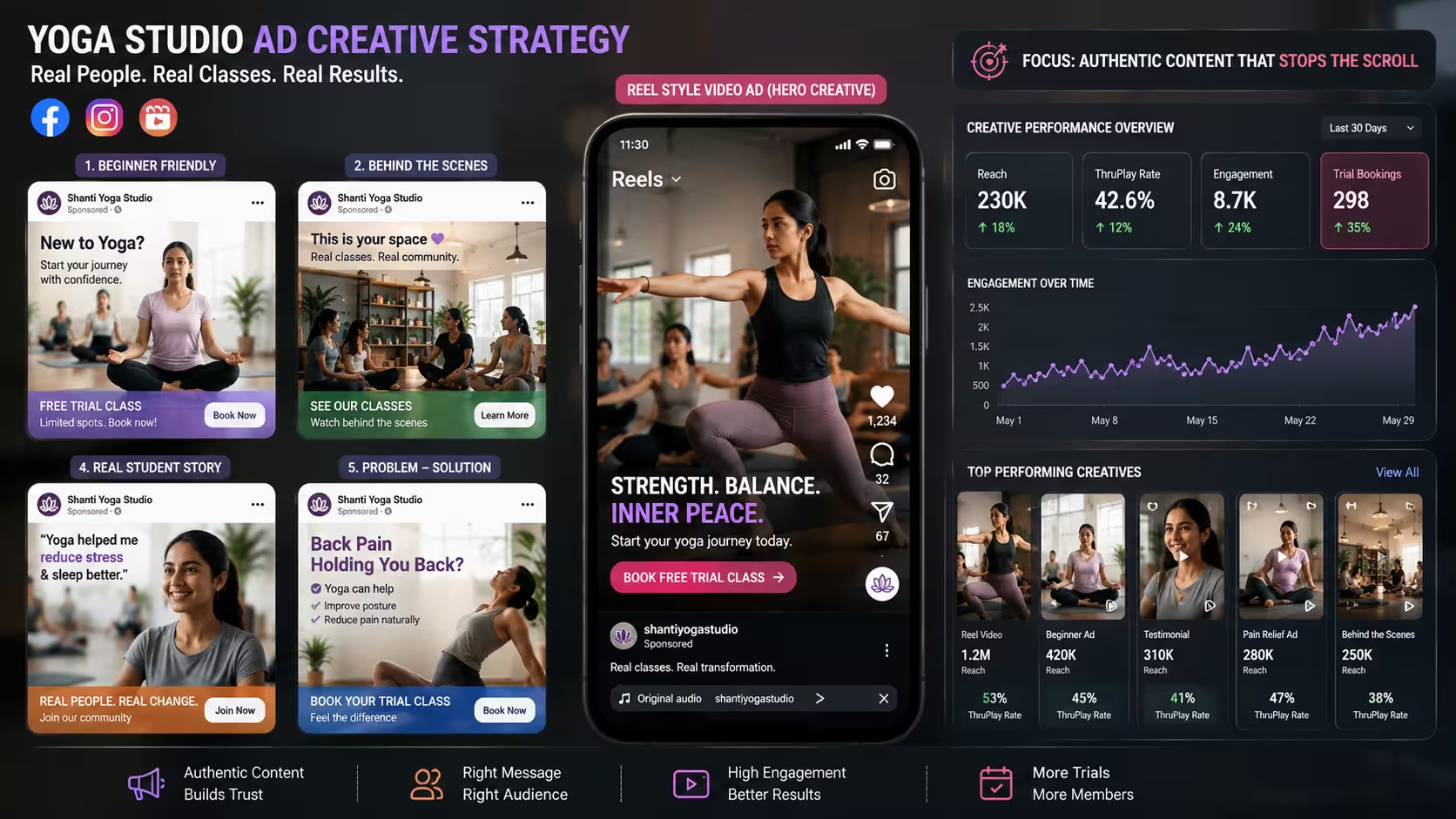
Short vertical video is outperforming static images for cold-audience acquisition across most Meta placements right now — this isn’t just an impression, it shows up consistently in industry benchmark data. Hootsuite’s Social Trends Report puts average video click-through rate on Meta noticeably ahead of static images, while separate benchmark data shows static images still holding a real cost-per-impression advantage in cold prospecting.
In practice, that means video tends to win on getting attention and building trust, while static images can still be the more efficient choice for a very tight testing budget or a simple, time-bound offer.
What tends to work specifically for yoga studios:
- Short clips of a real class in progress — not a polished shoot, an actual weekday session. Authenticity tends to outperform production value here.
- The instructor speaking directly to camera for a few seconds addressing a specific problem (“If your back hurts by 3pm every day at your desk, this is for you”) before cutting to class footage.
- On-screen captions — a large share of video is watched with sound off, so the hook needs to land visually in the first couple of seconds.
- Real students, real batch, real studio — not stock footage of a beach sunset pose. People are checking whether this looks like somewhere they’d actually feel comfortable walking into.
- A specific, visible CTA in the caption and on-screen: “Message us for a free trial class this week” outperforms a generic “Learn more.”
Static images still have a place — mainly for retargeting audiences and for promoting a specific time-bound offer where a clean graphic with the offer, price and batch timing communicates faster than video. But for new-audience acquisition, video is carrying most of the weight.
Also Read:- Why Yoga Studios Get Traffic but No Leads (And How to Fix It in 2026)
Lead Follow-Up: The Part Nobody Wants to Own
Well-targeted, well-designed campaigns regularly get written off as “not working” purely because of what happened after the enquiry came in. This part has nothing to do with Meta, and it’s usually the real difference between a profitable campaign and a wasted one.
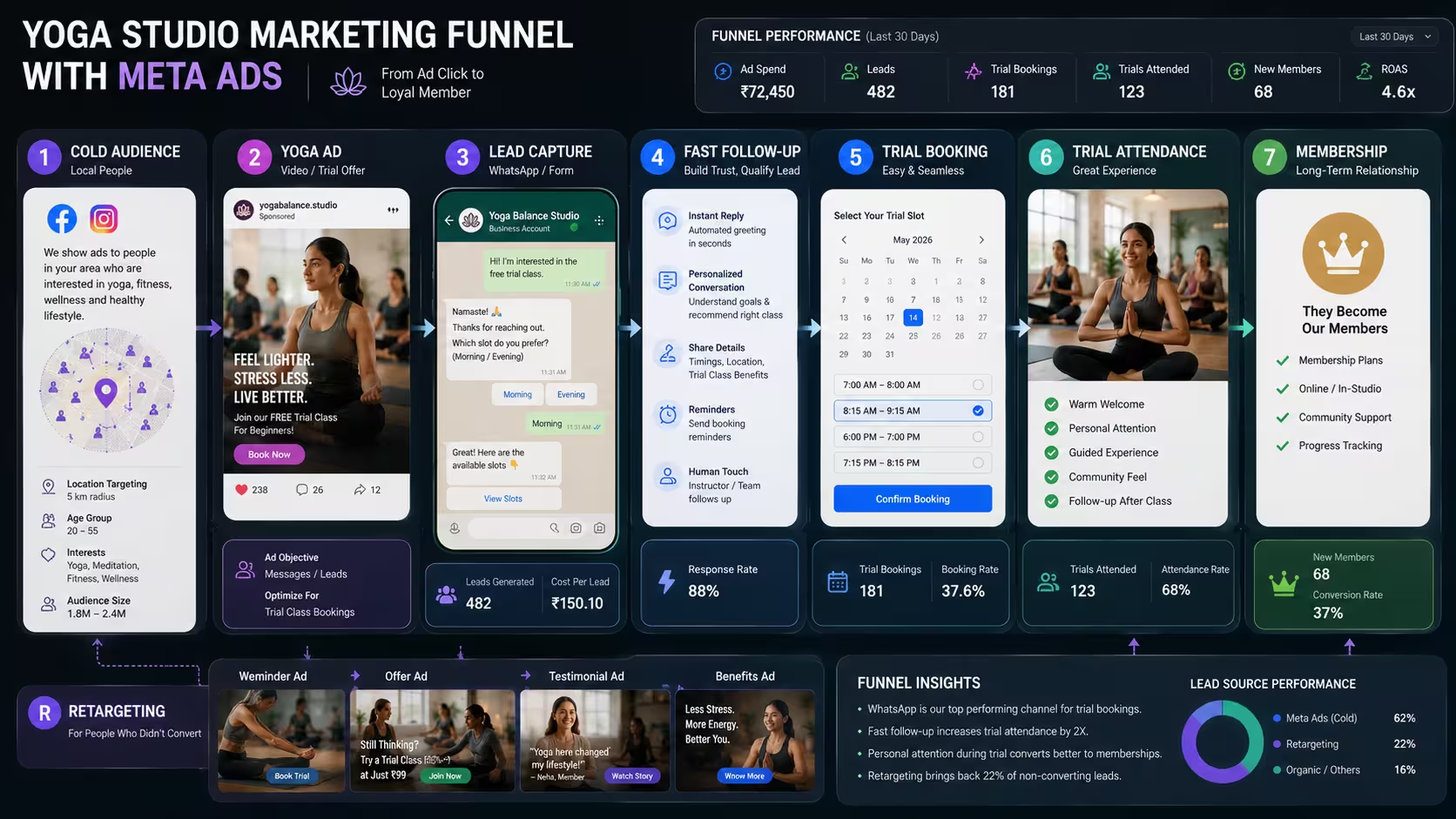
What tends to fail most often: enquiries sitting unanswered overnight, the same generic “Thank you for your interest” message sent to everyone regardless of what they asked, and no second follow-up if the person doesn’t respond to the first message.
A workable follow-up system for a yoga studio doesn’t need to be complicated:
- Respond within minutes during business hours, and within a couple of hours outside them — not next-day
- Ask one qualifying question, then offer a specific trial slot with a day and time, not a vague “come whenever”
- If there’s no reply within 24 hours, send one gentle follow-up — not five
- Track every enquiry in a simple sheet or CRM: source, date, status, whether they showed up for the trial
- Follow up again a few days after a no-show trial — life gets in the way, and a second nudge recovers a meaningful share of these
Tracking: Make Sure Meta Can See What’s Actually Working
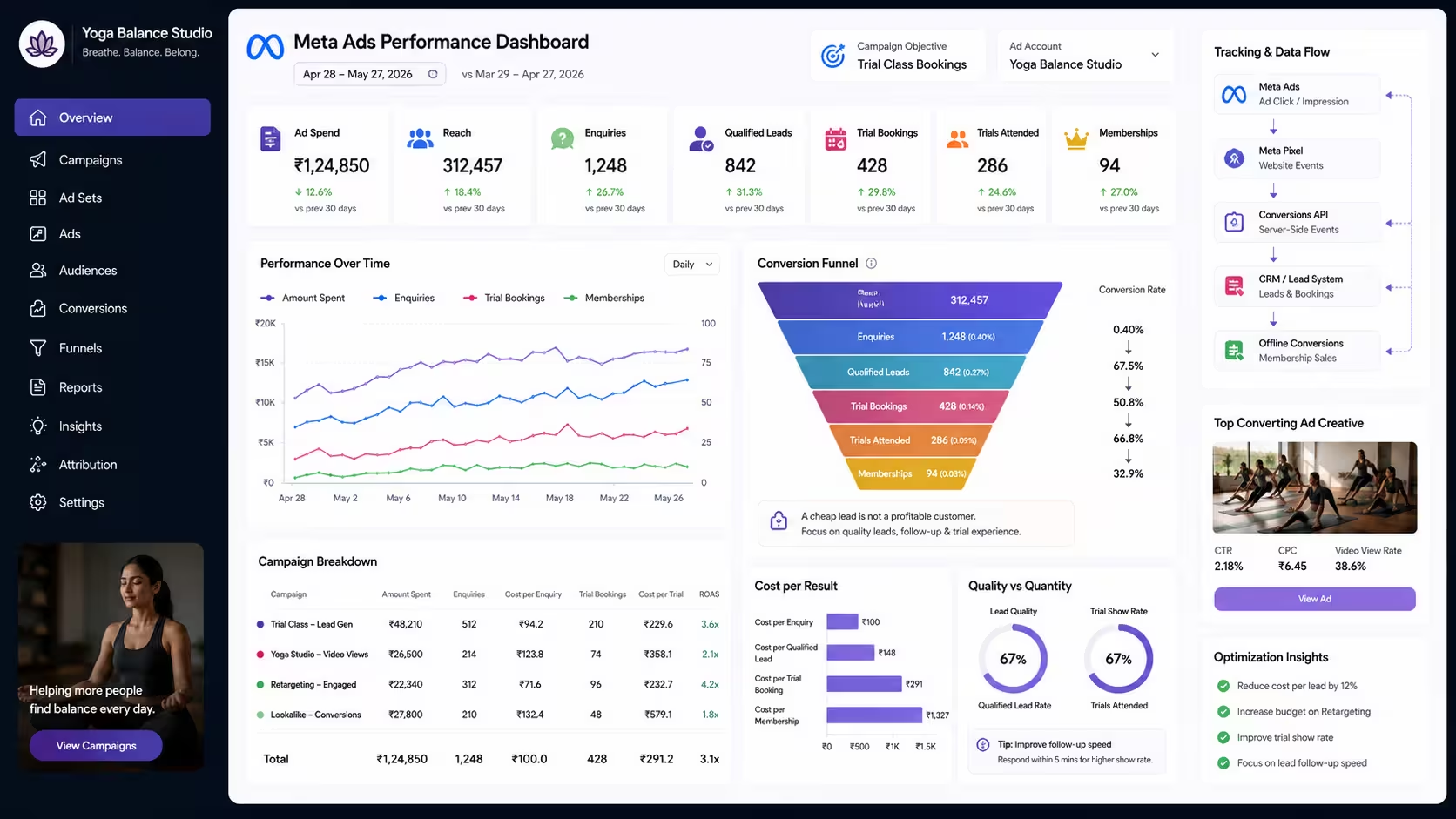
This part gets skipped most often, and it quietly makes every other decision harder than it needs to be. If Meta can’t see which leads turned into trial bookings and which trial bookings turned into memberships, its algorithm is optimising blind — it can only chase whatever event it’s being fed, which for most studios ends up being “link click” or “message started” rather than anything closer to revenue.
For a yoga studio, that means setting up the Meta Pixel on the website if any traffic is being driven there, and ideally connecting the Conversions API as well — Meta has been pushing advertisers toward server-side tracking for a while now, since campaigns relying only on browser-side pixel data tend to have noisier signal, partly because of how much tracking gets blocked on mobile browsers and in-app views.
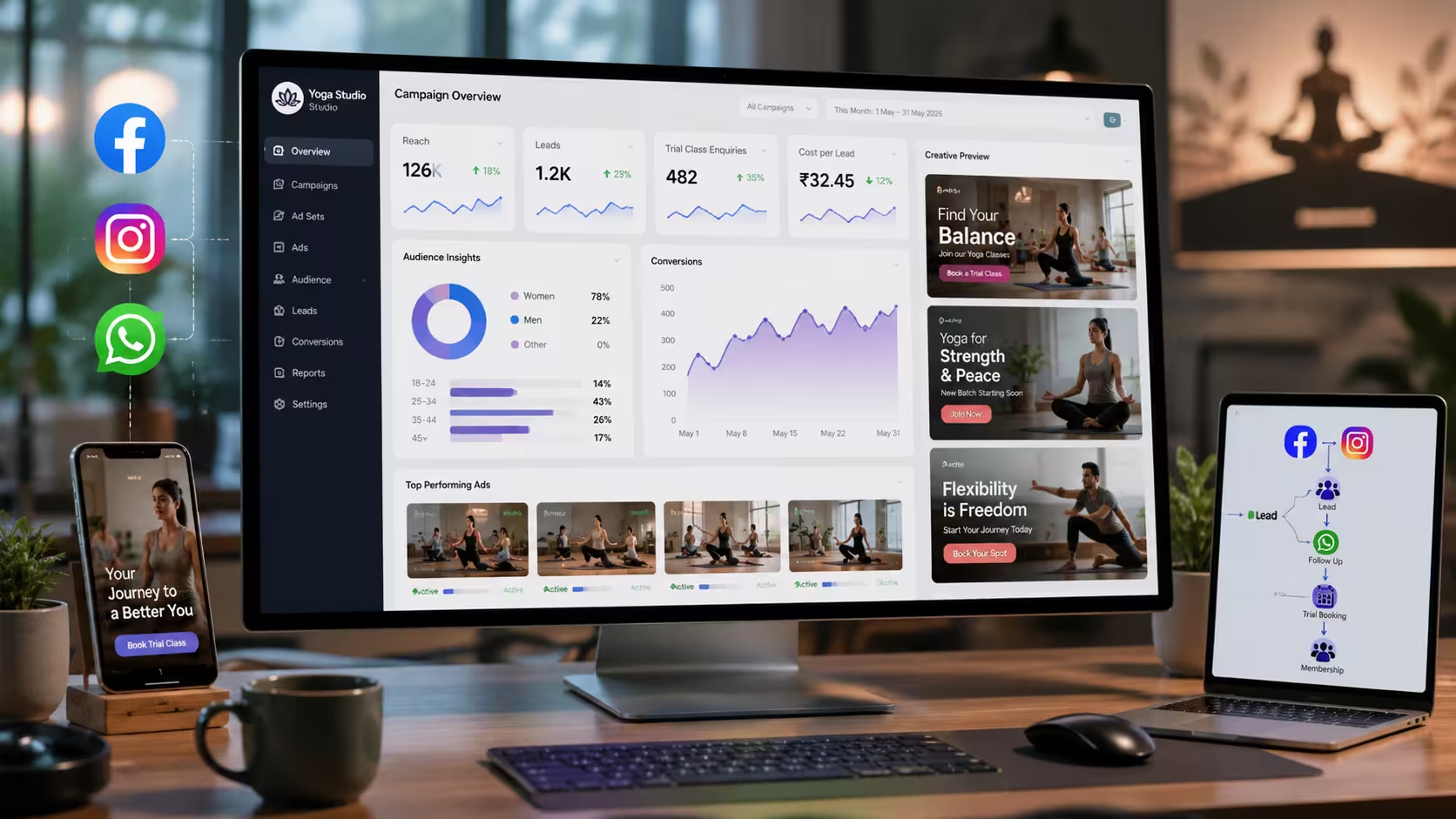
For WhatsApp and Lead Form campaigns specifically, the more useful move is manually tagging outcomes back into a CRM or spreadsheet — marking a lead as “trial booked,” “trial attended,” or “converted to membership” so cost per outcome can eventually be seen at each stage, not just cost per enquiry. A studio that only ever looks at cost-per-lead is optimising for the cheapest possible click, not the most profitable one — and those aren’t always the same audience.
REACH THE RIGHT LOCAL AUDIENCE
Your Next Yoga Students Are Already on Facebook & Instagram
Reach relevant people around your studio with the right audience strategy, authentic creatives and low-friction offers designed to turn interest into a trial class enquiry.
What a Meta Ads Strategy for a Yoga Studio Should Actually Include
“We’ll run some ads and send you a report” isn’t a strategy — it’s a placeholder for one. A proper Meta Ads setup for a yoga studio should cover each of the following as a distinct, deliberate step, not an afterthought bundled into a single generic campaign:
- Campaign setup — separate campaigns structured by objective (WhatsApp, Lead Forms, video/engagement) rather than one catch-all campaign trying to do everything at once
- Tracking — Pixel and Conversions API on the website where relevant, plus a simple system for tagging WhatsApp and form leads by outcome
- Audience strategy — a mix of Advantage+ delivery, tightly defined local/interest audiences, and lookalikes built from real enquiries once there’s enough data
- Creative testing — multiple video and static variations running against each other by batch or offer, not a single ad left untouched for months
- WhatsApp/Lead funnel — a defined first-reply sequence, qualifying questions, and a specific next step (a booked trial slot, not just “we’ll get back to you”)
- Retargeting — a standing campaign for anyone who engaged but didn’t convert, running separately from cold-audience acquisition
- Optimisation — a regular cadence of checking Meta’s relevance diagnostics and adjusting creative or targeting when a campaign’s engagement or conversion ranking drops
- Reporting — visibility into cost per trial booking and cost per membership conversion, not just cost per click or cost per lead
Also Read:- Local SEO for Yoga Studios: Why Your Studio Is Invisible on Google Maps (And How to Fix It)
What Should a Yoga Studio Look for in a Meta Ads Agency?
Plenty of yoga studio owners can and do run a basic version of this themselves, especially early on. Comfort inside Ads Manager, time to check performance every couple of days, and the ability to personally handle fast lead follow-up are enough to test this on a modest budget first.
It usually makes more sense to bring in someone who does this full-time once multiple batches or offers are running simultaneously and each needs its own creative, once retargeting and lookalike audiences need to be properly layered instead of a single flat campaign, or once a studio owner’s own time is genuinely worth more spent teaching than sitting in Ads Manager troubleshooting delivery issues.
When evaluating a Meta Ads agency or freelancer for a yoga studio, a few questions tend to separate a serious partner from someone reselling a generic package:
- Can they explain how they’ll structure campaigns by objective, rather than describing everything as “a Facebook ads campaign”?
- Do they ask about the studio’s actual batches, offers and follow-up process before quoting a plan — or hand over the same package regardless of the business?
- Will they set up Pixel/Conversions API and outcome tracking, or only report cost-per-click and impressions?
- Do they have a plan for lead follow-up support (templates, WhatsApp automation guidance) or does that responsibility sit entirely with the studio’s own team?
- Are they upfront that the first few weeks are a learning phase, or do they promise fixed lead numbers from day one — a promise nobody running Meta Ads honestly can guarantee?
Budget and Realistic Expectations
Every studio owner asks the same question first: “How much do I need to spend?” The honest answer depends on the city, the local competition, and how tight the targeting radius is — a studio in a dense South Delhi or Gurgaon micro-market will see different costs than one in a smaller tier-2 city with far less local ad competition.
The shape of a realistic campaign matters more than a specific number to expect on day one:
- The first couple of weeks are a learning phase. Meta’s algorithm needs conversion signal before it optimises well — judging a campaign on its first few days’ performance is one of the most common reasons studios pull the plug too early.
- Cost per enquiry tends to improve as the retargeting audience builds and the lookalike audience gets fed real conversion data — early costs rarely represent steady-state costs.
- A daily budget that lets the algorithm gather a reasonable flow of conversion events during the learning phase generally exits that phase faster than a very small budget spread too thin across too many objectives at once.
- Cost per trial booking and cost per membership conversion are worth tracking separately — a cheap enquiry that never shows up for the trial isn’t actually cheap.
It’s more useful to leave a studio owner with the right mental model than a specific rupee figure that may not hold in their city or against their local competition — anyone quoting a guaranteed cost-per-lead before seeing the market and creative is guessing.
Common Mistakes Yoga Studios Make With Meta Ads
- Boosting posts instead of running proper campaigns through Ads Manager
- Advertising the studio’s features instead of the visitor’s problem
- Sending cold traffic straight to a membership decision instead of a low-friction trial offer
- Using one generic ad for every audience segment instead of matching creative to specific batches (prenatal, senior, power yoga, etc.)
- Judging results after a few days instead of allowing a proper learning phase
- No retargeting audience or ad, so anyone who didn’t convert the first time is never reached again
- Slow or inconsistent WhatsApp/lead follow-up, which quietly wastes a large share of ad spend
- Turning ads off completely between “batches” instead of running always-on retargeting and switching only the acquisition offer
- No Pixel or Conversions API set up, so the algorithm is optimising for clicks instead of anything close to an actual trial booking or membership
BUILD A SMARTER GROWTH SYSTEM
Meta Ads Should Do More Than Generate Cheap Leads
Build a complete system around the right offer, local audience targeting, authentic ad creatives, fast lead follow-up, trial bookings, retargeting and student conversion.
Tier-1 vs Tier-2 City Considerations
A Meta Ads strategy that works in Delhi NCR doesn’t automatically translate to a tier-2 city, and treating every Indian market the same is a common gap in generic advice.
In dense tier-1 micro-markets, competition for the same local audience is higher, which usually means a tighter radius, more deliberate audience segmentation by batch, and a stronger reliance on retargeting to bring down cost per enquiry over time.
In tier-2 and smaller cities, local ad competition tends to be lighter, which often means lower costs per impression, but it can also mean a smaller total addressable audience — so radius sometimes needs to widen slightly just to give the algorithm enough people to work with, and creative may need to work harder to explain what a modern yoga studio actually offers, since brand awareness for organised studios (versus a neighbourhood instructor or gym class) is often lower outside major metros.
Language is also worth thinking through deliberately rather than defaulting to English creative everywhere. A studio in a tier-2 city or a more mixed-language tier-1 neighbourhood may see stronger engagement testing a Hindi or Hinglish version of the same ad alongside the English one, particularly for WhatsApp conversation openers, where a natural, local tone tends to get a faster first reply than a formal English script.
Ready to Fill Your Batches?
At Grow My Biz Digital, we run Meta Ads specifically for yoga studios and wellness businesses across Delhi NCR — from campaign structure and creative to lead follow-up systems that make sure every enquiry actually gets a response. If you’d like a straightforward, no-jargon look at what a campaign for your studio would involve, get in touch and we’ll walk you through it.
1. How much should a yoga studio budget for Meta Ads per month?
There’s no single number that applies across cities and competition levels. What matters more than the total budget is giving the algorithm a proper learning phase and tracking cost per trial booking rather than cost per click.
2. Are Facebook Ads or Instagram Ads better for yoga studios?
Most successful campaigns run across both placements through the same campaign, letting Meta’s delivery system decide where each ad performs best. It’s also worth checking who the ads are actually reaching — Instagram and Facebook usage in India skews male overall, which doesn’t automatically match the audience most likely to book a yoga class.
3. Do Click-to-WhatsApp ads work better than Lead Forms for yoga studios?
In most Indian markets, WhatsApp tends to produce higher-intent conversations, and adoption for business messaging in India is unusually high. The right choice still depends on whether the team can respond quickly; if not, Lead Forms with a fast callback process can work just as well.
4. How long before Meta Ads start generating real enquiries for a yoga studio?
Expect a learning phase of a couple of weeks before performance stabilises. Judging results in the first few days, before the algorithm has enough conversion data, is one of the most common reasons studios conclude Meta Ads “don’t work” for them.
5. Can a small, single-location yoga studio compete with larger chains on Meta Ads?
Yes — local radius targeting actually favours single-location studios, since the competition is only within a few kilometres of the studio, not citywide. A tightly targeted, authentic local campaign often outperforms a larger chain’s broader, less personal advertising within that same radius.