

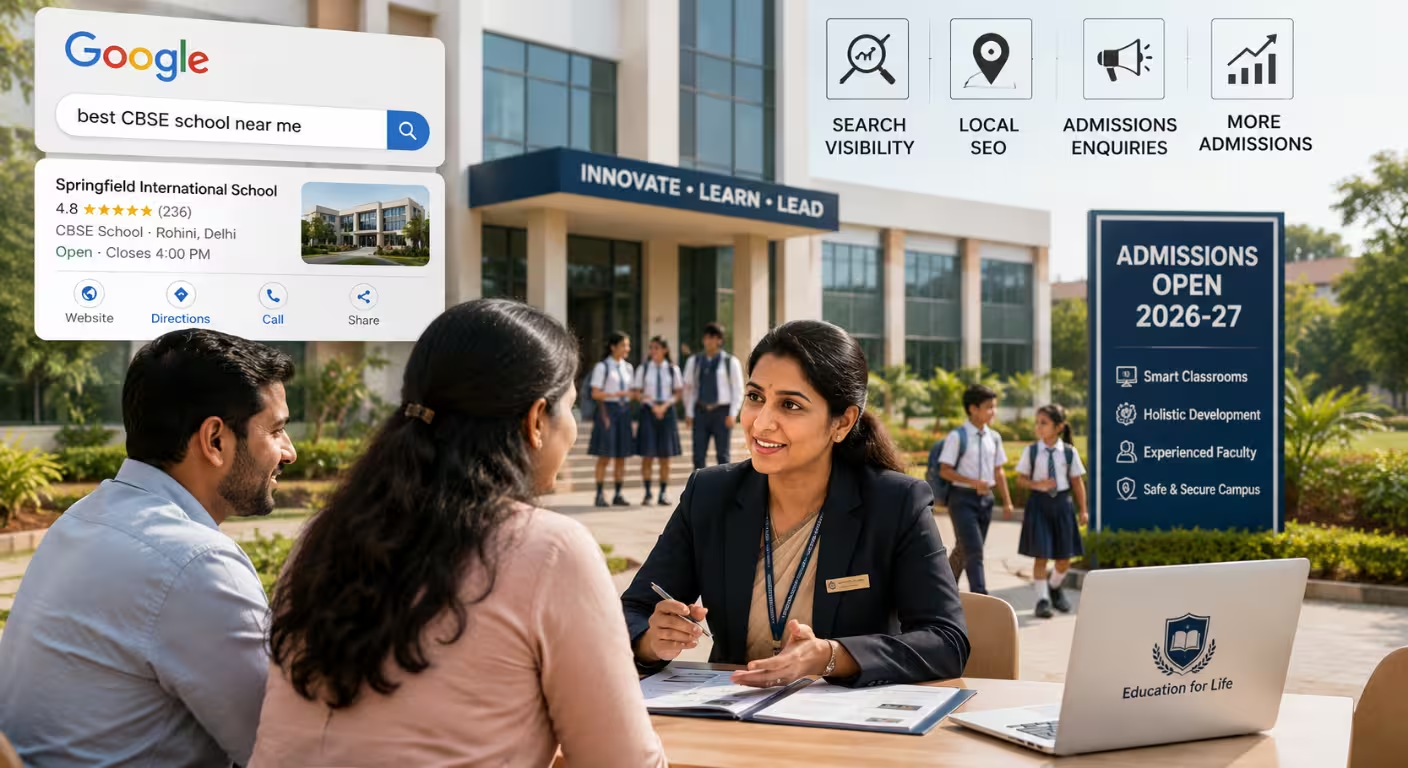
Every year, the same pattern plays out across thousands of private schools in India. Admission season approaches, the principal puts up a flex banner outside the gate, runs a few newspaper ads, and hopes that word-of-mouth does the rest. Some years it works. Most years, seats stay empty and everyone wonders why.
Here’s what’s actually happening: parents have changed how they find schools. They’re not asking neighbours first anymore. They’re opening Google.
A parent searching for a school in their area types something like ‘best day-care near me‘ or ‘play school admission open in Dwarka‘. If your school doesn’t appear in those results — in the map pack, in organic search, or in Google Ads — that parent moves to the next school that does. You never even get a chance to make an impression.
This guide is for school principals and owners who want to fix that. Not theory. Not generic marketing advice. A practical, channel-by-channel breakdown of how Indian schools actually generate admission inquiries online in 2026.
Table of Contents
What Is School Admission Marketing?
School admission marketing is the process of attracting parent enquiries using digital channels like Google Search, Google Business Profile, SEO, social media, and paid advertising. In India, most parents now begin their school research online — searching for terms like ‘best CBSE school near me’ or ‘school admissions open in [area]’. Schools that appear prominently in those search results generate more enquiries, campus visits, and admissions than schools relying only on offline marketing or referrals.
Effective admission marketing is not about posting random content on social media or running ads during the last month of admissions. It’s about building visibility and trust consistently — so that when parents begin comparing schools, your institution is already on their shortlist.
💡 From Experience In my experience working with schools across Delhi NCR, the ones that fill seats fastest aren’t necessarily the ones with the best facilities. They’re the ones parents can find, trust, and contact within 60 seconds of searching. Visibility and trust — in that order.
How Indian Parents Search for Schools — What the Data Shows
Before spending a rupee on marketing, you need to understand exactly how parents search. Because if you’re optimising for the wrong terms, you’re invisible to the people who matter.
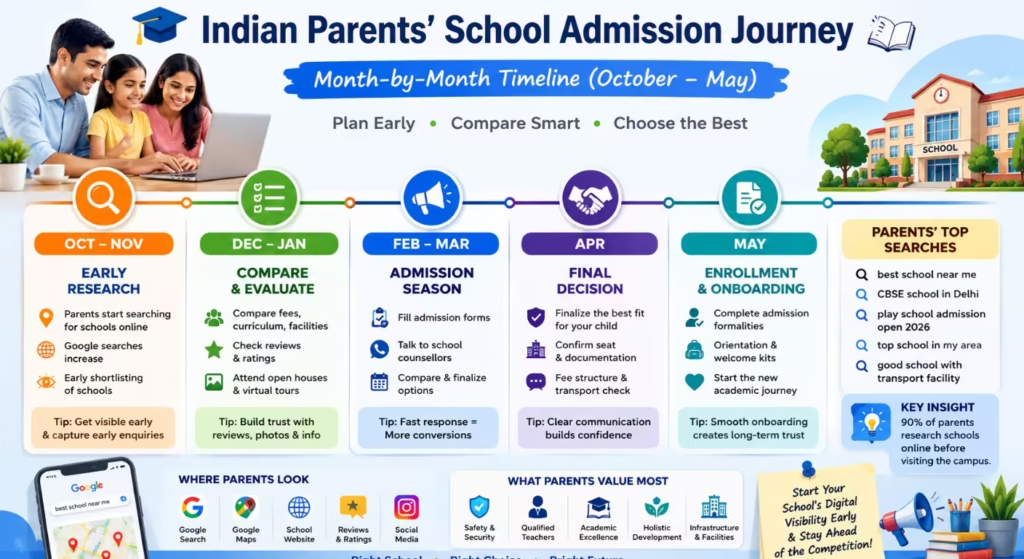
Studies consistently show that over 90% of parents research schools online before making an admission enquiry or campus visit. For most schools in India, Google has effectively become the first stage of the admission funnel.
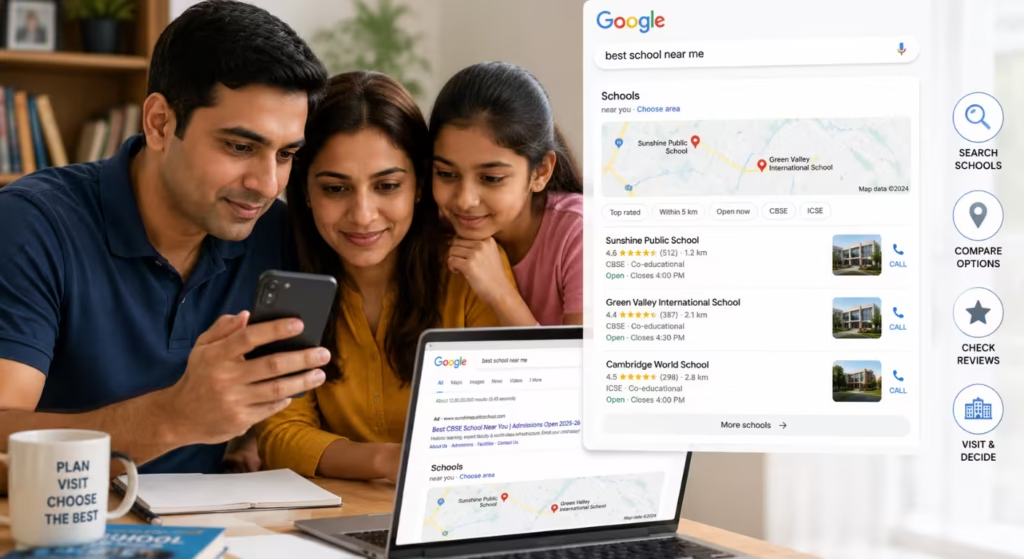
The ‘near me’ shift
Parents don’t search for your school by name — not until they already know you exist. They search by category and location.
Google searches containing phrases like ‘near me’ have continued to grow year after year, especially for local services such as schools, clinics, and coaching centres. This shift has fundamentally changed how schools need to approach visibility online.
The most common search patterns look like this:
- ‘best school near me’
- ‘CBSE school in [locality]’
- ‘play school admission open 2026’
- ‘good school in [area name] with transport’
- ‘top school in [city] for nursery admission’
Notice what’s missing from all of these: your school’s name. This means your school needs to rank for category + location queries, not just branded searches. If you’re only showing up when someone searches your school’s name directly, your digital presence is essentially zero.
Please check our guide if your Google Business Profile Edits Not Showing? Here’s What’s Actually Happening.
When do parents start searching?
| Admission Season Phase | What Parents Are Doing |
| October – November | Early movers start shortlisting schools for the next academic year. High-intent, low competition window. Schools that show up here get first-mover advantage. |
| December – January | Peak research phase. Majority of parents actively comparing schools, attending open days, asking for fee structures. |
| February – March | Decision and admission season. High urgency. Parents who haven’t decided yet are making final calls. Paid ads work best here. |
| April – May | Last-minute admissions. Seat-filling phase. Schools with waitlists close this window early. |
✓ What Actually Works Most schools start marketing in February when parents have already shortlisted 3-4 options. Start your digital visibility push in October. By the time your competitors wake up, you’ve already captured the early enquiries.
Mobile-first, WhatsApp-driven decisions
Over 80% of school-related searches in India happen on mobile. Parents find you on Google, open your website on their phone, and within 30 seconds decide whether to call or bounce. If your website loads slowly, doesn’t show your address clearly, or makes it hard to find the phone number — they’re gone.
And after they decide to reach out, most Indian parents prefer WhatsApp over a phone call for the first contact. A visible WhatsApp button on your website and Google Business Profile is not optional — it’s a conversion tool.
Is Your School Losing Admissions to Competitors on Google?
We help schools across Delhi NCR improve Google visibility, rank in local searches, optimize Google Business Profile, and generate consistent admission enquiries through SEO & Google Ads.
Your Google Business Profile — The Most Underused Admission Tool
If I had to pick one single thing that gives schools the highest return for the least effort, it’s a properly optimized Google Business Profile. Not paid ads. Not social media. GMB.
When a parent searches ‘school near me’ or ‘Play school in Rohini’, what shows up first is the map pack — three business listings with ratings, photos, distance, and a call button. If your school is in that pack, you get calls. If you’re not, you don’t.
What most school GMB profiles get wrong
- Primary category set to ‘School’ — too broad. Use ‘Private School’, ‘Primary School’, or the most specific category available.
- No photos of classrooms, playground, and events — parents are visual decision-makers. Empty photo sections kill trust instantly.
- Zero posts in the last 6 months — Google deprioritises dormant profiles in the map pack.
- No responses to reviews — a school that ignores reviews signals that it ignores parents.
- Missing attributes: school hours, website link, WhatsApp number, admission status.
A suspended Google Business Profile directly impacts your calls, walk-ins, and local visibility — sometimes within hours. If you want expert help rather than going through this alone, our Google Business Profile Suspended in India — Complete Recovery Guide (2026) cover everything from profile setup and optimization to suspension recovery and ongoing compliance.
⚠ Common Mistake Many schools in India list their GMB under the school owner’s personal Google account. If that person leaves or loses access, the profile becomes unmanageable. Always create a dedicated Google account for the school’s GMB profile.
GMB actions that directly increase admission enquiries
- Post ‘Admissions Open’ updates every 2 weeks during peak season. These appear directly in search results.
- Add photos every month — classrooms, events, annual function, sports day. Schools with 50+ photos significantly outrank those with under 10.
- Collect reviews from current parents systematically. 4.5+ star rating with 50+ reviews is the local trust threshold in most Indian cities.
- Enable messaging on your GMB profile — many parents prefer to message before calling.
- Keep admission season hours updated — if you’re open for enquiries on Saturdays, show it.
For a complete GMB setup and optimization walkthrough, see our guide on Google Business Profile optimization for local businesses.
Local SEO for Schools — How to Rank in Google Search
Beyond the map pack, parents also scroll through organic search results. A school that appears in both the map pack AND the organic results for the same query looks dominant. Parents perceive it as the most credible option — even if the other schools are equally good.
What your school website needs to rank
Most school websites in India are built for looks, not search. Beautiful banners, auto-playing videos, a welcome message from the principal — and zero SEO structure. Google can’t rank what it can’t understand.
- Each class level needs its own page: Nursery admissions, KG admissions, Class 1 admissions — separate pages, not one combined ‘Admissions’ page.
- Location in page titles: ‘Play School Admissions in Rohini Delhi | [School Name]’ — not just ‘[School Name] Admissions’.
- Schema markup: Schools are eligible for EducationalOrganization schema, which helps Google understand your institution type, location, and contact details.
- Testimonials page with parent names and class years — this is user-generated content that Google values.
- Blog section with admission-related content: ‘How to choose the right school for your child in Delhi’, ‘CBSE vs ICSE — what parents need to know’. This builds topical authority.
Hyperlocal SEO — go neighbourhood-level
Here’s an insight most school marketers miss: parents search by neighbourhood, not city. A parent in Vasant Kunj is not searching ‘school in Delhi’. They’re searching ‘school in Vasant Kunj’ or ‘school near Vasant Kunj’.
Create a dedicated page for each key locality you serve: ‘School admissions in Vasant Kunj’, ‘School in Dwarka Sector 10 area’. These pages rank quickly because almost no school has this level of geographic specificity. Low competition, high-intent traffic.
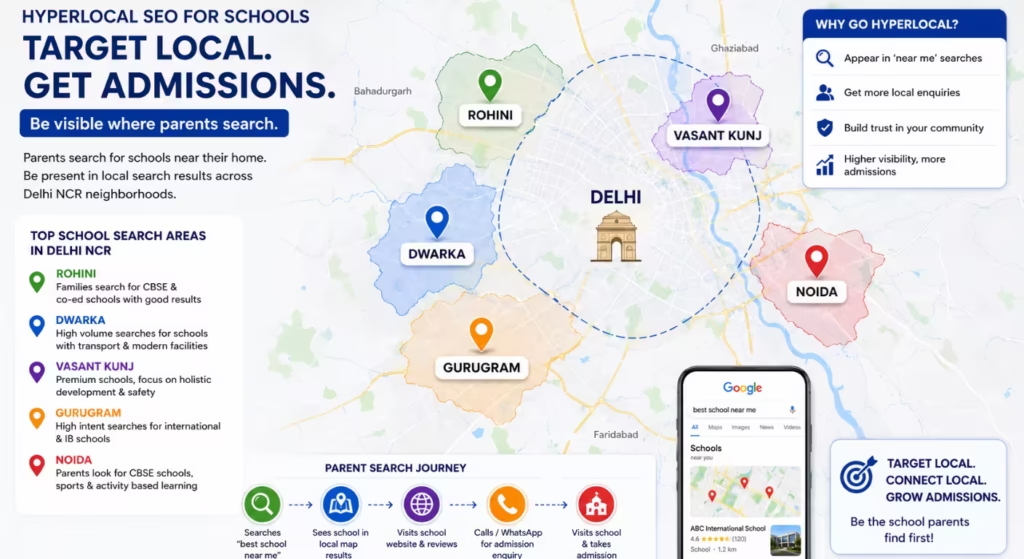
💡 From Experience I’ve seen school websites rank on page 1 within 6 weeks for neighbourhood-level queries — while the same school couldn’t rank in the top 20 for city-level terms. Go local, go specific, go fast.
See our Local SEO services page for a detailed breakdown of how neighbourhood-level optimisation works for service businesses in India.
Google Ads for Schools — When and How to Use Paid Search
Paid ads are not for building awareness. They’re for capturing demand that already exists. And during admission season in India, that demand is enormous.
Google Ads work well for schools because the searches are high-intent. A parent typing ‘play school admissions open 2026 in Gurgaon’ is not browsing. They want to act. If your ad appears, you get the call.
Campaign structure that works for schools
- Separate campaigns for each class level: Nursery, KG, Class 1, Middle School, Senior School. Different parents, different searches, different messaging.
- Location targeting: target within 5–8 km of your school only. A parent 20 km away is almost never going to choose you regardless of how good your ad is.
- Ad schedule: run ads Tuesday–Saturday, 9am–7pm. Most school admission searches happen on weekdays during working hours and Saturday mornings.
- Landing page: don’t send clicks to your homepage. Create a dedicated admission landing page with a clear form, WhatsApp button, and fee structure download.
⚠ Common Mistake The biggest waste I see in school Google Ads campaigns is broad match keywords with no negative list. ‘School’ as a broad match keyword will show your ad for ‘how to build a school’, ‘school holiday list’, and ‘school bus accident news’. Add 200+ negative keywords before going live.
What to bid on
Start with exact match and phrase match only:
- ‘[board] school admission [year] [city/locality]’
- ‘play school near me [area]’
- ‘nursery admission open [city]’
- ‘best school in [locality]’
- ‘[your school name] admission fee’
If you want campaign setup and management handled end-to-end, our Google Ads services for schools cover keyword research, landing page setup, and ongoing optimisation.
Social Media Marketing for Schools — What Actually Moves the Needle
Let me be direct: most school social media is a waste of time. Motivational quotes every Monday. Assembly photos. Republic Day greetings. None of this generates admissions.
What works is content that builds parental confidence. Parents follow school pages to evaluate — they want to see teaching quality, campus culture, and student outcomes. Give them that.
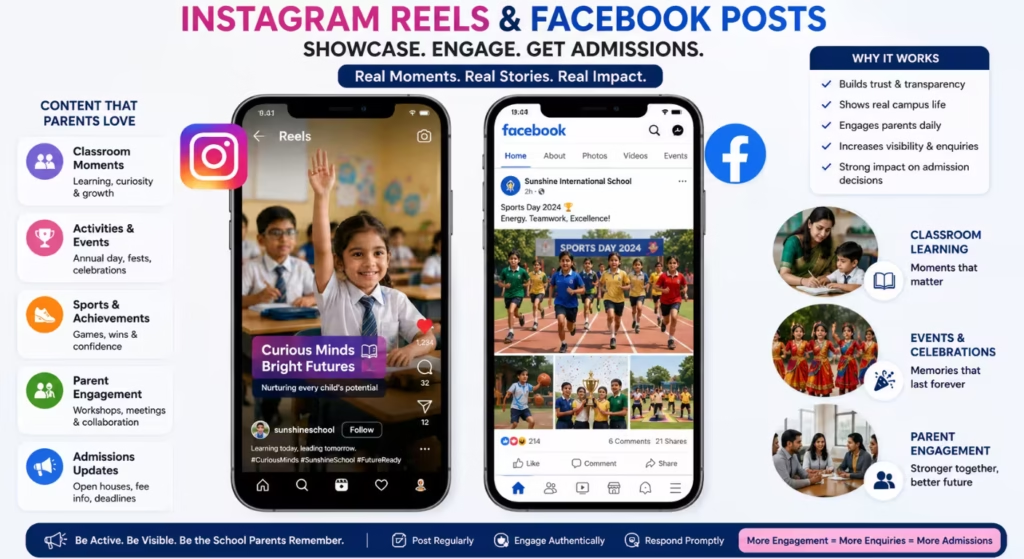
Content that builds trust and drives enquiries
- Short videos of classroom teaching in action — 30–60 seconds. Real classes, real teachers, no staging.
- Parent testimonials: a 60-second video of a current parent talking about why they chose your school is worth more than 10 polished promotional posts.
- Student achievement posts: board results, competition wins, art exhibitions. Proof that the school delivers outcomes.
- Behind-the-scenes: sports practice, science lab, annual function preparation. Authenticity beats production value every time.
- Admission countdown posts: ‘Only 5 seats remaining in Class 1’ — genuine scarcity drives action.
Which platforms matter for Indian school parents
| Platform | How it works for school admissions |
| Primary platform for parent communities in India. Local parent groups are high-value. Paid ads on Facebook reach parents aged 28–42 precisely. Non-negotiable for schools. | |
| Strong for visual storytelling — campus photos, event videos, student achievements. Younger parents (25–35) are active here. Reels with school life content perform well organically. | |
| YouTube | Underused by most schools. A school YouTube channel with genuine content — campus tour, annual function highlights, teacher introductions — builds massive trust. Parents spend 10+ minutes on YouTube researching schools. |
| WhatsApp Broadcast | Not social media, but the most effective nurture tool. Once a parent contacts you, add them to a broadcast list for admission season updates. Open rates are near 100%. |
| Relevant only for premium or international schools targeting corporate parents. Skip for most CBSE/ICSE schools. |
How Parents Compare Schools Online
Most school owners assume parents compare schools mainly on fees, board affiliation, or infrastructure. In reality, digital perception plays a much bigger role than most principals realise.
Before a parent ever visits your campus, they have already formed an opinion about your school online.
They compare:
- Google ratings and reviews
- School photos and campus appearance
- Website quality and mobile experience
- Social media activity
- Response speed on WhatsApp or calls
- Transparency around fees and admissions
- Recent parent feedback and testimonials
And here’s the important part: parents usually compare multiple schools side by side within the same 15–20 minute search session.
A school with:
- outdated photos,
- unanswered reviews,
- slow website loading,
- or inactive social media
immediately feels less trustworthy — even if the actual education quality is excellent.
Meanwhile, a school that appears active, responsive, and transparent across Google and social platforms creates confidence before the first enquiry even happens.
This is why digital marketing for schools is no longer just about visibility. It’s about reducing uncertainty for parents during one of the most emotionally important decisions they make for their child.
💡 From Experience
Parents rarely say, “your Instagram page convinced us.” But schools with strong online trust signals consistently receive more enquiries, more campus visits, and faster admission decisions than schools with weak digital presence.
Building Parent Trust — The Real Conversion Factor
Here’s something most school marketing guides won’t tell you: parents in India don’t just compare schools on curriculum or fees. They compare trust signals. Which school feels safer? Which principal seems more accountable? Which school communicates more transparently?
Digital marketing can build or destroy this trust. Every touchpoint — your website, your GMB listing, your response to a review, your social media posts — contributes to how parents perceive your school before they ever visit.
Trust signals that directly increase admission conversions
- Google reviews with responses: a school with 80 reviews and no responses looks indifferent. A school with 40 reviews and thoughtful responses to each looks engaged.
- Principal’s message video: a 2-minute video from the principal on the website homepage reduces bounce rate significantly. Parents want to see who’s running the school.
- CBSE affiliation number and accreditation clearly visible: first thing CBSE parents look for. Put it in the header or footer of every page.
- Fee structure transparency: schools that hide fees create anxiety. A ‘fees on request’ policy feels evasive. Even a range (‘Fees from ₹X/month’) builds more trust than nothing.
- Active Facebook parent community: a public or semi-public Facebook group with current parent activity signals a healthy school culture.
💡 From Experience The school that answers a parent’s WhatsApp message within 2 hours gets the admission. The school that replies ‘please visit during school hours’ loses it. Speed of response is a trust signal that most principals underestimate completely.
What NOT to Do — Admission Marketing Mistakes That Waste Budget
These mistakes are common. They cost real money and generate almost nothing.
Mistake 1 — Running ads without a proper landing page
Spending ₹30,000/month on Google Ads and sending traffic to your school’s homepage is like putting up a hoarding on the highway with no contact number. A dedicated admission landing page with a form, WhatsApp button, and clear next step is not optional. Without it, you’re paying for clicks that disappear.
Mistake 2 — Social media without a strategy
Posting daily with no clear objective is exhausting and ineffective. Five high-quality posts per month — parent testimonial, student achievement, classroom video, admission update, event highlight — will outperform 30 random posts every time.
Mistake 3 — Ignoring Google Reviews
I’ve seen schools with 3.2 star ratings wonder why parents don’t call. A low rating on Google is a conversion killer. It doesn’t matter how good your actual school is — a parent seeing 3.2 stars next to a competitor’s 4.7 will call the competitor first. Actively building reviews from happy parents is not optional.
Mistake 4 — Building a beautiful website with no SEO
The most common problem in school websites across India: ₹2–5 lakh spent on a website that ranks for nothing. A website that Google can’t read is an expensive brochure. SEO structure needs to be built in from day one — not added later as an afterthought.
Mistake 5 — Starting marketing too late in the admission season
February marketing for April admissions means you’ve already lost the high-intent parents from October–January. Schools that fill fastest start building visibility in August–September for the next academic year. It feels early. It works.
Since India is a highly diverse education market, factors such as school positioning, target audience, competition level, admission goals, and local demand patterns directly impact lead quality, campaign intensity, and overall Cost Per Admission (CPA). Digital marketing costs for schools can vary widely because every institution operates under different academic, geographic, and competitive conditions.
⚠ Common Mistake Never purchase ‘enquiry lists’ or run admissions through agents who promise guaranteed seat-fills. Beyond the ethical issues, these parents are often not genuinely interested — and a school with 200 cold enquiries and 20 actual admissions is not a success story.
A Practical 90-Day Admission Marketing Plan
If you’re reading this in October–November and admissions open in January, here’s a realistic action plan:
| Phase | Actions |
| Month 1 (Oct/Nov) | Fix GMB profile completely. Update photos, posts, attributes, hours. Launch website SEO fixes — location pages, admission pages, schema markup. Set up WhatsApp Business with auto-reply. |
| Month 2 (Nov/Dec) | Launch Google Ads — exact match only, tight location targeting, dedicated landing page. Begin Facebook and Instagram content: 3 posts/week minimum. Start systematic review collection from current parents. |
| Month 3 (Dec/Jan) | Increase ad budget for peak season. Run remarketing ads for website visitors who didn’t enquire. Launch ‘limited seats’ messaging across all channels. Respond to every enquiry within 2 hours. |
FAQs About How to Increase School Admissions in India
How long does digital marketing take to increase school admissions?
SEO and GMB optimization typically show meaningful results in 60–90 days. Google Ads can generate enquiries within 48–72 hours of going live, provided the campaign is set up correctly with a proper landing page. The most effective approach combines both — SEO for sustained organic visibility and ads for immediate admission season coverage.
How much should a school spend on digital marketing in India?
For a mid-size private school targeting 50–100 new admissions per year, a realistic monthly budget is ₹25,000–₹60,000 covering Google Ads (₹15,000–₹35,000 ad spend), SEO management, GMB optimization, and basic social media. Schools in highly competitive markets like South Delhi or Gurugram may need higher ad spends during peak season (January–March).
Does social media actually bring school admissions?
Directly, rarely. Indirectly, consistently. Social media is a trust-building channel — parents who are already considering your school will check your Facebook and Instagram to validate their decision. A strong social presence converts fence-sitters. It rarely generates cold enquiries on its own, which is why it works best alongside Google Ads and SEO.
What is the most important digital marketing channel for school admissions?
Google Business Profile, for most schools in India. It’s free, it appears above organic results and ads for local searches, and parents in decision mode check it first — for reviews, photos, address, and contact. A well-managed GMB profile generates more admission enquiries per rupee than any paid channel.
How do I get more Google reviews for my school?
The most effective approach is direct, personal asking. After a parent attends an open day, after their child completes the first term, after a positive interaction with the school — send a WhatsApp message with a direct link to your Google review page. Bulk asking via circular or notice board rarely works. Personal, timely requests from teachers or the principal’s office have a much higher conversion rate.
Should schools run Facebook Ads or Google Ads?
Both, but with different objectives. Google Ads capture active demand — parents already searching for admissions. Facebook Ads create demand — they reach parents who aren’t actively searching yet but match your demographic profile. During peak season (January–March), Google Ads should get the majority of budget. In off-season (August–November), Facebook brand-building is more cost-effective.
What should a school admission landing page include?
School name and board affiliation at the top. A brief, specific value statement (not generic claims like ‘best education’). Admission open notice with current academic year. A simple enquiry form — name, phone, class applying for, locality. WhatsApp button. Fee range or ‘get fee details’ option. Photos of campus and classrooms. 3–4 parent testimonials. School Google Maps location. Call button visible on mobile.
Conclusion
School admissions in India are no longer driven only by reputation, referrals, or newspaper ads. Parents now compare schools online long before they make a campus visit. They search on Google, check reviews, browse social media, visit websites, and evaluate how responsive and trustworthy a school appears digitally.
That means visibility alone is not enough anymore. Schools need a complete digital presence that combines local SEO, Google Business Profile optimization, paid advertising, trust-building content, and fast enquiry handling.
The schools that consistently fill seats are usually the ones that:
- appear when parents search locally,
- build trust before the first interaction,
- respond quickly to enquiries,
- and maintain strong online credibility throughout the admission cycle.
The good news is that most schools in India are still doing digital marketing poorly or inconsistently. That creates a major opportunity for schools willing to invest in proper visibility early.
If your school is not appearing prominently on Google when parents search in your area, another school is getting those enquiries instead.
Start early, focus locally, build trust consistently, and treat digital visibility as an admission infrastructure — not just seasonal promotion.