
If you’re running a skin or aesthetic clinic in 2026 and still relying on walk-ins and referrals, your growth is capped.
That model doesn’t scale anymore.
Instagram reach isn’t what it used to be. Google Ads are more expensive. Patients research more. Competition has exploded — especially in cities like Delhi NCR, Mumbai, Bangalore.
I’ve worked with clinics across dermatology, fertility, and cosmetic medicine. The pattern is clear.
Clinics that treat digital marketing for skin clinics as a system grow predictably.
Clinics that treat it like “let’s post some reels and run a few ads” burn money.
This page is not theory.
It’s how patient acquisition actually works in 2026.
We’ll break down:
- What it really costs
- What actually drives ROI
- Where clinics lose money
- How to build predictable patient flow
No fluff. Just what works.
Table of Contents
What “Digital Marketing for Skin Clinics” Actually Means in 2026
Digital marketing for skin clinics is not:
- Posting on Instagram
- Boosting random posts
- Hiring a freelancer and hoping for leads
It’s a structured acquisition system built on five pillars:
- Search capture (SEO + Google Ads)
- Demand generation (Meta + YouTube)
- Trust architecture (reviews, authority, proof)
- Conversion engineering (landing pages + WhatsApp systems)
- Financial tracking (CPL, CPA, LTV)
If one pillar breaks, the system weakens.
Most clinic owners invest in two and expect all five to perform.
That’s why results feel inconsistent.
Real Cost of Digital Marketing for Skin Clinics in India (2026)
Let’s talk real numbers.
Serious clinics in India are typically investing:
- SEO: ₹35,000 – ₹1,20,000
- Google Ads: ₹50,000 – ₹3,00,000 ad spend
- Meta Ads: ₹40,000 – ₹2,00,000 ad spend
- Content & creatives: ₹20,000 – ₹60,000
- Agency fee: ₹30,000 – ₹1,50,000
If your total budget is below ₹1.5–2 lakh per month in a metro city, expect slow growth.
That’s not pessimism. That’s market reality.
And if someone promises 100 Botox leads at ₹200 per lead — that’s not efficiency.
That’s bait.
The Real Costs & CPL Matrix (2026 Reality Check)
Clinic owners don’t want theory.
They want numbers.
Here’s a simplified, decision-ready snapshot combining monthly investment ranges and realistic cost-per-lead benchmarks.
| Category | Investment / Cost Range (India – 2026) |
|---|---|
| SEO (Monthly) | ₹35,000 – ₹1,20,000 |
| Google Ads Spend (Monthly) | ₹50,000 – ₹3,00,000 |
| Meta Ads Spend (Monthly) | ₹40,000 – ₹2,00,000 |
| Content & Creatives (Monthly) | ₹20,000 – ₹60,000 |
| Agency Management Fee (Monthly) | ₹30,000 – ₹1,50,000 |
| Laser Hair Removal CPL | ₹350 – ₹900 per lead |
| Acne Treatment CPL | ₹300 – ₹800 per lead |
| PRP / Hair Treatment CPL | ₹600 – ₹1,200 per lead |
| High-Ticket Cosmetic Procedure CPL | ₹1,500 – ₹4,000 per lead |
These ranges reflect real-world campaign data across metro and Tier-2 cities. Actual performance depends on positioning, competition, and internal conversion efficiency.
Cost Per Lead for Skin Clinics (What’s Realistic?)
This is what most owners care about.
Based on campaigns I’ve managed:
- Laser hair removal: ₹350 – ₹900 per lead
- Acne treatment: ₹300 – ₹800
- PRP / Hair treatments: ₹600 – ₹1,200
- High-ticket cosmetic procedures: ₹1,500 – ₹4,000
Your cost per lead for IVF clinic in Delhi may differ, but the pattern is the same — high-intent medical services always have higher acquisition cost.
What matters more is:
Cost per converted patient
And patient lifetime value (LTV)
Most people get this wrong because they obsess over CPL instead of revenue per patient.
SEO for Skin Clinics – Still Worth It?
Yes. But only if done properly. SEO still works.
But most clinics do it badly.
Ranking for:
“winter skincare tips”
“home remedies for acne”
will bring traffic.
It won’t bring patients.
High-intent pages win:
- Laser hair removal cost in Delhi
- Chemical peel price in Gurgaon
- PRP treatment cost near me
In my experience, procedure-specific cost pages convert 2–3x better than generic service pages.
Google’s Helpful Content system rewards real expertise.
Anonymous, outsourced fluff doesn’t move the needle anymore.
Google Ads Cost for Skin Clinics in 2026
CPC has increased 30–50% in the last few years.
Expect:
- ₹40–₹120 per click (low competition cities)
- ₹120–₹350 per click (Delhi NCR, Mumbai)
If your landing page sucks, your cost per acquisition doubles.
What I’ve seen fail most often:
- Sending traffic to homepage
- No WhatsApp click-to-chat
- No clear pricing cues
- No urgency
Quick Google Ads Checklist
- Separate campaigns by procedure
- Use exact match for high intent keywords
- Add price qualifiers (“starting at ₹…”)
- Track form + call + WhatsApp conversions
- Negative keyword list updated weekly
If you don’t optimize weekly, you bleed money.
Instagram & Meta Ads: Branding vs Lead Generation
This is where ego kills ROI.
Most dermatologists want:
- Reels
- Educational content
- Personal branding
That’s fine. But branding doesn’t immediately pay staff salaries.
Meta Ads in 2026 work best when:
- You promote offers
- You use strong hooks (problem-focused)
- You retarget website visitors
- You run lead forms + WhatsApp funnel
For high-ticket treatments, video testimonial ads outperform educational reels.
Always.
Advanced Funnel Structure for 2026 (High-Converting Model)
This is what works right now.
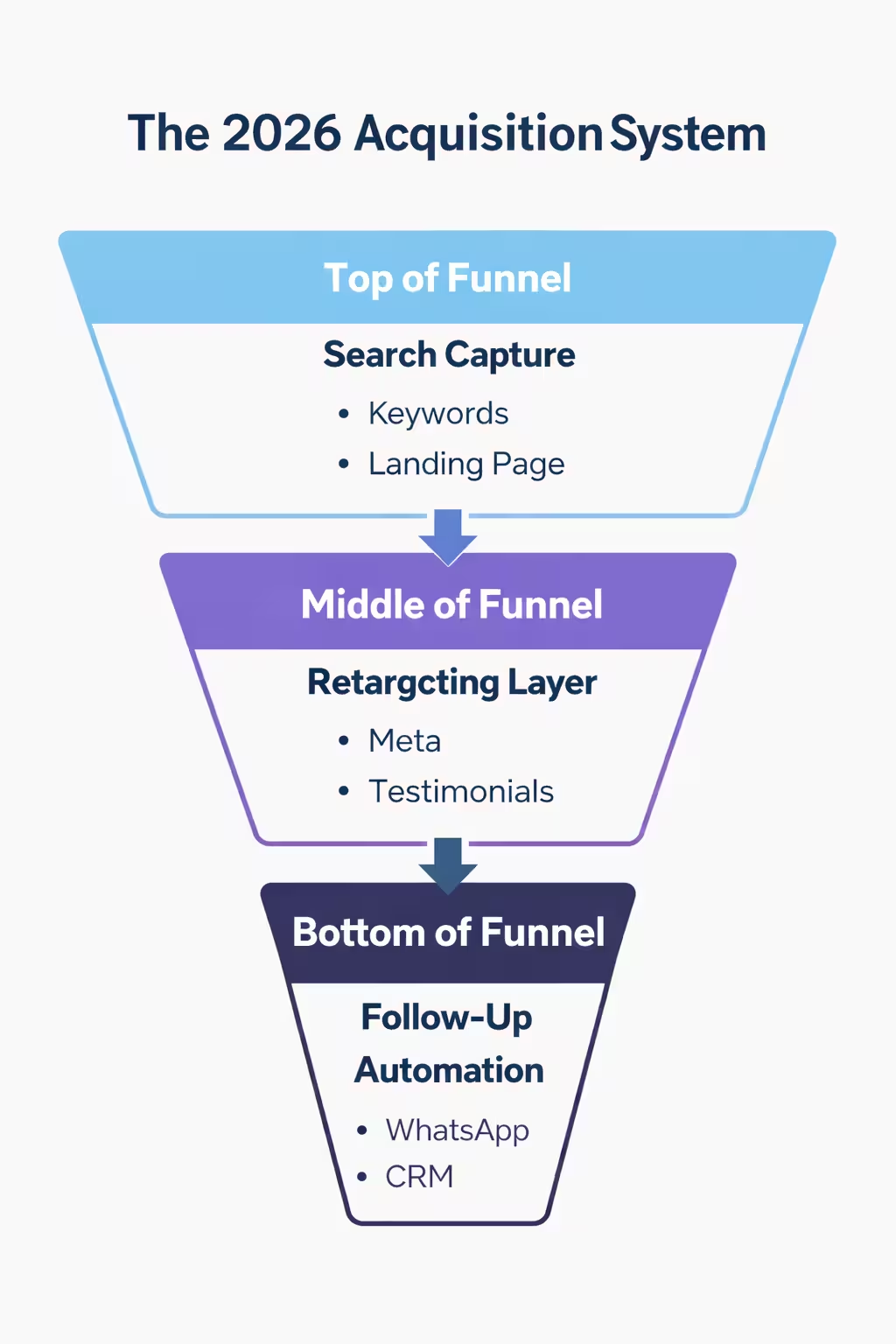
Step 1: Search Capture
Keywords like:
- laser hair removal cost in delhi
- chemical peel price near me
- best skin clinic for acne scars
Landing page must:
- Show pricing range
- Show doctor credentials
- Show before-after
- Show WhatsApp CTA
Step 2: Retargeting Layer
Most clinics ignore this.
Retarget:
- Website visitors
- Video viewers
- Instagram engagers
Show:
- Testimonials
- Limited-time offers
- Social proof
Retargeting reduces blended cost per acquisition significantly.
Step 3: Follow-Up Automation
This is the silent profit multiplier.
- WhatsApp reminders
- Consultation follow-ups
- Package upsells
- Maintenance reminders
In my experience, 30–40% of revenue in aesthetic clinics comes from follow-ups, not first bookings.
Perfect.
This section will add psychological depth and strengthen search intent coverage.
Here’s the fully written, publish-ready section you can insert after your funnel discussion.
The Modern Skin Clinic Patient Journey (2026 Reality)
Most clinics think in terms of ads and leads.
Patients don’t.
Patients move through psychological stages. If your digital marketing for skin clinics doesn’t match those stages, you lose them long before booking.
Here’s how it actually works in 2026.
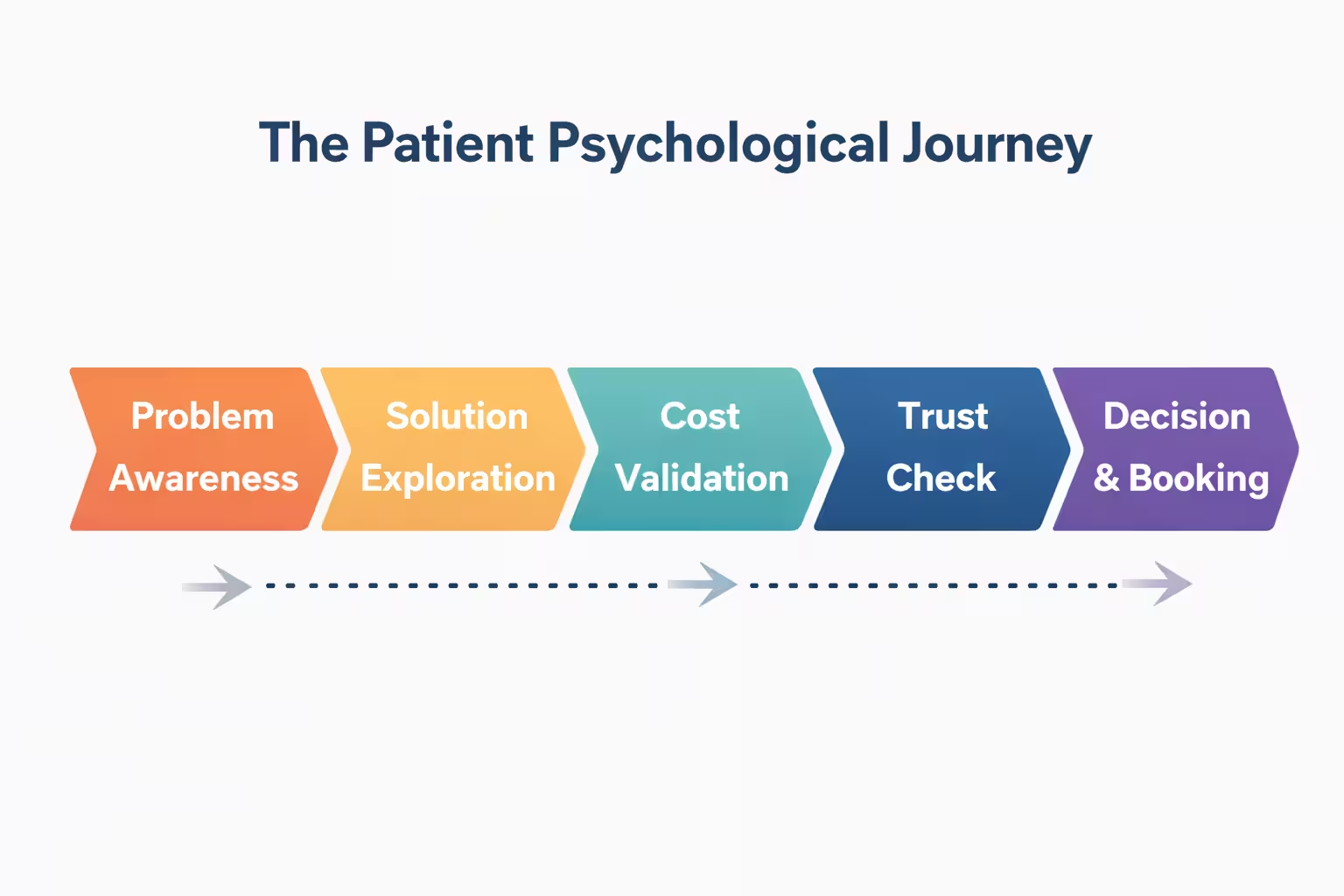
Stage 1: Problem Awareness
This is where everything begins.
The patient is not looking for a clinic yet.
They are trying to understand their problem.
Common triggers:
- Acne scars that won’t fade
- Pigmentation after pregnancy
- Hair thinning or visible scalp
- Early aging signs
- Dark circles or dull skin
Search behavior at this stage looks like:
- “why am I getting acne scars”
- “how to remove pigmentation permanently”
- “causes of hair fall in women”
- “best treatment for wrinkles at 35”
Search intent = Informational
They want clarity, not a sales pitch.
This is where most clinics disappear.
In my experience, if your website only has service pages and no educational depth, Google won’t see you as authoritative — and patients won’t see you as trustworthy.
What works here:
- Detailed treatment explanation pages
- Comparison content (laser vs peel, PRP vs GFC, etc.)
- FAQs that address real doubts
- Doctor-authored insights
You’re not converting here.
You’re building credibility.
Stage 2: Solution Exploration
Now the patient accepts:
“I need professional treatment.”
This is where intent shifts.
Search queries become:
- “best treatment for acne scars”
- “laser hair removal vs waxing results”
- “chemical peel side effects”
- “PRP treatment success rate”
Search intent = Commercial Investigation
They are comparing options.
They are evaluating:
- Effectiveness
- Safety
- Downtime
- Cost range
- Results timeline
This is where many clinics lose patients by being vague.
If your page says:
“Advanced technology. Best results. Book now.”
You lose serious buyers.
What works here:
- Transparent explanation of procedure
- Realistic expectations
- Timeline of visible results
- Side effects clearly stated
- Before-after proof
Patients in 2026 are skeptical. Overpromising reduces trust.
Stage 3: Cost Validation
Now the psychology changes again.
The patient is ready — but wants budget clarity.
Search queries look like:
- “laser hair removal cost in Delhi”
- “PRP treatment price near me”
- “chemical peel cost Gurgaon”
- “skin clinic consultation fees”
Search intent = High Commercial Intent
This is where money is decided.
In my experience, pages that hide pricing lose high-intent traffic.
Not because patients want exact numbers —
but because they want a range.
Even writing:
“Starting from ₹3,500 per session depending on area”
can increase inquiry quality.
This stage is where most ROI happens.
If your digital marketing for skin clinics doesn’t capture cost-intent traffic, you are missing revenue-ready patients.
Stage 4: Trust & Validation Check
Before booking, patients stalk you.
They check:
- Google reviews
- Instagram profile
- Before-after consistency
- Doctor qualifications
- Clinic hygiene
- Response speed
They might not even visit your website again.
They go straight to your Google Business Profile.
If you have:
- 4.1 rating
- Inconsistent reviews
- No recent activity
Your ads become more expensive automatically.
I’ve seen clinics reduce cost per acquisition simply by improving review velocity.
Trust signals are conversion multipliers.
Stage 5: Decision & Booking
At this stage, friction kills conversion.
Patients expect:
- Quick WhatsApp response
- Clear consultation process
- No aggressive upselling
- Professional follow-up
If response time crosses 10 minutes, drop-off increases sharply.
Speed matters.
Confidence matters.
Clarity matters.
Real Conversion Benchmarks for Skin Clinics
Most clinic owners obsess over cost per lead.
Very few track conversion properly.
If you don’t know your numbers at each stage, you don’t know whether marketing is failing — or your internal process is.
Here are realistic benchmarks I’ve seen across metro and Tier-2 cities.
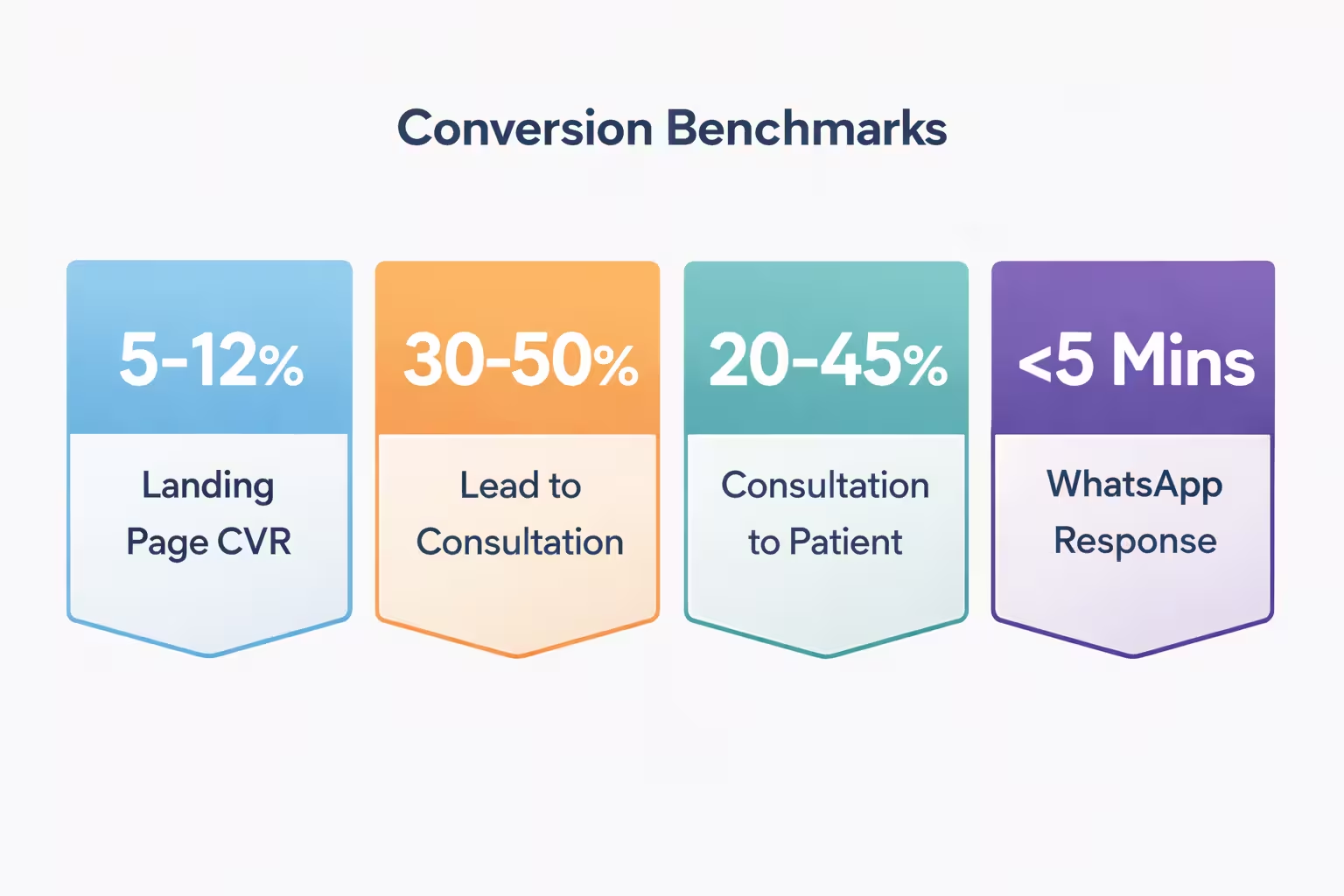
Landing Page Conversion Rate: 5–12%
This is the percentage of visitors who turn into leads.
If you’re below 5%, usually one of these is broken:
- Weak headline
- No pricing indication
- Poor mobile experience
- Slow loading speed
- No trust signals
Clinics with strong doctor positioning and before-after proof can push 10–12%.
Anything above 15% consistently?
Either very niche traffic — or very aggressive offers.
Lead to Consultation Rate: 30–50%
Out of total leads generated:
- 30–50% should show up (or confirm) for consultation.
If you’re below 30%, check:
- Response time
- Follow-up frequency
- Lead qualification
- Appointment reminders
Speed alone can improve this dramatically.
In competitive cities, first responder often wins.
Consultation to Patient Conversion: 20–45%
This is where real money is made.
If your consultation close rate is below 20%, your problem is internal — not marketing.
Let me repeat that.
It’s not your ads.
It’s your consultation process.
Common issues I’ve seen:
- No structured consultation flow
- No clear treatment roadmap
- No pricing framing
- Overloading patients with jargon
- Front desk not reinforcing urgency
Clinics with trained consultation scripts and package structuring regularly close at 35–45%.
That’s the difference between average and dominant clinics.
WhatsApp Response Window: Under 5 Minutes
In 2026, attention span is brutal.
If response time crosses 5–10 minutes:
- Drop-off increases
- Price shoppers disappear
- Competitors capture the lead
I’ve seen clinics reduce cost per acquisition just by improving response speed.
Not changing ads.
Not increasing budget.
Just speed.
Why These Benchmarks Matter
Let’s say your cost per lead is ₹900.
If:
- Landing page improves from 6% to 10%
- Consultation close improves from 18% to 32%
Your effective cost per patient drops massively — without increasing ad spend.
Most clinics try to lower CPL.
Smart clinics increase conversion efficiency.
That’s leverage.
Track these four numbers monthly:
- Landing page CVR
- Lead-to-consultation rate
- Consultation-to-patient rate
- Average revenue per patient
If you control these, your digital marketing for skin clinics becomes predictable.
And predictable growth is how you dominate.
Why This Journey Matters
If your strategy only targets Stage 3 (cost keywords), you miss early-stage traffic.
If you only create educational content (Stage 1), you miss revenue.
If you ignore Stage 4 (reviews), your ad ROI drops.
Digital marketing for skin clinics works best when it aligns with the entire psychological journey — not just the booking moment.
Most clinics focus on tactics.
Winning clinics understand behavior.
That’s the difference.
High-Converting Landing Page Structure for Skin Clinics
Most clinics don’t have a traffic problem.
They have a landing page problem.
I’ve audited dozens of aesthetic clinic websites. The pattern is predictable — generic hero banner, stock images, vague claims, no pricing clarity.
Then they blame ads.
Landing pages for skin clinics must do one thing well:
Reduce hesitation.
Here’s the structure that consistently works.
1. Strong Outcome-Based Headline
Not:
“Advanced Dermatology Solutions.”
That means nothing.
Instead:
“Laser Hair Removal in Delhi – Smooth Skin in 6–8 Sessions”
Or
“Acne Scar Treatment That Shows Visible Improvement in 3 Months”
Outcome clarity increases serious inquiries.
Be specific. Be realistic.
2. Clear Procedure Explanation
Patients want:
- What exactly will happen?
- How long does it take?
- Is it painful?
- How many sessions required?
Avoid medical jargon overload.
Explain in simple, confident language.
Ambiguity reduces conversions.
3. Price Range Transparency
This is where most clinics get nervous.
They hide pricing completely.
In my experience, removing pricing completely reduces serious inquiries.
Not because patients want exact numbers.
But because they want affordability validation.
Even something like:
“Starting from ₹3,500 per session (depends on treatment area)”
filters unserious leads and improves conversion quality.
Price secrecy attracts low-intent inquiries.
Transparency attracts buyers.
4. Doctor Credibility Block
This is non-negotiable.
Include:
- Doctor name and qualification
- Years of experience
- Certifications
- Association memberships
- Short professional bio
Medical services are trust-heavy decisions.
If the doctor feels invisible, conversion drops.
5. Before-After Gallery
Visual proof beats written claims.
But:
- Use authentic cases.
- Avoid exaggerated lighting edits.
- Show realistic timelines.
Consistency builds credibility.
6. FAQ Objection Section
Address objections directly:
- “Is it safe for sensitive skin?”
- “Are results permanent?”
- “Is there downtime?”
- “Can men do this treatment?”
If you don’t answer objections, patients Google them — and may land on a competitor’s site.
7. Clear WhatsApp & Call-to-Action Placement
Your CTA should not appear only once.
Place it:
- Above the fold
- After pricing
- After before-after section
- At bottom of page
And keep it simple:
“Book Consultation on WhatsApp”
Not “Submit Form for Preliminary Treatment Assessment.”
Keep friction low.
8. Urgency Trigger (Without Being Cheap)
Not fake countdown timers.
Instead:
- “Limited consultation slots this week”
- “Introductory package valid till [date]”
- “Festive offer on full-face laser package”
Urgency should feel professional — not desperate.
Why Structure Beats Budget
You can double ad spend.
Or you can increase landing page conversion rate from 6% to 11%.
The second option is cheaper.
Digital marketing for skin clinics works when traffic and conversion structure align.
Without structure, you’re just paying for visitors.
With structure, you’re building predictable patient flow.
That’s the difference.
Brand Marketing vs Performance Marketing – What Actually Scales Clinics?
Performance marketing pays the bills.
Brand marketing reduces friction.
Clinics that ignore performance struggle with cash flow.
Clinics that ignore brand become discount-dependent.
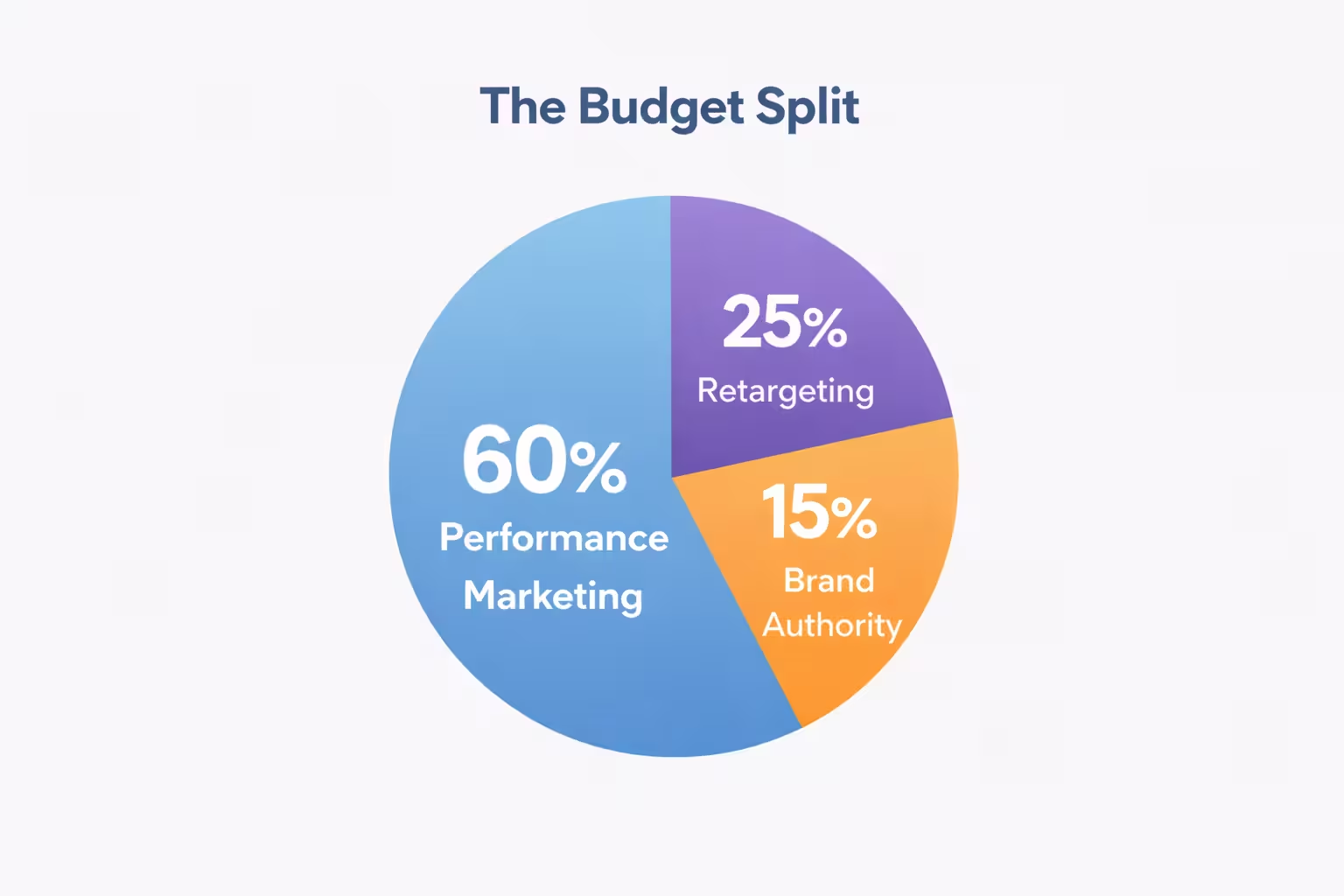
The smart split for growth-stage clinics:
- 60% performance
- 25% retargeting
- 15% brand authority
Brand doesn’t convert instantly.
But over 6–12 months, it lowers your cost per acquisition.
Trust compounds.
Performance Marketing = Immediate Patients
This includes:
- Google Search Ads
- High-intent Meta lead campaigns
- Cost-focused landing pages
- Offer-driven creatives
Performance marketing captures demand that already exists.
Someone searching:
“laser hair removal cost in Delhi”
is ready to act.
If your digital marketing for skin clinics ignores performance, you are leaving money on the table.
Performance campaigns generate:
- Consultations
- Cash flow
- Immediate pipeline
But there’s a limitation.
Performance alone does not build long-term authority.
Brand Marketing = Long-Term Trust
Brand marketing includes:
- Educational reels
- Doctor thought-leadership content
- YouTube procedure explainers
- Patient story videos
- Community engagement
Branding does not always convert instantly.
But it reduces hesitation.
It increases consultation close rate.
It reduces price sensitivity.
I’ve seen two clinics with similar ad budgets —
the one with stronger brand presence always converts better.
Why?
Because trust reduces friction.
Mature Clinics Need Both
Early-stage clinics over-index on performance.
Established clinics sometimes over-index on brand.
The clinics that dominate markets combine both strategically.
Performance fills the funnel.
Brand increases conversion rate and lifetime value.
Ignoring one eventually caps growth.
Smart Budget Allocation Model (2026 Reality)
For growth-stage clinics, this allocation works well:
- 60% Performance Marketing
(Google Ads, Meta lead campaigns, high-intent targeting) - 25% Retargeting
(Website visitors, video viewers, abandoned inquiries) - 15% Brand Content & Authority Building
(Educational videos, doctor positioning, trust-building assets)
Why this split?
Because:
- Performance drives acquisition
- Retargeting lowers blended cost per acquisition
- Brand strengthens conversion and long-term positioning
As clinics mature and dominate locally, brand allocation can increase gradually.
But removing performance entirely?
That’s dangerous.
The Real Insight Most Clinics Miss
Brand reduces your cost per acquisition over time.
Not instantly.
But steadily.
A clinic with:
- 4.8 rating
- Strong Instagram presence
- Recognizable doctor
- Consistent educational content
will always pay less per converted patient than an invisible clinic.
Digital marketing for skin clinics is not either/or.
It’s sequencing and balance.
Performance fuels growth.
Brand sustains it.
That’s how clinics scale without constant discounting.
ROI Model for Skin Clinics (Simple Formula)
Let’s simplify.
If:
- Cost per lead = ₹800
- 20 leads → 4 consultations
- 4 consultations → 2 patients
- Average revenue per patient = ₹25,000
Then:
- Spend: ₹16,000
- Revenue: ₹50,000
- ROAS: 3.1x
Now factor repeat visits.
Real ROI is built on repeat procedures.
This is identical in structure to models used in high-ticket medical niches like ivf clinic lead generation cost analysis or ivf patient acquisition cost delhi.
Same math. Different procedure.
Patient Acquisition Economics: The Part Most Clinics Don’t Understand
Let’s get uncomfortable for a second.
Most skin clinics have no idea what a patient is actually worth.
They know:
- Cost per lead
- Maybe cost per consultation
But they don’t calculate:
- Cost per acquisition (CPA)
- Average treatment cycle value
- Repeat visit rate
- Referral multiplier
- Lifetime value (LTV)
Without this, your digital marketing for skin clinics becomes guesswork.
How to Calculate Real Patient Acquisition Cost
Here’s the proper model:
Step 1:
Total monthly marketing spend (ads + agency + creatives)
Step 2:
Divide by number of converted paying patients
That’s your true CPA.
Now compare that to:
- Average revenue per patient
- Repeat cycle probability
In high-ticket treatments (laser packages, skin resurfacing, anti-aging plans), LTV is often 2–4x first-visit revenue.
In my experience, clinics panic too early because they look at front-end revenue only.
Long-term operators don’t.
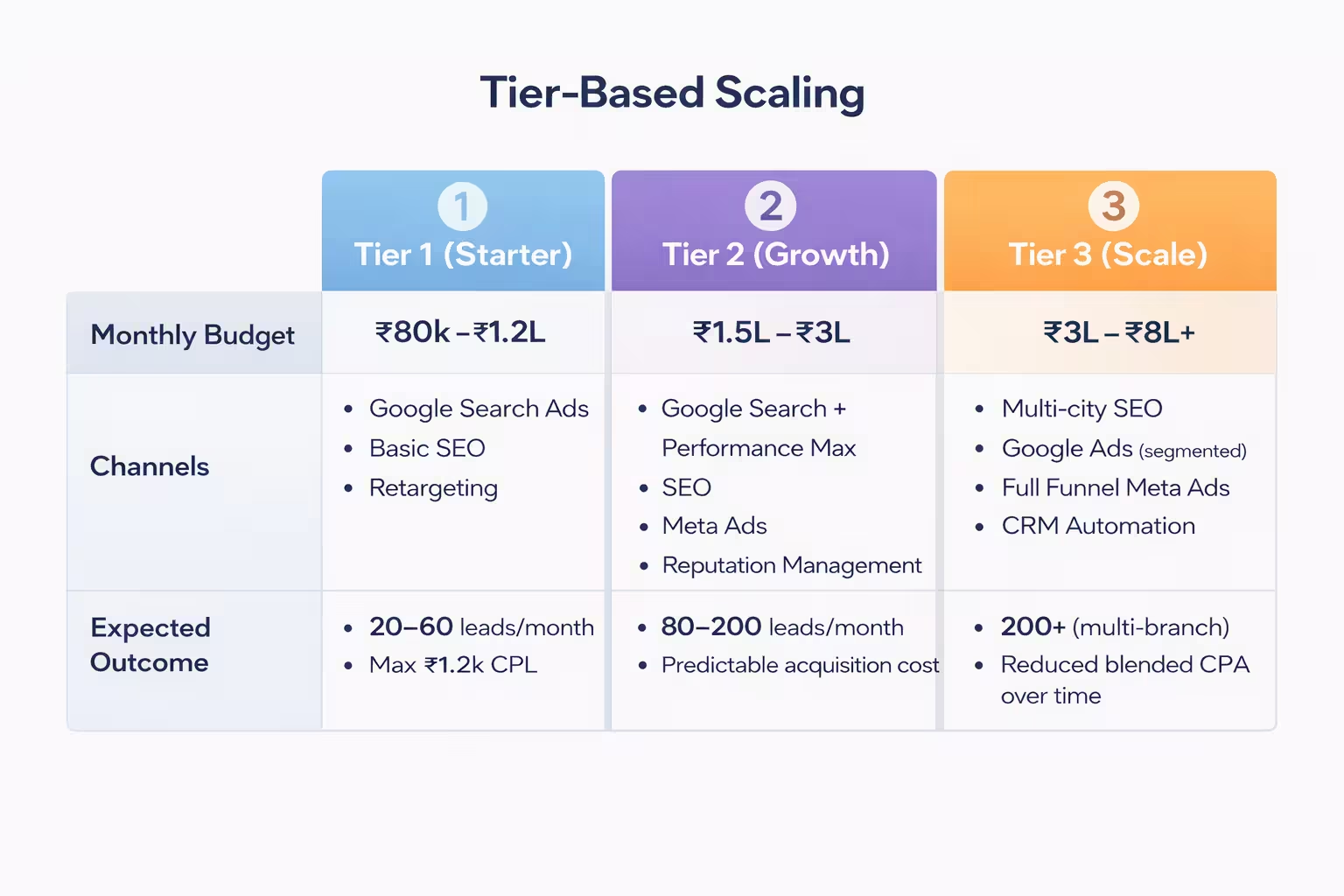
Tier-Based Budget Model (Starter vs Growth vs Scale)
If you want domination, you need structured scaling.
Tier 1 – Starter Clinic (₹80k–1.2L/month)
Best for:
- Single branch
- Early stage growth
- 1–2 key procedures focus
Channels:
- Google Ads (high intent)
- Basic SEO
- Retargeting ads
Expected outcome:
- 20–60 leads/month
- Slow but stable pipeline
Tier 2 – Growth Clinic (₹1.5L–3L/month)
Best for:
- Established practice
- Multiple procedures
- Metro competition
Channels:
- SEO clusters
- Google Search + Performance Max
- Meta lead campaigns
- Reputation management
- Landing page optimization
Expected outcome:
- 80–200 leads/month
- Predictable acquisition cost
Tier 3 – Scale Operator (₹3L–8L+/month)
Best for:
- Multi-branch
- Cosmetic chains
- Expansion mode
Channels:
- Multi-city SEO landing pages
- Aggressive retargeting
- Video testimonials funnel
- CRM automation
- Brand + performance mix
Expected outcome:
- Market share expansion
- Lower blended CPA over time
Most clinics jump to Tier 3 mindset with Tier 1 budget.
That’s delusion.
Starter vs Growth vs Scale – Financial Comparison Model (2026)
Here’s a simplified financial blueprint for how serious skin clinics allocate budget and what they can realistically expect.
| Model | Starter Clinic | Growth Clinic | Scale Operator / Chain |
| Monthly Budget | ₹80K – ₹1.2L | ₹1.5L – ₹3L | ₹3L – ₹8L+ |
| Primary Focus | 1–2 core procedures | Multi-procedure growth | Market share domination |
| SEO Investment | Basic service pages | Cluster + city pages | Multi-city authority build |
| Google Ads | High-intent only | Search + PMax mix | Aggressive segmented campaigns |
| Meta Ads | Retargeting | Lead gen + retargeting | Full-funnel video + remarketing |
| Expected Leads/Month | 20–60 | 80–200 | 250+ (multi-branch) |
| Avg CPL Range | ₹400–₹1,200 | ₹700–₹1,800 | ₹900–₹2,500 (blended) |
| Consultation Conversion Target | 20–30% | 30–40% | 35–45% |
| Tracking & CRM | Basic | Structured CRM | Advanced attribution + dashboards |
| Risk Level | Low–Moderate | Moderate | High (but scalable) |
| Growth Outcome | Stable pipeline | Predictable scaling | Regional authority positioning |
How to Interpret This Comparison
Each tier reflects a different stage of clinic maturity and operational readiness.
Starter clinics focus on building consistent lead flow.
Growth-stage clinics work on improving conversion efficiency and predictable scaling.
Scale operators invest heavily in systems, tracking, and brand authority to expand market share.
The key is alignment — budget, positioning, and internal processes must match your current growth stage.
Scaling too aggressively without structure often creates instability rather than growth.
What Most Skin Clinics Get Wrong
Let me be blunt.
- They hire cheap agencies.
- They expect instant results from SEO.
- They don’t track actual conversion rate.
- They ignore follow-up systems.
- They change strategy every 30 days.
Consistency beats hacks.
I’ve seen clinics triple revenue in 9 months — not because of genius ads — but because they fixed:
- Response time
- Consultation script
- Follow-up reminders
Digital marketing amplifies your internal systems. It doesn’t fix broken ones.
What 90% of Agencies Get Wrong in Medical Marketing
This section alone can separate you from competitors.
1. They Treat Medical Like Ecommerce
Medical acquisition is slower.
Patients research.
They compare.
They stalk reviews.
If your funnel doesn’t include:
- Authority signals
- Doctor profile depth
- Testimonials
- Procedure transparency
You lose high-ticket patients.
2. They Ignore Consultation Conversion Rate
If your consultation-to-patient rate is below 20%, your issue is not ads.
It’s your consultation.
Most clinics lose patients because:
- There’s no structured treatment roadmap
- Pricing is dumped without framing
- Objections aren’t handled confidently
- Front desk doesn’t reinforce urgency
Fix this and your ROI changes without increasing ad spend.
I’ve seen it repeatedly.
Compliance & Advertising Regulations in India
This is where inexperienced marketers get clinics into trouble.
You cannot:
- Make exaggerated claims
- Promise guaranteed results
- Use misleading before-after edits
- Use unethical testimonial manipulation
Google and Meta both tighten restrictions on medical advertising every year.
In high-regulated verticals like fertility, ad costs are higher — similar patterns are seen in keywords like:
- ivf clinic advertising cost
- google ads cost for ivf clinic
- fertility clinic marketing cost delhi
Skin clinics are heading in that direction too.
Build compliant funnels from day one.
How to Choose the Right Marketing Agency
If you’re evaluating an agency:
Ask them:
- What’s the expected patient acquisition cost?
- How do you calculate ROI?
- Show me 3 medical case studies.
- How do you structure ad campaigns?
- How often do you optimize?
If they only talk about impressions and reach — they don’t understand commercial healthcare marketing.
Search for agencies experienced in medical niches — similar to those offering ivf marketing agency pricing or digital marketing charges for fertility clinic — because medical acquisition strategy is different from eCommerce.
Compliance, trust, sensitivity — all matter.
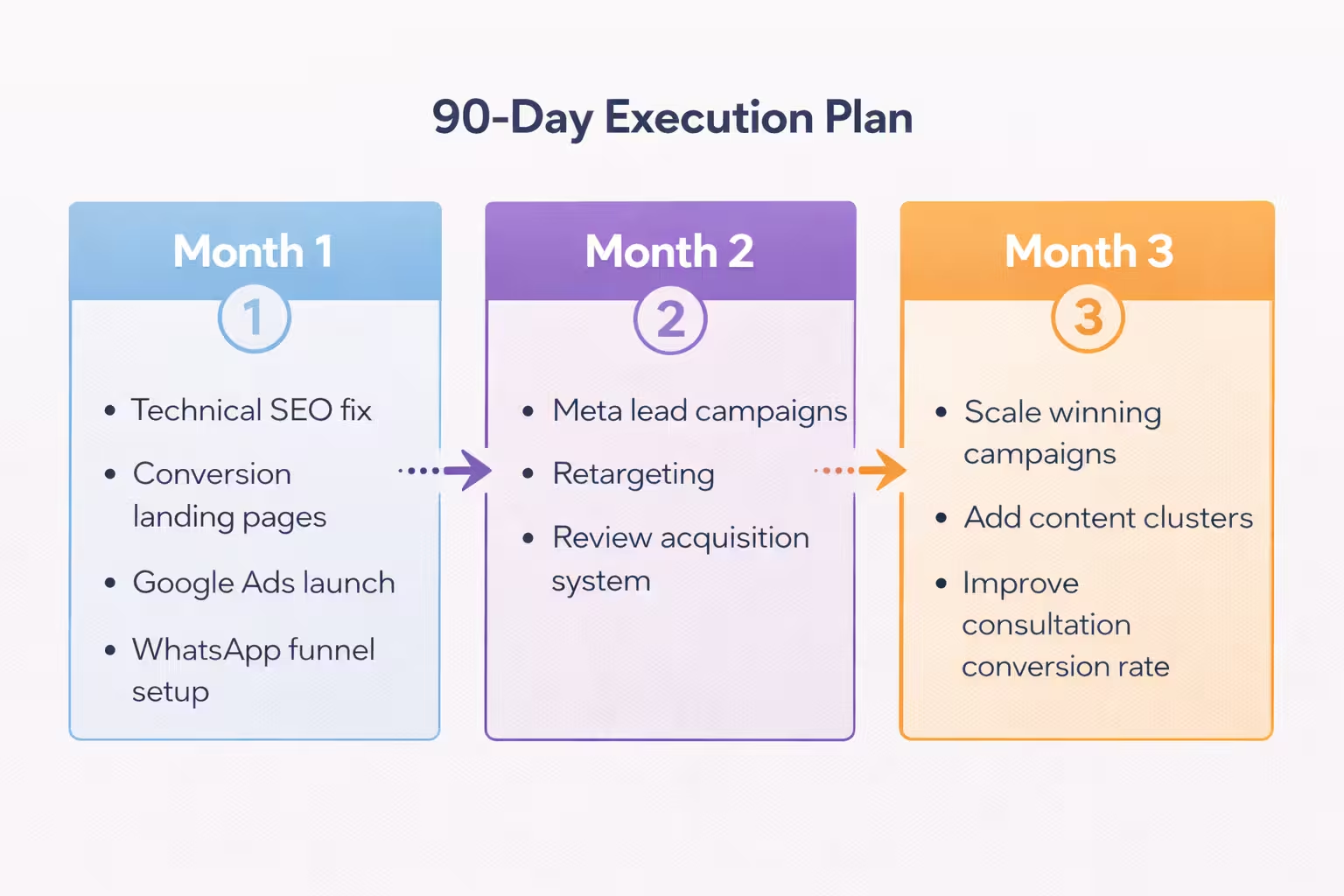
Practical Framework: 90-Day Growth Plan
If I onboard a skin clinic, this is the typical rollout:
Month 1
- Technical SEO fix
- Conversion landing pages
- Google Ads launch
- WhatsApp funnel setup
Month 2
- Meta lead campaigns
- Retargeting
- Review acquisition system
Month 3
- Scale winning campaigns
- Add content clusters
- Improve consultation conversion rate
No random posting.
No scattered tactics.
System first. Scale later.
Final Straight Talk
Digital marketing is not about being “active online.”
It’s about building a controlled patient acquisition engine.
Your competitors are learning CAC, LTV, funnel optimization.
If you’re not — they will outscale you.
Even if your clinical skill is better.
That’s uncomfortable.
But it’s real.
Growth in 2026 belongs to operators.
Not experimenters.
Common Objections Clinic Owners Have
After years of working with medical clinics, I’ve heard the same concerns again and again.
Let’s address them honestly.
“Ads don’t work in my city.”
Ads don’t fail because of geography.
They fail because of:
- Wrong targeting
- Weak landing pages
- Poor follow-up
- Bad positioning
Even Tier-2 cities now have strong digital adoption.
If competitors are running ads consistently, it means ads are working for someone.
In most cases, the real issue is:
- You tried ads without proper funnel structure.
- Or you stopped too early before optimization stabilized.
Paid acquisition is math.
If the math doesn’t work, something in the system is broken — not the city.
“Patients only want discounts.”
Discount-heavy leads are usually a positioning problem.
If your messaging revolves around:
“Lowest price”
“Biggest offer”
“Flat 50% off”
You attract price-sensitive patients.
Clinics that focus on:
- Doctor expertise
- Safety
- Outcome clarity
- Structured consultation
attract higher-quality patients.
Price sensitivity drops when trust increases.
I’ve seen clinics increase consultation conversion simply by removing aggressive discount language and improving authority positioning.
Cheap messaging attracts cheap behavior.
“SEO takes too long.”
SEO does take time.
But so does building any long-term asset.
The real question is:
Do you want rented traffic (ads only)?
Or owned visibility (organic search + brand presence)?
In competitive cities, SEO typically shows strong movement in 4–6 months when done correctly.
Clinics that rely only on ads become dependent on rising CPC.
Clinics that combine SEO and performance lower blended acquisition cost over time.
Short-term thinking creates long-term vulnerability.
“We tried an agency before.”
That’s common.
But here’s what usually happened:
- No clear KPIs were defined.
- No revenue tracking existed.
- Reports focused on impressions, not patients.
- Strategy changed every month.
Marketing failure often comes from lack of structure — not lack of effort.
Before blaming marketing, ask:
Did we track consultation-to-patient rate?
Did we measure cost per converted patient?
Did we fix internal process issues?
Without that clarity, even a good agency looks ineffective.
The Calm Reality
Skepticism is healthy.
Blind optimism is dangerous.
But assuming digital marketing doesn’t work because one attempt failed — that’s expensive thinking.
Digital marketing for skin clinics is not magic.
It’s system design.
When:
- Positioning is clear
- Funnel is structured
- Tracking is accurate
- Follow-up is disciplined
Results become predictable.
And predictable growth removes fear.
SEO Domination Strategy (Topical Authority Model)
If you want to dominate the niche long term, do this:
Create content clusters around:
- Laser treatments
- Acne & pigmentation
- Anti-aging procedures
- Hair restoration
- Cosmetic dermatology pricing
- City-wise cost pages
Then internally link using anchors like:
- skin clinic marketing strategy
- medical SEO pricing guide
- healthcare Google Ads management
- patient acquisition strategy
Don’t publish isolated articles.
Build silos.
Multi-Branch SEO Strategy for Skin Clinic Chains
If you operate in more than one city and your SEO strategy is just copying the same service page and changing the city name — you’re sabotaging yourself.
I’ve seen large aesthetic chains lose rankings because of lazy duplication.
Google is not confused.
It sees duplicate intent pages competing with each other.
And nobody wins.
If you want domination, multi-location SEO must be engineered properly.
1. Unique City-Specific Pages (Not Copy-Paste Variations)
Do not create:
“Laser Hair Removal Delhi”
“Laser Hair Removal Gurgaon”
“Laser Hair Removal Noida”
…with 95% identical content.
Instead, each page must include:
- City-specific pricing range
- Local doctor availability
- Real patient cases from that branch
- Location-specific FAQs
- Travel/access information
Google rewards geographic relevance.
Patients trust localized proof.
2. Separate Google Business Profiles for Each Branch
This is non-negotiable.
Each clinic location must have:
- Dedicated Google Business Profile
- Correct NAP (Name, Address, Phone) consistency
- Separate review flow
- Unique photos from that branch
When done correctly, your visibility multiplies across local map results.
When done poorly, branches compete against each other.
3. City-Specific Testimonials & Social Proof
If your Mumbai branch page shows testimonials from Delhi patients, credibility drops.
Local patients want:
“Someone like me, in my city, got results here.”
Include:
- Branch-specific before-after
- Local language review snippets (where appropriate)
- Real staff photos
Localization improves both rankings and conversion rate.
4. Local Backlinks & Authority Signals
Most chains focus only on national SEO.
That’s a mistake.
Each branch should build:
- Local directory citations
- City-level health portals
- Local press mentions
- Event sponsorship coverage
- Community partnerships
Local backlinks strengthen map pack rankings dramatically.
I’ve seen single-branch clinics outrank large chains simply because they built stronger local authority signals.
The Mistake That Kills Rankings
Most multi-location clinics:
- Duplicate content
- Ignore local backlinks
- Share one centralized review strategy
- Treat SEO as a national strategy only
That kills scalability.
Multi-branch domination requires:
- Central strategy
- Local execution
If done correctly, each branch becomes its own ranking asset — not a diluted extension.
That’s how chains expand without cannibalizing their own traffic.
Reputation Management System for Aesthetic Clinics
Reviews are not a vanity metric.
They directly affect:
- Local rankings
- Consultation conversion rate
- Cost per acquisition
- Price sensitivity
In aesthetic medicine, trust is currency.
And reviews are public proof of that trust.
Most clinics treat reviews passively.
Serious operators engineer them.
1. Automated Review Request System
If you’re waiting for patients to “leave a review when they feel like it,” you’ll grow slowly.
You need a system.
After treatment:
- Send automated WhatsApp review request
- Send follow-up reminder after 48 hours
- Provide direct Google review link
- Keep message short and personal
Example structure:
“Hi [Name], we hope you’re happy with your treatment. Your feedback helps other patients make confident decisions. Would you mind sharing your experience here?”
Simple.
Professional.
No begging.
Clinics that systemize this see steady review growth without chasing patients manually.
2. Review Velocity Matters More Than Total Count
Many clinics brag about “500+ reviews.”
But if the last review was 4 months ago, it hurts credibility.
Google’s local algorithm values review freshness.
Consistent flow > occasional bulk.
Aim for steady monthly velocity.
Even 8–12 quality reviews per month is powerful.
Consistency builds algorithm trust.
3. Negative Review Handling Script
Negative reviews are not the problem.
Poor responses are.
Never:
- Argue publicly
- Blame the patient
- Reveal medical details
Instead:
- Acknowledge concern calmly
- Invite offline resolution
- Maintain professional tone
Example approach:
“Thank you for sharing your feedback. We take patient experience seriously. Please contact our clinic manager directly so we can understand and resolve this.”
Professional response improves trust — even for people reading the review later.
In my experience, how you respond matters more than the complaint itself.
4. Why 4.7+ Rating Changes Everything
There’s a psychological shift between:
4.2 and 4.7
Clinics with 4.7+ rating:
- Close consultations easier
- Face less price resistance
- Convert higher from ads
- Rank stronger in local pack
I’ve seen a 0.5 rating increase reduce ad cost per acquisition by 15–20%.
Same ads.
Same budget.
Higher trust.
That’s the multiplier effect.
CRM, Tracking & Automation Stack for 2026
Most skin clinics think marketing ends when a lead comes in.
That’s beginner thinking.
Serious operators track the journey from:
Click → Lead → Consultation → Procedure → Repeat Revenue
If you don’t track lead source to revenue level, you’re scaling blind.
And blind scaling is expensive.
Here’s the stack modern aesthetic clinics should be running.
1. Lead Tracking CRM (Non-Negotiable)
Every inquiry should enter a centralized CRM.
Not:
- WhatsApp only
- Excel sheet
- Front desk diary
Your CRM should track:
- Source (Google Ads, Meta, SEO, Referral)
- Procedure interest
- Assigned staff
- Consultation date
- Conversion status
- Revenue value
Without this, you cannot calculate true patient acquisition cost.
In my experience, clinics that implement CRM properly improve follow-up efficiency by 20–30% within 3 months.
2. Call Tracking Numbers
If you’re running Google Ads and using the same clinic number everywhere, you’re missing data.
Use:
- Dynamic call tracking numbers
- Separate tracking per campaign
This helps you understand:
- Which keyword drives calls
- Which ad group generates quality patients
- Which city performs better
Without call tracking, half your data is invisible.
3. WhatsApp Automation
WhatsApp is powerful.
But unmanaged WhatsApp becomes chaos.
You need:
- Instant auto-reply
- Appointment confirmation messages
- Reminder sequences
- Follow-up nudges
- Post-treatment check-in messages
Automation does not replace human touch.
It supports consistency.
Clinics that automate reminders see reduced no-shows.
4. Pipeline Dashboard
Your team should see, weekly:
- Total leads
- Consultations booked
- Consultations attended
- Procedures closed
- Revenue generated
If this dashboard doesn’t exist, decisions become emotional.
Data removes guesswork.
5. Attribution Tracking
This is where most agencies stop.
You must know:
Which channel brings not just leads — but paying patients.
Sometimes:
- Meta brings more leads
- Google brings fewer leads
- But Google brings higher-paying procedures
Without revenue-level attribution, you may cut the wrong channel.
The Operator Mindset
If you don’t track:
- Cost per lead
- Cost per consultation
- Cost per converted patient
- Revenue per channel
You’re not scaling.
You’re gambling.
Digital marketing for skin clinics becomes predictable only when infrastructure supports it.
CRM. Call tracking. Revenue attribution.
Otherwise, every decision is emotional.
How to Position Your Skin Clinic Against Aggressive Competitors
If you operate in a metro city, you already know this:
There’s always someone running cheaper ads.
Someone offering 50% off.
Someone shouting “lowest price guaranteed.”
If your only strategy is matching their pricing, your margins will collapse.
Competing on price alone destroys margins.
And once margins shrink, marketing becomes stressful.
Positioning is how you escape that race.
Here are the three models that actually work.
1. Premium Positioning
This is not just charging more.
It’s justifying higher value.
Premium clinics focus on:
- Senior doctor visibility
- Advanced technology positioning
- Detailed consultation process
- Controlled patient volume
- High-quality clinic environment
Their messaging is not:
“Affordable laser package.”
It’s:
“Medically supervised laser treatment with personalized skin mapping.”
Premium positioning works best when:
- Your doctor has strong credentials
- You invest in brand presence
- Your consultation experience feels structured
In my experience, premium clinics often close fewer leads — but generate higher revenue per patient.
Lower volume.
Higher margins.
More stability.
2. Affordable Volume Positioning
This model works in highly competitive cities and emerging markets.
Here the strategy is:
- Clear pricing
- Package bundles
- High lead flow
- Optimized consultation scripts
- Efficient operations
Volume clinics win by:
- Strong ad optimization
- Tight conversion tracking
- Operational efficiency
But here’s the danger.
If your systems are weak, volume positioning burns out staff and reduces service quality.
Volume requires discipline.
It’s not “cheap.”
It’s “efficient.”
3. Niche Specialization Positioning
This is underrated.
Instead of being:
“Skin & Hair Clinic”
You become:
“Acne Scar Specialist”
or
“Hair Restoration Focused Clinic”
or
“Anti-Aging Dermatology Center”
Niche positioning reduces competition instantly.
When someone searches:
“best acne scar doctor in Delhi”
Specialists outrank generalists in perception.
Even if ad budgets are similar.
Specialization increases authority.
Authority reduces price pressure.
The Strategic Reality
You cannot communicate:
- Premium
- Affordable
- Specialist
at the same time.
Your website, ads, reviews, and consultation process must align with one primary positioning.
Mixed signals confuse patients.
Clear positioning attracts the right audience.
In digital marketing for skin clinics, positioning determines:
- Your cost per lead
- Your consultation close rate
- Your revenue per patient
Choose your battlefield carefully.
Because once you enter a price war, it’s hard to exit.
Reputation Is Not Marketing — It’s Infrastructure
If your rating is below 4.3:
Fix this before scaling ads.
If you have inconsistent feedback:
Audit internal service quality.
If you rarely ask for reviews:
You are leaving growth on the table.
Digital marketing for skin clinics amplifies visibility.
Reputation determines whether that visibility converts.
And in aesthetic medicine, perception is reality.
When NOT to Invest Aggressively in Digital Marketing
This will make you sound real.
Don’t scale ads if:
- Your consultation close rate is below 20%
- Your reviews are below 4.2 rating
- Your response time is more than 10 minutes
- You don’t know your procedure margins
Fix fundamentals first.
Otherwise you amplify inefficiency.
Case Example: 7-Month Growth Model (Tier 1 Metro)
Let me walk you through a realistic growth scenario.
This is based on patterns I’ve seen repeatedly in metro markets.
City: Tier 1 Metro
Monthly Budget: ₹2.2 lakh (ads + management)
Primary Focus: Laser hair removal + acne scar treatment
Month 1–2: Baseline Reality
Initial metrics:
- Cost per lead (CPL): ₹1,100
- Landing page conversion: 6%
- Lead to consultation rate: 41%
- Consultation to patient: 22%
- Blended cost per patient: High
- Revenue growth: Stagnant
Problems identified:
- Generic landing page
- No pricing indication
- Weak retargeting
- Slow WhatsApp response
- Consultation flow inconsistent
Marketing wasn’t the only issue.
Process was.
Month 3–4: Structural Optimization
Changes implemented:
- Separate landing pages per procedure
- Added price range transparency
- Installed call tracking + CRM tracking
- Introduced WhatsApp auto-response + reminders
- Retargeting testimonial ads launched
- Consultation script standardized
Results:
- CPL reduced to ₹920
- Consultation rate improved to 30%
- Landing page conversion increased to 9%
Notice something.
Ad spend didn’t increase.
Structure improved.
Month 5–7: Scaling What Works
After identifying top-performing keywords and audience segments:
- Budget shifted toward high-converting procedures
- Weak campaigns paused
- Review velocity improved
- Doctor positioning content strengthened
New metrics:
- CPL: ₹780
- Consultation-to-patient conversion: 37%
- Repeat package sales increased
- Revenue growth: 2.8x from baseline
Blended cost per acquisition dropped significantly.
Not because leads became “cheap.”
Because conversion efficiency improved.
What This Case Actually Proves
Three important lessons:
- Lowering CPL is not the first priority.
- Consultation optimization changes everything.
- Systems beat hacks.
In metro markets, digital marketing for skin clinics becomes profitable when:
- Funnel is structured
- Tracking is accurate
- Positioning is clear
- Follow-up is disciplined
Most clinics try to scale before fixing foundation.
That’s backwards.
Fix economics first.
Then scale.
That’s how growth becomes predictable — not accidental.
Realistic Timeline for Niche Domination
Month 0–3:
- Stabilize ads
- Build SEO base
- Fix funnel
Month 3–6:
- Scale what works
- Publish cluster content
- Improve consultation conversion
Month 6–12:
- Expand city targeting
- Add authority backlinks
- Launch brand campaigns
Month 12–24:
- You become default option in your area
Long-term domination is boring.
It’s consistent execution.
FAQ – Digital Marketing for Skin Clinics
How much should a skin clinic spend on digital marketing in India?
For aggressive growth in metro cities, ₹1.5–3 lakh per month combined (ads + SEO + agency). Smaller cities may operate at ₹80,000–₹1.2 lakh.
What is the average cost per lead for skin treatments?
₹300–₹1,200 depending on procedure and city. High-ticket cosmetic procedures cost more.
Is SEO better than Google Ads for skin clinics?
SEO builds long-term asset. Ads bring immediate leads. You need both. Ads fund growth. SEO compounds.
How long does it take to see ROI?
Ads: 30–45 days if optimized properly.
SEO: 4–6 months for serious movement in competitive cities.
What is the patient acquisition cost for a skin clinic in India?
Patient acquisition cost (CPA) for skin clinics typically ranges between ₹2,500 and ₹8,000 depending on city, procedure, and positioning. High-ticket cosmetic treatments in metro cities often have higher CPA but stronger lifetime value.
How many leads does a skin clinic need per month to grow?
A single-branch clinic typically needs 40–100 qualified leads per month to maintain steady growth. The exact number depends on consultation conversion rate and average treatment revenue.
Is Instagram enough to grow a skin clinic?
No. Instagram helps with branding and trust-building, but most high-intent patients search on Google before booking. A balanced strategy includes SEO, Google Ads, and retargeting along with Instagram presence.
What is the ideal consultation-to-patient conversion rate for skin clinics?
A healthy consultation-to-patient conversion rate ranges from 25% to 40%. If the rate falls below 20%, the issue is usually in consultation structure, pricing communication, or trust-building — not marketing quality.
Should skin clinics show treatment prices on their website?
Yes, at least a starting price range. Price transparency improves lead quality and reduces unqualified inquiries. Completely hiding pricing often decreases serious consultation bookings.
How long does it take to dominate a local skin clinic market online?
With consistent investment and structured execution, noticeable market dominance can begin in 6–12 months. Full local authority positioning typically takes 12–24 months in competitive metro cities.