

Digital marketing for IVF centers has become increasingly important as the fertility industry in India—especially in Delhi, Noida, and Ghaziabad—grows more competitive. Couples today invest significant time researching online before choosing a fertility clinic. They look beyond basic information and closely evaluate factors such as success rates, doctor credentials, patient reviews, treatment costs, and real patient experiences.
As a result, an IVF clinic’s digital presence now plays a critical role in how trust is built even before the first consultation. Clinics that communicate clearly, ethically, and consistently across digital channels are better positioned to attract informed and serious patient enquiries.
In this guide, we explore:
- Why digital marketing has become essential for IVF centers
- Which strategies genuinely influence patient decision-making
- What prospective patients search for during different stages of their journey
- How trust is built online in a highly sensitive and regulated medical field
The focus of this article is to help IVF clinic owners and administrators understand the digital landscape clearly, so they can make informed marketing decisions aligned with patient trust and long-term growth.
This perspective reflects how IVF clinics across India are adapting to evolving patient behaviour, regulatory requirements, and digital decision-making trends.
1. Why Digital Marketing Matters for IVF Centers
IVF is a high-involvement medical decision that is deeply emotional and heavily dependent on trust. Couples rarely choose a fertility clinic impulsively. Instead, they spend weeks—sometimes months—researching, comparing, and validating their options before booking a consultation.
For many clinics, digital marketing for IVF centers has become essential to stay visible during the long and trust-driven patient decision process.
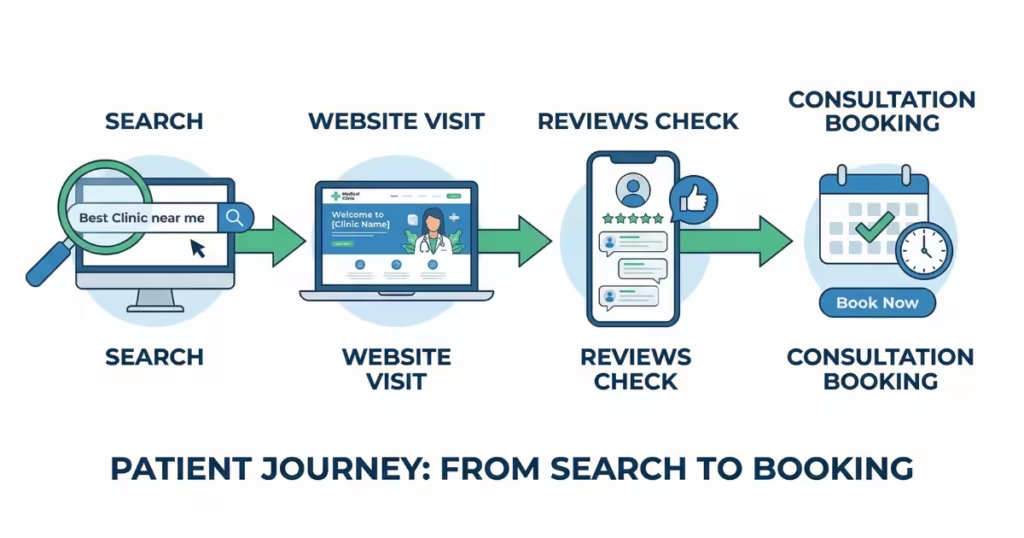
During this research phase, prospective patients typically evaluate:
- IVF success rates and treatment outcomes
- The experience and credibility of doctors and specialists
- Clinic location, accessibility, and infrastructure
- Reviews and feedback from real patients
- Cost transparency and treatment clarity
- Technology, laboratory standards, and safety protocols
- Success stories, testimonials, and patient journeys
For most couples, this entire evaluation process happens online—across search engines, clinic websites, review platforms, and social media. Digital marketing, therefore, is not just a visibility tool for IVF centers; it becomes the primary medium through which trust is established long before any direct interaction takes place.
If you’re specifically planning budgets in Delhi NCR, here’s a detailed breakdown of IVF digital marketing cost in Delhi, including SEO pricing, Google Ads spend, and cost-per-cycle benchmarks.
Without digital marketing, IVF centers face:
Without a structured digital presence, many IVF centers struggle to stay visible and credible during the patient decision-making process. Even clinics with strong medical expertise often face challenges such as:
- Heavy reliance on word-of-mouth and referrals alone
- Limited online visibility during high-intent searches
- Difficulty establishing trust before the first consultation
- Irregular or unpredictable patient enquiries
- Weak brand recall in competitive city markets
With strategic digital marketing, IVF centers get:
In contrast, a well-planned digital marketing approach helps IVF centers communicate more clearly and consistently with prospective patients. Clinics that invest in the right digital channels typically experience:
- A more predictable flow of relevant and informed enquiries
- Stronger trust and perceived authority online
- Improved enquiry-to-consultation conversion rates
- A more credible and recognisable clinic reputation
- Better efficiency in patient acquisition over time
This shift is not about aggressive promotion, but about being present, transparent, and trustworthy at the exact moments when patients are actively seeking answers and reassurance.
2. What Patients Search Online: IVF Keyword Insights
Prospective IVF patients do not search randomly. Their queries reflect different stages of concern, awareness, and readiness to move forward with treatment. In regions like Delhi NCR, these search patterns broadly fall into two categories: discovery-driven searches and decision-driven searches.
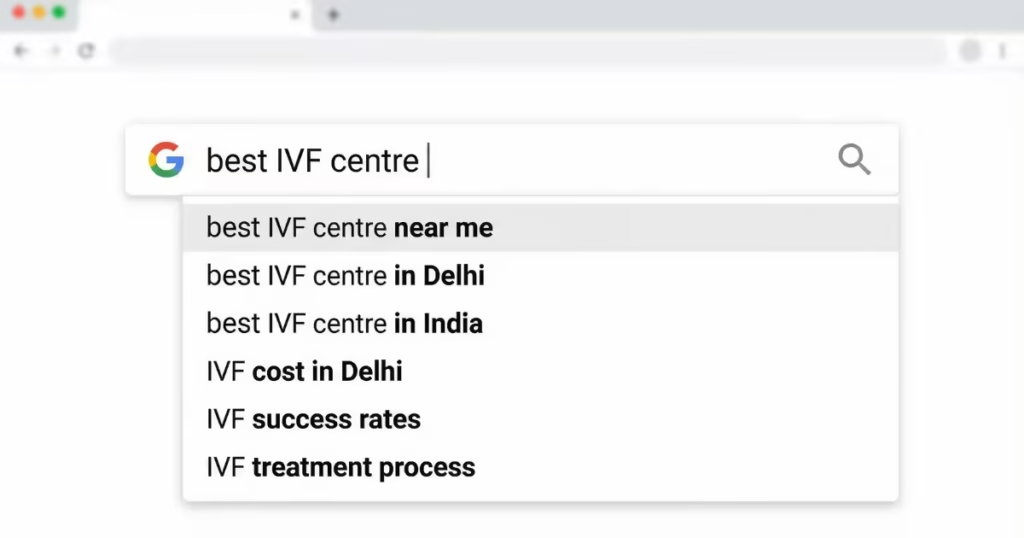
Discovery and comparison-focused searches usually relate to location, credibility, and basic treatment information. Patients use these searches to identify clinics, understand options, and narrow down their choices.
At a later stage, decision-oriented searches become more specific and personal. These queries often reflect emotional concerns, financial planning, medical conditions, and readiness to begin treatment.
Together, these search behaviours signal intent. When an IVF clinic’s digital presence aligns with both early research queries and high-intent decision queries, it becomes visible at the exact moments when patients are actively evaluating their next step.
Understanding this intent—not just individual keywords—allows IVF centers to communicate more effectively, provide relevant information, and build trust throughout the patient’s research journey.
3. Best Digital Marketing Strategies for IVF Centers
3.1 SEO (Search Engine Optimization) for IVF Clinics
Search Engine Optimization plays a foundational role in how IVF clinics are discovered online. When couples search for fertility-related information, treatments, or clinics, SEO determines whether a clinic appears prominently or remains invisible during this critical research phase.
For IVF centers, effective SEO is less about technical tricks and more about relevance, clarity, and trust. Clinics that structure their websites around genuine patient concerns—such as treatment options, doctor expertise, and location-specific information—tend to perform better in organic search results.
Strong IVF-focused SEO typically involves:
- Clear and accurate representation of treatments and services
- Informative content that addresses common infertility questions
- Location relevance to support local search visibility
- Structured information that search engines can easily understand
- Credible references and mentions within the healthcare ecosystem
Because IVF decisions are rarely rushed, SEO works as a long-term visibility channel. It helps clinics stay present throughout the patient research cycle, supporting steady awareness, trust-building, and organic enquiry generation over time.
For a detailed, step-by-step breakdown of how IVF clinics can dominate local search and Google Maps rankings specifically, read our complete guide on local SEO for IVF clinics.
3.2 Google My Business (GMB) for Local IVF Visibility
Local search plays a decisive role in how IVF clinics are discovered, especially when patients look for options close to their home or workplace. Searches such as “IVF center near me” or “fertility clinic open now” usually indicate immediate intent and often lead directly to calls or appointment requests.
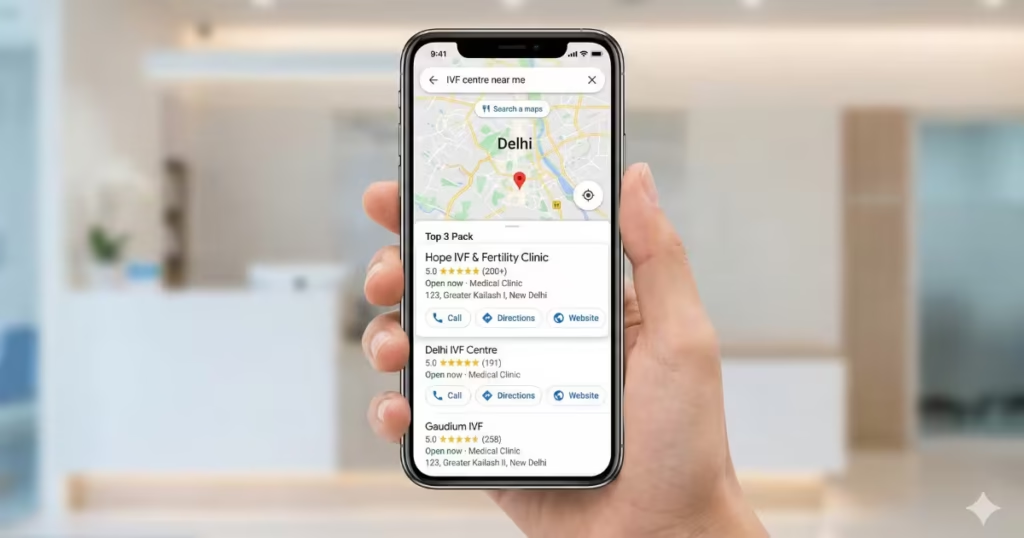
Google Business Profile (formerly Google My Business) is a key visibility channel for IVF centers in this stage of the journey. A well-maintained profile helps clinics appear in local map results and provides patients with quick access to essential information such as location, contact details, operating hours, and reviews.
From an informational perspective, effective local visibility is influenced by:
- The accuracy and completeness of clinic information
- Clear representation of available fertility treatments
- Ongoing activity that signals relevance and credibility
- Genuine patient feedback that builds confidence
- Visual elements that reinforce professionalism and trust
When managed consistently, a strong local presence helps IVF clinics remain discoverable during high-intent local searches and reinforces trust before a patient ever visits the clinic or website.
3.3 Website Optimisation for IVF Lead Conversion
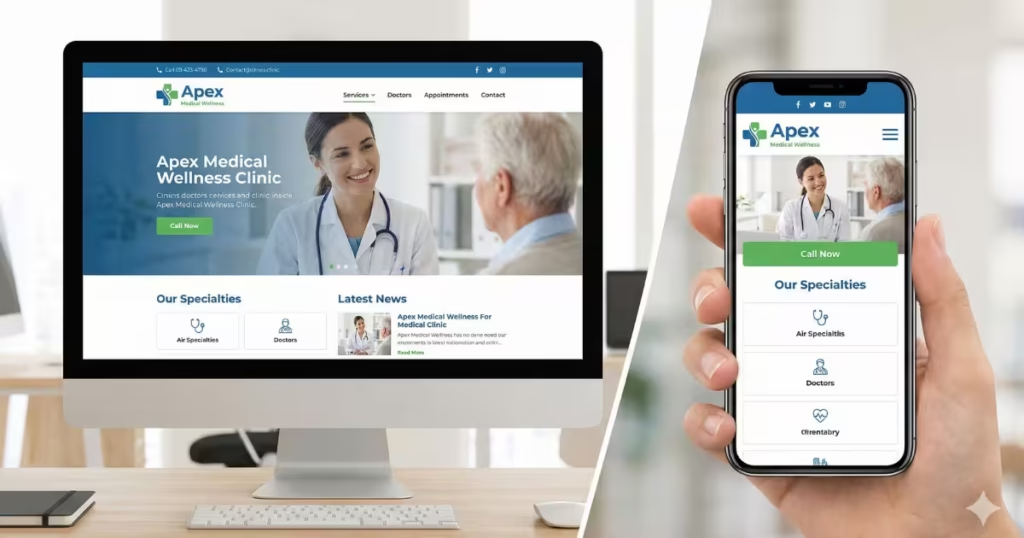
For many couples, a clinic’s website becomes the first real point of interaction with the brand. In IVF-related decisions, the website is not just an information source—it is a trust checkpoint. Patients often decide whether to explore further or move on within a few seconds of landing on a page.
An effective IVF clinic website should balance medical credibility with emotional reassurance. It needs to clearly communicate treatment information while remaining calm, supportive, and easy to navigate.
From a patient’s perspective, high-performing IVF websites typically feel:
- Trustworthy and professionally presented
- Emotionally reassuring rather than overly promotional
- Clear and informative without being overwhelming
- Fast-loading across devices and connections
- Fully accessible and usable on mobile phones
When these fundamentals are in place, a website supports the patient journey instead of interrupting it, making it easier for visitors to take the next step when they feel ready.
Key pages you must include:
From a patient’s point of view, clarity and completeness matter more than volume. IVF clinics that organise their websites around real patient concerns make it easier for visitors to find answers, build confidence, and progress naturally toward a consultation.
Informational completeness usually comes from having clearly structured pages that explain:
- Simple and accessible ways to request appointments or enquiries
- The clinic’s overall approach and values
- IVF treatments and the step-by-step process involved
- Doctor credentials, experience, and specialisations
- Treatment costs, payment expectations, and transparency
- Laboratory standards, technology, and safety protocols
- Educational resources that address common fertility questions
High converting elements:
Beyond page structure, certain elements help visitors feel reassured rather than pressured. Clinics that communicate outcomes responsibly and focus on education tend to build stronger trust over time. This may include:
- Clear explanations of the patient journey
- Realistic success indicators presented ethically
- Patient stories or experiences shared with consent
- Visible certifications, accreditations, and professional affiliations
Together, these elements help an IVF clinic’s website function as a supportive decision-making resource—guiding patients without overwhelming them and reinforcing trust at every stage of their research.
3.4 Social Media Marketing for IVF Centers
Social media has become an important trust-building channel for IVF centers, especially for patients who want to understand the human side of a clinic before reaching out. Many prospective patients observe a clinic’s social presence quietly—watching, reading, and forming opinions—long before they make direct contact.
Platforms such as Instagram, Facebook, YouTube, and emerging channels like Threads allow clinics to communicate in a more personal and approachable way than traditional websites. When used responsibly, social media helps reduce anxiety, clarify expectations, and humanise the treatment process.
Effective IVF-related social content typically focuses on:
- Educational explanations of treatments and procedures
- Doctor-led videos that establish credibility and approachability
- Common patient questions answered clearly and sensitively
- Responsible sharing of patient experiences and journeys
- Myth-versus-fact content to address misinformation
- Behind-the-scenes glimpses that reinforce transparency and professionalism
Unlike promotional advertising, consistent and educational social media communication helps clinics build familiarity and trust over time, often making patients feel more confident before scheduling a consultation.
3.5 Performance Marketing for IVF Specialists & Doctors
Performance marketing focuses on visibility at moments of high intent—when prospective patients are actively searching for fertility-related solutions and are closer to making a decision. Unlike traditional awareness-based advertising, this approach is centred on measurable actions such as calls, enquiry submissions, and appointment requests.
In competitive regions like Delhi, Noida, and Ghaziabad, paid digital channels often play a complementary role alongside SEO and local visibility. They help clinics appear prominently during searches that indicate immediate need, such as treatment costs, doctor availability, or nearby clinic options.
From an informational standpoint, performance marketing typically works by:
- Aligning ads with searches that reflect strong treatment intent
- Directing users to focused, relevant information rather than generic pages
- Reducing friction between interest and enquiry
- Allowing clinics to measure engagement and optimise visibility responsibly
When someone searches for terms related to IVF doctors, clinic locations, or treatment costs, they are usually in an advanced stage of decision-making. Appearing clearly and ethically at this point can support higher-quality enquiries and more meaningful consultations.
Because IVF-related marketing operates within a sensitive and regulated medical environment, performance campaigns must prioritise accuracy, compliance, and patient trust over aggressive promotion. When managed thoughtfully, performance marketing can support predictable visibility while maintaining ethical standards and long-term credibility.
3.6 Content Marketing for IVF Centers
Fertility treatment decisions are driven by information, reassurance, and understanding. Patients actively look for clear answers to medical, emotional, and practical questions before committing to an IVF clinic. Content marketing helps bridge this gap by educating patients while building long-term credibility.
For IVF centers, effective content focuses on clarity rather than promotion. Educational resources that explain procedures, expectations, and outcomes help reduce uncertainty and anxiety during the research phase.
Informative IVF content commonly includes:
- Step-by-step explanations of IVF and related treatments
- Articles addressing common concerns and misconceptions
- Doctor-led interviews that clarify medical perspectives
- Patient education pieces that explain preparation and aftercare
- Video content that simplifies complex fertility topics
When created responsibly, content serves two purposes at once: it supports patients in making informed decisions and strengthens a clinic’s visibility in search results over time. More importantly, it positions the clinic as a reliable source of guidance rather than just a service provider.
3.7 Reputation & Review Management
In healthcare—especially in fertility care—patient trust is shaped more by real experiences than by promotional messaging. Reviews and testimonials often become a deciding factor when couples compare IVF clinics, as they offer insight into transparency, care quality, and patient satisfaction.

Online reviews help prospective patients understand what it feels like to engage with a clinic, long before any personal interaction takes place. Consistent, authentic feedback signals credibility and reassures patients that the clinic values openness and accountability.
From an educational standpoint, a strong reputation is built through:
- Genuine patient feedback shared voluntarily
- Thoughtful responses that acknowledge patient experiences
- Responsible use of testimonials with proper consent
- Ongoing attention to how the clinic is represented across platforms
When handled ethically and consistently, review management strengthens trust, reinforces credibility, and supports informed decision-making—often influencing patient confidence more effectively than advertising alone.
4. When IVF Centers Choose to Work With Specialist Digital Marketing Partners
As IVF clinics grow, their digital requirements often become more complex. Increased competition, higher patient expectations, regulatory considerations, and rising advertising costs can make in-house or generalist marketing efforts difficult to scale effectively.
At this stage, many IVF centers explore working with specialised digital marketing partners who understand both healthcare sensitivity and local market dynamics. The goal is not faster promotion, but clearer communication, better patient alignment, and more predictable growth.
Clinics typically consider external expertise when:
- Competition in their city increases significantly
- Lead quality becomes inconsistent despite good visibility
- Compliance and ethical communication become harder to manage
- Internal teams lack the bandwidth or specialised knowledge
- Marketing decisions need clearer data and accountability
A specialised approach focuses on aligning digital channels—such as search, local visibility, content, and paid media—around patient intent and trust rather than volume alone. When done responsibly, this allows IVF centers to scale their outreach while maintaining transparency, compliance, and long-term credibility.
4.1 IVF-Focused SEO Strategy
As competition increases, many IVF centers move beyond basic SEO and adopt a more focused approach tailored specifically to fertility-related searches. IVF-focused SEO is designed to reflect how patients actually search, compare, and validate clinics during their research phase.
From an informational standpoint, this usually involves:
- Clear explanation of IVF and related treatments
- Content that addresses specific fertility conditions and concerns
- Local relevance to help clinics appear in city-based and “near me” searches
- Structured medical information that search engines can interpret accurately
- Visibility of doctor expertise and clinical credentials
- References and citations from credible healthcare sources
When implemented responsibly, this approach helps clinics remain visible throughout the patient research journey and supports consistent, organic enquiry discovery over time.
From search visibility to local discovery, digital marketing for IVF centers supports clinics at every stage of online patient research.
4.2 Google Ads & Performance Marketing for IVF
Paid search and other performance-driven channels are often used to support visibility during high-intent moments—when patients are actively exploring treatment options or comparing clinics. These channels are typically most effective when aligned closely with patient intent and ethical communication standards.
In practice, performance marketing for IVF clinics focuses on:
- Reaching patients searching for specific fertility treatments
- Supporting visibility for consultation-focused queries
- Providing clear, relevant information at the decision stage
- Managing spend carefully to prioritise enquiry quality over volume
Because IVF-related advertising operates within a sensitive medical and regulatory environment, responsible execution and message accuracy are essential to maintaining patient trust and credibility.
4.3 Website Development for IVF Clinics
For IVF centers, a website is more than a digital brochure—it functions as a reassurance platform. Patients often assess credibility, professionalism, and comfort level through the website before taking any further step.
Well-structured IVF clinic websites typically prioritise:
- Clean, professional design that reflects medical credibility
- Fast performance across devices and connection types
- Clear, emotionally considerate language
- Logical navigation that supports patient understanding
- Simple pathways for enquiries or appointment requests
When a website aligns medical clarity with emotional sensitivity, it helps patients feel more confident and supported as they move closer to a consultation decision.
4.4 Local Visibility Through Google Business Profiles
For IVF centers, local visibility often determines whether a clinic is considered or overlooked during high-intent searches. A well-maintained Google Business Profile helps patients quickly access essential information such as location, contact details, timings, and reviews—often before they even visit a website.
From an educational standpoint, strong local visibility is supported by:
- Accurate and consistent clinic information
- Regular updates that signal activity and relevance
- Ethical review practices that reflect real patient experiences
- Ongoing attention to how the clinic appears in local search results
When managed consistently, local profiles play a significant role in discovery, credibility, and patient confidence during the early decision stage.
4.5 Social Media Management for IVF Clinics
As IVF decisions are deeply personal, patients often look for reassurance beyond formal medical information. Social media provides a channel where clinics can communicate in a more human, educational, and approachable manner.
Effective IVF-related social media typically focuses on:
- Doctor-led communication that builds familiarity
- Educational content explaining treatments and processes
- Patient awareness posts shared responsibly
- Frequently asked questions addressed clearly
- Ongoing educational series that reduce anxiety and confusion
A consistent and thoughtful social presence helps clinics build long-term trust rather than short-term attention.
4.6 Content Writing & Blogging
Educational content plays a central role in how IVF clinics establish authority and credibility online. Patients actively search for reliable information related to fertility treatments, preparation, outcomes, and emotional readiness.
From a blog perspective, effective medical content usually includes:
- Clear answers to common IVF-related questions
- Treatment explanations written in accessible language
- Awareness content that supports informed decision-making
- Articles that prioritise education over promotion
Over time, this type of content helps clinics become recognised as dependable sources of guidance rather than just service providers.
4.7 Email Communication and Patient Nurturing
Not all patients are ready to proceed immediately after their first interaction. Thoughtful email communication helps clinics stay connected with prospective patients during the consideration phase.
Educational email communication often supports:
- Ongoing patient education
- Appointment reminders and process clarity
- Gentle follow-ups without pressure
- Continued trust-building through relevant information
When used responsibly, email becomes a supportive channel that respects patient timelines and decision-making comfort.
4.8 Measurement, Transparency, and Performance Tracking
As digital efforts grow more complex, visibility into performance becomes essential for informed decision-making. IVF clinics benefit from understanding how different channels contribute to visibility, engagement, and enquiries.
From an informational perspective, transparent tracking helps clinics:
- Assess enquiry patterns over time
- Understand cost and efficiency trends
- Evaluate visibility improvements across platforms
- Make data-backed decisions rather than assumptions
Clear reporting supports accountability and helps clinics align their marketing efforts with long-term growth goals rather than short-term metrics.
✅ Ethical and Compliant Digital Marketing for IVF Clinics
IVF and fertility treatments operate within one of the most sensitive and highly regulated areas of healthcare. Digital communication in this space must balance visibility with responsibility, ensuring that patient trust, legal compliance, and ethical standards are never compromised.
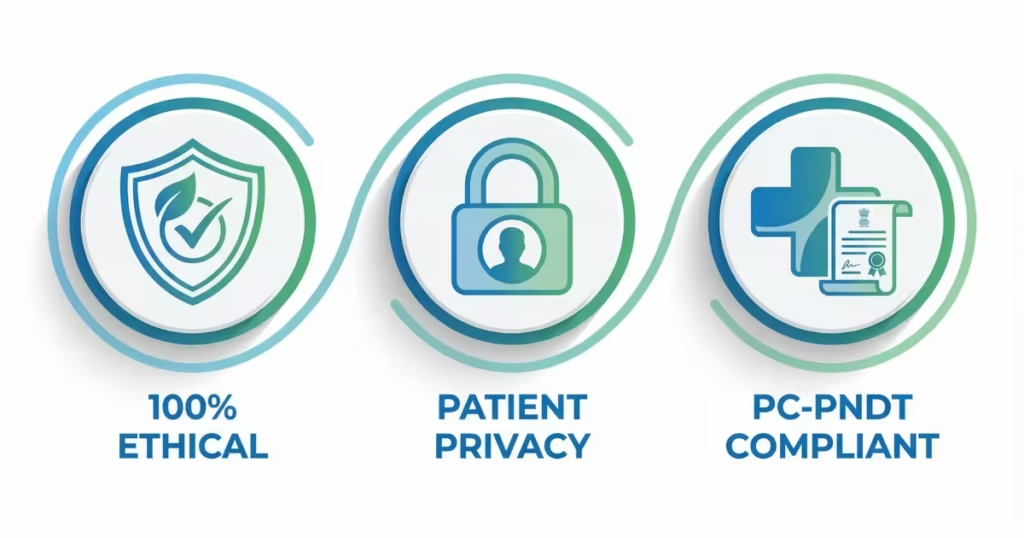
In India, IVF-related marketing is governed by strict regulations, including the PC-PNDT Act, ICMR guidelines, and healthcare advertising norms. Clinics that engage in digital marketing must remain especially careful about how treatments, outcomes, and patient experiences are presented online.
Ethical IVF marketing is defined by clear boundaries, such as:
- Avoiding misleading or exaggerated claims about success rates
- Fully respecting laws related to gender selection and disclosure
- Refraining from unethical comparisons with other clinics or doctors
- Steering clear of fear-based, emotional manipulation in messaging
- Ensuring testimonials and patient stories are genuine, consent-driven, and responsibly shared
When digital marketing is approached with integrity and transparency, it protects not only patients but also the long-term reputation of the clinic. Ethical compliance is not a limitation—it is a foundation for sustainable trust, credibility, and responsible growth in fertility care.
🔒 Patient Privacy and Integrity-First Communication
In fertility care, patient privacy is non-negotiable. IVF clinics handle deeply personal medical information, and any digital interaction—whether through enquiry forms, messaging platforms, or follow-ups—must respect confidentiality at every stage of the patient journey.
Responsible digital practices prioritise:
- Secure handling of patient enquiries and personal information
- Protection of identities, medical details, and communication records
- Clear boundaries around data usage and storage
- Respect for patient consent and confidentiality at all times
Beyond privacy, long-term trust is shaped by how clinics present themselves publicly. Integrity-first communication focuses on education rather than persuasion and clarity rather than exaggeration.
This approach typically emphasises:
- Authentic representation of doctors and medical teams
- Patient education that explains treatments honestly and clearly
- Transparent communication around procedures and expectations
- Content that builds confidence through accuracy and empathy
When IVF clinics align privacy protection with ethical branding, they create a foundation for sustainable credibility. Trust built through responsible communication does not just support enquiries—it strengthens reputation, patient confidence, and long-term respect within the healthcare ecosystem.
Key Takeways
- IVF patients research extensively before choosing a clinic
- Digital visibility and trust signals strongly influence decisions
- Ethical, compliant communication supports long-term credibility
Conclusion
Digital marketing has become an integral part of how IVF clinics are discovered, evaluated, and trusted by prospective patients. As more couples rely on online research to make deeply personal treatment decisions, a clinic’s digital presence increasingly influences confidence and choice.
When channels such as search visibility, local discovery, educational content, and responsible advertising work together, IVF centers are better positioned to communicate clearly, build credibility, and support patients throughout their decision-making journey. The emphasis is not on promotion, but on being informative, accessible, and trustworthy at the moments that matter most.
As competition increases, digital marketing for IVF centers is no longer about promotion, but about responsible visibility, education, and trust.
For clinics in competitive regions like Delhi NCR, a patient-first and ethically aligned digital approach supports sustainable growth while allowing medical teams to focus on their core responsibility—providing compassionate, high-quality fertility care.
✅ Frequently Asked Questions (FAQs) – Digital Marketing for IVF Centers
1. Why is digital marketing for IVF centers important for patient trust?
Most couples research fertility clinics online before booking a consultation. Digital marketing helps IVF centers remain visible during this research phase, communicate trust signals, and provide accurate information when patients are actively comparing options.
2. Which digital marketing channels work best for IVF clinics?
IVF clinics typically benefit from a combination of local search visibility, educational content, website clarity, and selective paid visibility. No single channel works alone—effectiveness depends on how well channels align with patient intent and trust-building.
3. How long does it take to see results from IVF-focused SEO?
SEO is a gradual process. Initial visibility improvements may appear within a few months, while consistent patient discovery usually develops over a longer period, depending on location competition and content quality.
4. Are Google Ads suitable for IVF clinics?
Paid search can be effective when used responsibly, as many IVF-related searches indicate high intent. However, messaging accuracy, ethical compliance, and patient sensitivity are critical in this medical category.
5. How does Google Business Profile help IVF clinics?
Google Business Profiles support local discovery by displaying clinic details, reviews, and location information in search and map results. This is especially important for “near me” searches and location-based comparisons.
6. Can social media influence IVF patient decisions?
Social media does not usually drive immediate bookings, but it plays a significant role in trust-building. Educational posts, doctor communication, and awareness content help patients feel more confident before contacting a clinic.
7. Is digital marketing for IVF clinics legally allowed in India?
Yes, provided it follows regulations such as the PC-PNDT Act, ICMR guidelines, and healthcare advertising norms. Ethical communication, accuracy, and patient privacy are essential.
8. How do IVF clinics decide how much to invest in digital marketing?
Investment levels vary based on city competition, clinic size, and growth goals. Clinics typically prioritise visibility, trust-building, and patient education rather than aggressive promotion.
9. When should an IVF clinic consider professional digital support?
Clinics often seek specialised support when competition increases, enquiry quality drops, or compliance and data tracking become difficult to manage internally.
10. How soon can digital channels start influencing patient enquiries?
Different channels influence decisions at different stages. Paid visibility may create early awareness, while SEO and content support long-term discovery. Most clinics see gradual, compounding impact rather than instant results.